
Livraison le jour même ou le lendemain

Qualité garantie

Débloquez vos offres de bienvenue: Livraison GRATUITE | Jusqu'à -80 % | 30 jours d'essai gratuits à JoyPlus
Téléchargez l'application
Whether you're a weekend DIYer, a passionate mechanic, or a seasoned technician, choosing a tool kit can quickly become a headache. Faced with hundreds of options, marketing promises are often misleading and lead to purchases we bitterly regret. Our mission: to help you see things more clearly. Let's break down the pitfalls to avoid and the criteria that truly matter to make the right choice.
Before you even start comparing spec sheets, it's crucial to know how to sniff out a bad deal.
To avoid these traps, focus on a few technical details that make all the difference.
The longevity of your tools depends above all on the quality of the steel. For regular use, Chrome-Vanadium (Cr-V) Steel is the undisputed standard. This alloy provides excellent resistance to torsion, wear, and corrosion. For driver bits, which are subject to different stresses, S2 steel is often preferred for its superior hardness, which limits the risk of deforming the bit head.
A good ratchet is identified by its mechanism. A 72-tooth model has now established itself as the quality standard for mechanic's tools. It allows for a swing arc of just 5 degrees, which is essential for tightening or loosening in hard-to-reach areas, like an engine bay. This is the kind of detail that is a daily game-changer, both in comfort and efficiency.
There's no need to go for the biggest kit; ask yourself what you really need.
To guide you, here are a few options that meet specific needs while avoiding the classic pitfalls.
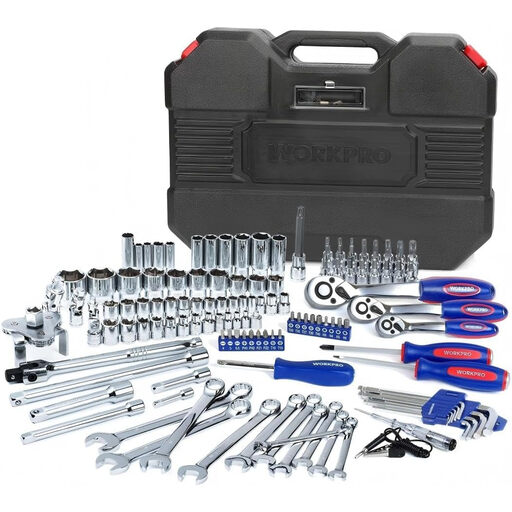
Why it's a great choice: Perfect for small everyday repairs, both at home and on the car. It provides just what you need to assemble furniture, tighten a nut, or perform minor maintenance, all in a well-designed case.
This set doesn't try to impress with the number of pieces. It focuses on the essentials (ratchets, sockets, wrenches, bits) and prioritizes quality with heat-treated steel and an anti-corrosion chrome finish.
Its strength: it includes all 3 standard ratchet sizes (1/4", 3/8", 1/2"), making it ultra-versatile. The molded case keeps everything organized and prevents loss.
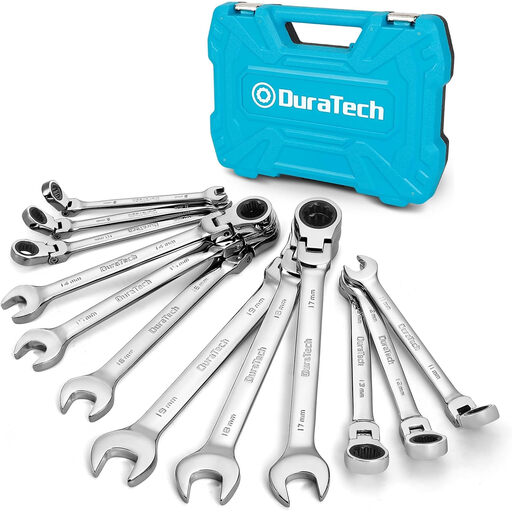
Why it's a great choice: Designed for those who get their hands dirty. Its flex-head and precise ratchet allow you to reach nuts and bolts that are inaccessible with classic wrenches. A real time- and nerve-saver!
Here, the focus is on specialization, not quantity. The set concentrates on 12 wrenches with a highly specialized design. The Cr-V steel and 72-tooth mechanism are clearly stated, guaranteeing performance and longevity.
The 180° flex-head offers unparalleled access. With its 5° swing arc, you can work efficiently even when you have almost no room to maneuver.

Why it's a great choice: The essential tool for disassembling and repairing smartphones, laptops, consoles, or drones. This motorized electronic repair kit combines the precision and variety of bits needed to tackle the tiniest screws without damaging anything.
It's the antithesis of a general-purpose kit. This ultra-specialized tool provides 52 bits dedicated to electronics and, crucially, adjustable torque. This ensures you won't strip a screw or damage a fragile circuit board.
Its real edge: the motorized and adjustable torque (from 0.1 to 0.35 N.m) for high-precision work. The magnetic storage case is a welcome bonus for not losing any bits.
Discover our complete selection of tool kits that meet our quality criteria and safety standards.
Chrome-Vanadium (Cr-V) steel is an alloy enriched with chrome and vanadium. The result: it is much stronger, harder, and more resistant to rust than basic carbon steel. For tools that endure high force, like wrenches and sockets, Cr-V is a guarantee of incomparably longer life.
For occasional use in open spaces, a ratchet with fewer teeth might suffice. However, as soon as you work in a tight space (under a car, behind furniture), the difference is striking. A 72-tooth ratchet only needs 5° of swing to "click," compared to 10° or 15° for entry-level models. It's a level of comfort that, once you've tried it, becomes indispensable.
It's simple, but essential. After each use, give them a wipe with a dry cloth to remove grease and moisture. Always store your tools in their case to protect them from impacts and dust. For untreated steel tools, a light spray of protective oil from time to time won't do them any harm.