
Livraison le jour même ou le lendemain

Qualité garantie

Débloquez vos offres de bienvenue: Livraison GRATUITE | Jusqu'à -80 % | 30 jours d'essai gratuits à JoyPlus
Téléchargez l'application
Whether you're a weekend DIYer, a mechanics enthusiast, or just someone who likes to be prepared for everyday repairs, buying a tool kit can quickly become a headache. Faced with cases promising hundreds of pieces and tempting marketing, it's easy to make the wrong choice.
As a product expert at Joybuy, I'm here to help you see things more clearly. Let's forget the jargon and focus on what really matters. Here are the two most common pitfalls to avoid?:
To make an informed choice, you need to focus on a few non-negotiable technical specifications. They are the true indicators of the quality and longevity of your future tool kit.
The material is the most critical factor. Steer clear of vague terms like "high-strength steel" and look for these two standards?:
If your kit includes a ratchet, check the number of teeth in its mechanism. This number determines the swing arc: in simple terms, the minimum arc you need to turn the handle to tighten or loosen a nut.
A comprehensive tool case doesn't necessarily mean it's right for your needs. Define your primary use case?:
To illustrate these criteria, here are a few concrete examples suited for different profiles.
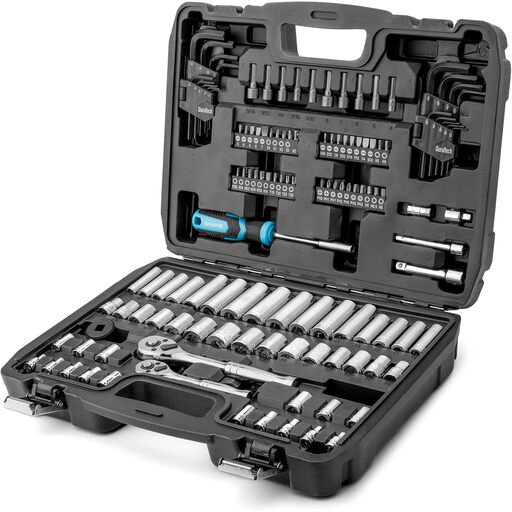
Why it's a great choice : Perfect for anyone looking for a reliable first kit that can handle routine home maintenance as well as minor car repairs. The essentials, without the fluff.
This kit avoids the piece-count trap by focusing on 121 relevant tools, all made from Chrome Vanadium steel for optimal durability.
Includes 1/4" and 3/8" ratchets, a magnetic bit driver with 40 bits, and hex keys. All housed in a sturdy, well-organised case.
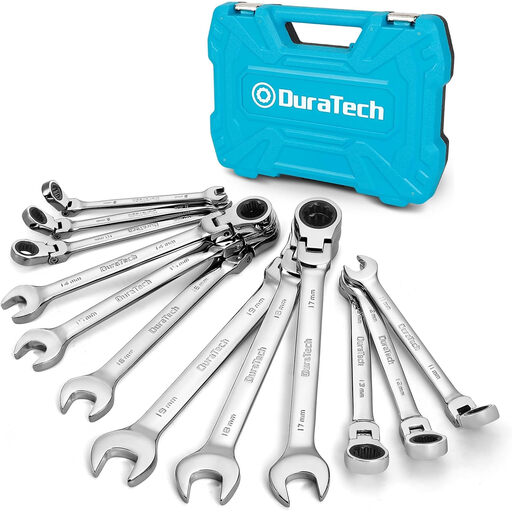
Why it's a great choice : A must-have for the mechanics enthusiast who needs to reach nuts and bolts in the most difficult-to-access spots, like around an engine or exhaust system.
There's no filler here. This specialised set avoids the quantity trap by focusing on a major technical advantage: a 180° flex-head combined with a 72-tooth ratchet mechanism.
Its 5° swing arc and pivoting head provide access to nuts and bolts that are unreachable with standard wrenches. The Cr-V steel construction ensures its robustness.
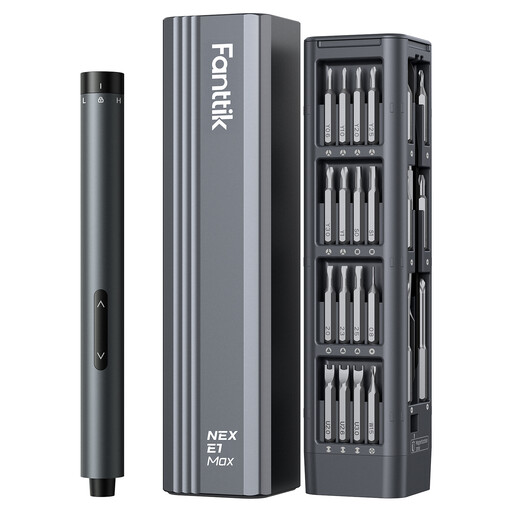
Why it's a great choice : Designed for those who repair smartphones, laptops, watches, or drones. For them, precision, torque control, and bit quality are non-negotiable criteria.
It doesn't pretend to be an all-rounder; it excels in its niche: micro-fasteners. Its 50 bits are made of S2 steel, the benchmark material for preventing damage to the most delicate screws.
Features two torque settings (0.05 N.m and 0.2 N.m) to adapt to fragile components. The magnetic case and rechargeable battery make it the perfect companion for the modern technician.
Some projects require highly specialised tools. For working on a vehicle's interior, a trim removal tool kit is essential for working cleanly without causing damage.
The lifespan of a tool kit depends mainly on two factors: material quality and maintenance. A kit made of Chrome Vanadium (Cr-V) steel, used under normal conditions and cleaned after use to prevent moisture, can last for decades—even a lifetime for an amateur user. Conversely, entry-level carbon steel tools can rust or deform in less than a year.
It's not a matter of one or the other, as they are complementary. Cr-V steel is ideal for tools that undergo high torsion, like wrenches and sockets. S2 steel, which is harder but slightly more brittle, is perfect for driver bits because it resists wear better and protects screw heads. A good mechanic's tool kit often cleverly combines Cr-V sockets with S2 bits.
Not necessarily. It's often wiser to start with a basic but high-quality tool case, like the DURATECH 121-piece kit, which covers 90% of home and light mechanical needs. You can then add more specialised tools (flex-head wrenches, precision screwdrivers, etc.) to your collection as your projects require. This avoids a large initial investment in tools that might never be used.