
Livraison le jour même ou le lendemain

Qualité garantie

Débloquez vos offres de bienvenue: Livraison GRATUITE | Jusqu'à -80 % | 30 jours d'essai gratuits à JoyPlus
Téléchargez l'application
Whether you're a weekend DIYer, a passionate mechanic, or a seasoned professional, one thing unites you: the right tool is the key to a job well done. But the market is a confusing jungle of offers. Between inflated power claims and toolsets that seem too good to be true, a poor investment is never far off. This guide deciphers the essential criteria for choosing equipment that is reliable, durable, and perfectly suited to your needs.
Before we even talk about gear, let's learn how to sidestep the common traps that turn a supposed bargain into a regrettable purchase.
To avoid these pitfalls, focus on the technical specifications that don't lie.
For hand tools, everything depends on the quality of the steel and its treatment. A heat-treated Cr-V steel offers excellent resistance to torsion and wear. The finish is just as important: quality chrome plating protects against corrosion and makes cleaning easier. For automotive tools, where stresses are extreme, this criterion is non-negotiable.
Torque, measured in Newton-metres (Nm), is your tool's raw power. High torque is essential for an impact wrench used for loosening lug nuts (aim for 150?Nm minimum). For a cordless drill driver, adjustable torque provides far more versatility. As for battery life, it's measured in Amp-hours (Ah). The higher the number, the longer you can work before needing to recharge.
When it comes to electrical work, safety is non-negotiable. Electrical equipment for home installations must comply with national safety standards (such as UL in the United States or CE in Europe). These standards govern the design and implementation of low-voltage electrical systems. Always check for these certifications on items like breaker panels or circuit breakers.
Instead of a random laundry list, here are our targeted recommendations, chosen for their relevance and value.
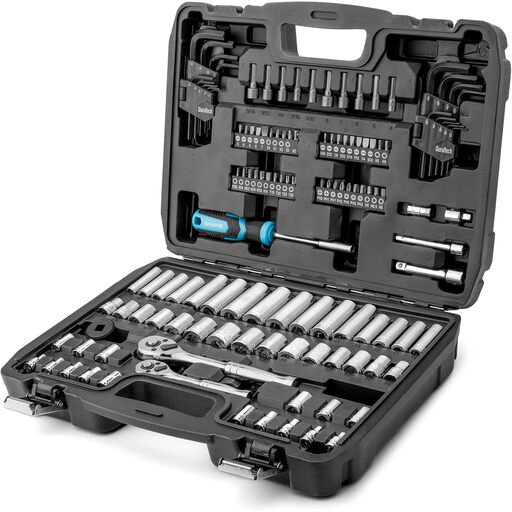
Why this pick? Ideal for car maintenance, furniture assembly, or small everyday repairs. This set is an excellent foundation to get you started.
Far from being a mere catch-all, this kit gets straight to the point: metric and SAE sockets, confidence-inspiring ratchets, and a magnetic screwdriver with truly useful bits. The mention of heat-treated Cr-V steel is a definite plus.
Its excellent versatility-to-quality ratio. The carrying case is robust and thoughtfully designed to keep every tool securely in place.
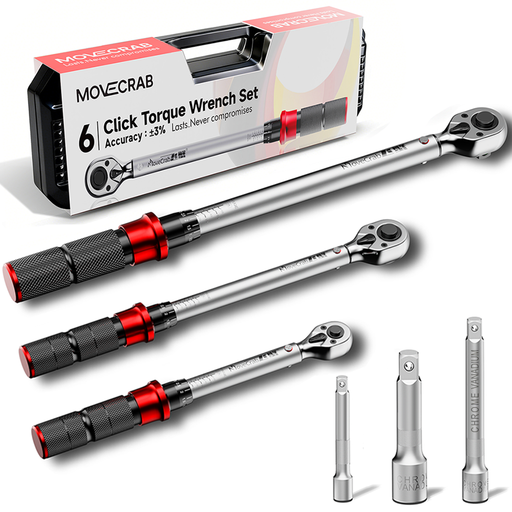
Why this pick? For jobs where precision is a matter of safety (tightening lug nuts, cylinder heads...), a reliable torque wrench isn't a luxury—it's a necessity.
No empty promises here, just certified precision. Each wrench comes with its own calibration certificate, guaranteeing an accuracy of ±3 %. This is a crucial detail for tightening jobs that allow no room for error.
The set covers a very wide torque range (from 5 to 220 Nm) with its three wrenches, making it just as suitable for delicate components as for heavy-duty chassis bolts. Its all-steel construction is a testament to its longevity.
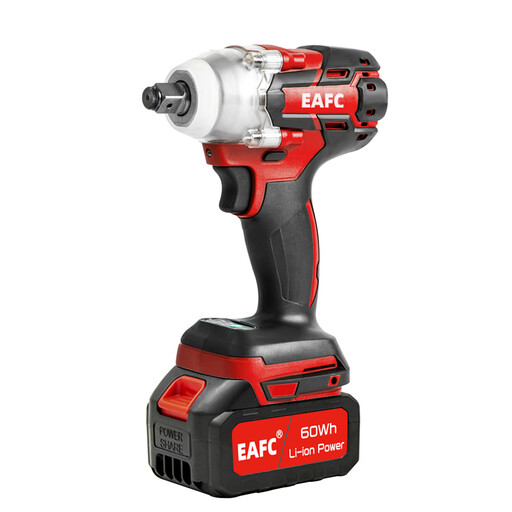
Why this pick? The perfect tool for changing tyres in record time or working on a job site with no outlet nearby. It's cordless freedom, with extra power.
Instead of a vague "powerful" descriptor, this impact wrench makes its case with a clear maximum torque of 200 Nm. The spec sheet even details the battery composition (10 cells of 1500 mAh)—a welcome level of transparency.
Its high torque tackles stubborn lug nuts and other recalcitrant fasteners with ease. The brushless motor is a real plus, synonymous with longer life and better power efficiency.
We have curated a full range of products that meet our selection criteria and current safety standards.
Although their names are similar, their jobs are very different. The impact wrench is a force of nature, designed to deliver massive torque to tighten or loosen large bolts and nuts (for auto mechanics, construction framing). The impact driver, on the other hand, is more compact and agile. Its job is to quickly drive long screws into dense materials (like wood) using rotational impacts that protect the screw head from stripping.
A few simple steps can significantly extend the life of your tools. After each use, wiping them with a dry cloth to remove dust and moisture is essential. For metal parts, applying a thin film of oil (like linseed or machine oil) from time to time will prevent rust from forming. Finally, store them in a dry place, ideally in their original case.
A good complete tool set is indeed an excellent starting point. It covers most everyday needs, from small DIY jobs to basic mechanics. Of course, for more specialised projects (plumbing, electrical, precision woodworking), you will need to supplement it with dedicated tools: a torque wrench, crimping pliers, a precision saw, etc. The key is to start with a solid, high-quality foundation.