
Livraison le jour même ou le lendemain

Qualité garantie

Débloquez vos offres de bienvenue: Livraison GRATUITE | Jusqu'à -80 % | 30 jours d'essai gratuits à JoyPlus
Téléchargez l'application
Suddenly craving a steaming bowl of rich, creamy ramen? Tonkotsu ramen, with its signature milky broth made from simmering pork bones for hours, is a true institution. The problem: preparing an authentic broth at home is a culinary marathon. Fortunately, Japanese instant noodles have reached such a high level of quality that it's now possible to enjoy this unique flavour in just a few minutes.
But with ever-expanding store shelves, making the right choice isn't easy. Our guide is here to cut through the noise and help you choose THE tonkotsu ramen for you, without the marketing fluff.
To make sure you get it right, here are the key criteria to keep in mind.
The broth is the soul of tonkotsu. Its characteristic richness comes from the emulsified fats and collagen extracted from pork bones. In an instant version, this magic is recreated with concentrated powders and oils. Take a look at the ingredients: the presence of pork extract or lard is often a sign of a more authentic and deep flavour. Some variations, like miso ramen tonkotsu, add fermented soybean paste for an extra layer of complexity.
You'll mainly find two types of noodles in instant packets: fried and non-fried.
A good ramen packet rarely stops at just noodles and a broth powder. Aromatic oils (sesame oil, black garlic oil, etc.) are essential for perfecting the taste and giving the broth its characteristic pearly sheen. The inclusion of these extra sachets is almost always a hallmark of quality.
We've selected a few gems, each with its own personality, to help you find your perfect match.
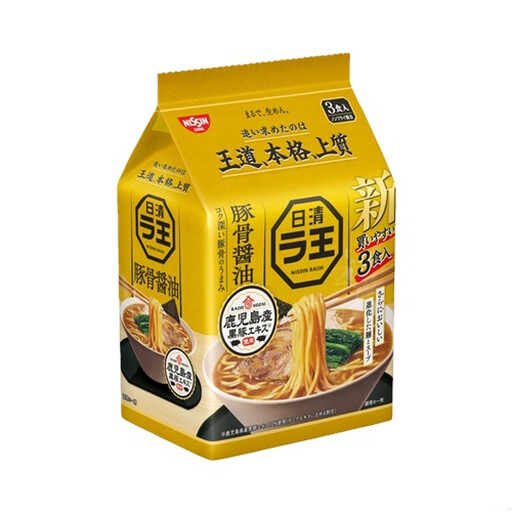
Why it stands out: The Raoh line from Nissin is the gold standard for its non-fried noodles, which offer a stunningly realistic texture. This version combines a savoury tonkotsu broth with a touch of soy sauce for a beautiful umami depth.
Highlights:
Best for: Those who make no compromises on noodle texture and are looking for a balanced and refined ramen soup broth.
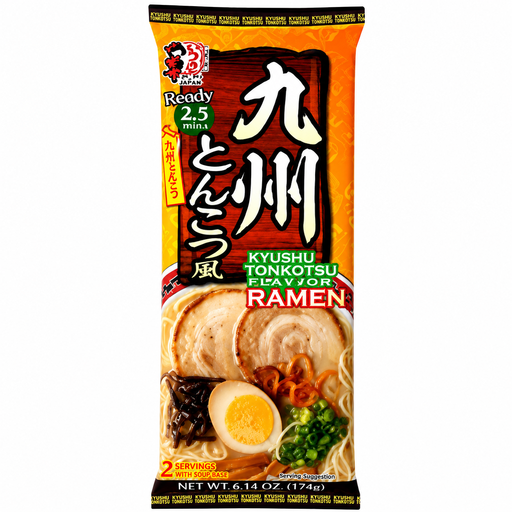
Why it stands out: This ramen is inspired by the style of Kyushu, the birthplace of tonkotsu. Here, the focus is on a pure and powerful pork broth, enhanced by a sesame oil with toasted notes.
Highlights:
Best for: Purists who want to experience the authentic taste of Kyushu ramen.
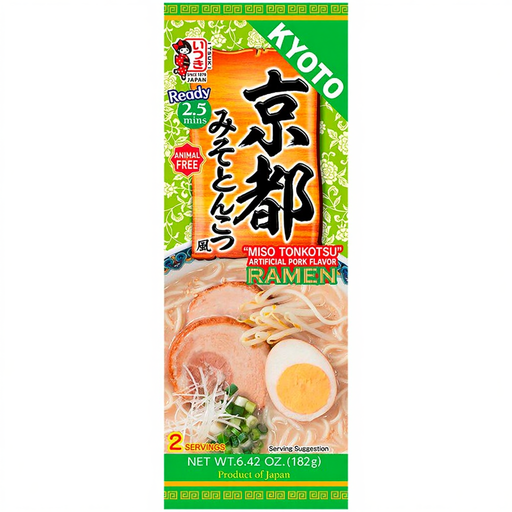
Why it stands out: A bold fusion of rich tonkotsu and the deep, umami flavour of Kyoto miso. The result is a complex and ultra-comforting ramen soup.
Highlights:
Best for: Adventurous eaters who appreciate broths with character and want to try something new.
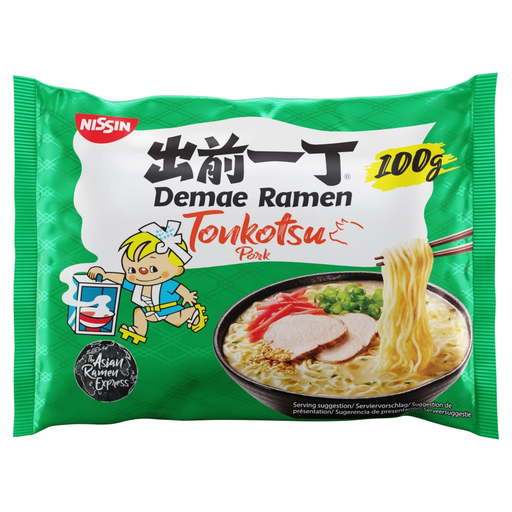
Why it stands out: The Demae line from Nissin is a go-to staple, loved for its simplicity and a taste that always hits the spot. This tonkotsu version doesn't disappoint, with its distinct pork flavour and express preparation.
Highlights:
Best for: Students or anyone looking for a quick, budget-friendly, and tasty solution to satisfy a ravenous hunger.
Tonkotsu is an excellent gateway, but the world of ramen is nearly infinite! From soy sauce (shoyu) and salt (shio) broths to other creative variations, there are countless ways to mix things up.
To explore further, feel free to browse our complete selection of pork noodles and find your next favourite.
The term tonkotsu (豚骨) literally means "pork bone" in Japanese. It refers to a broth prepared by simmering pork bones for hours until the collagen and fat dissolve, creating a rich, opaque, and milky broth. This is what gives this ramen soup its prized texture and taste.
To transform a simple bowl of noodles into a true feast, here are a few topping ideas:
It's all in the flavouring base (the tare). Tonkotsu ramen gets its flavour and texture from a pork bone broth. Miso ramen, on the other hand, uses a fermented soybean paste (miso) to season its broth (which can be pork, chicken, or vegetable-based). And yes, the two can be combined! A ramen can absolutely be a miso tonkotsu, like our pick from ITSUKI: the pork broth is enriched with miso paste for an even more complex result.