
当日/次日达

品质保障

开启新人专享福利: 全场免邮 | 低至 2 折 | 免费试用 30 天 JoyPlus 会员
下载 Joybuy
Between cleaning gels, scented toilet blocks, toilet paper and bathroom accessories, it’s not always easy to compare products. A colourful package or a “3-in-1” promise doesn’t guarantee that an item will be suitable for your toilet bowl, your plumbing or your habits.
Three mistakes crop up time and again when shopping:
To avoid nasty surprises, take the time to check the ingredients, usage instructions, dimensions and frequency of use before comparing prices.
A toilet cleaning gel is usually enough for everyday bowl maintenance. Its texture makes it easy to apply under the rim. For stubborn mineral marks, you can turn to a limescale remover for toilets with an acid base, making sure to follow the instructions on the label carefully.
Products containing sodium hypochlorite, such as some whitening gels, are designed to clean and disinfect under the conditions specified by the manufacturer. They must never be mixed with an acidic product, ammonia or any other cleaner.
Claims like “99.9% effective” or “disinfecting action” should always be considered alongside the usage instructions and conditions. They don’t replace the essential steps: apply the product, allow the recommended contact time, scrub if needed, then rinse.
A 750 ml bottle is generally suitable for regular use in a household. However, consumption depends on how often you clean and how much you use each time. A toilet block can release fragrance or cleaning agents with every flush, but it will never replace manual cleaning of hard-to-reach areas.
For toilet paper, compare the number of rolls, the number of plies, the stated grammage and compatibility with your plumbing. Even when a paper is labelled as flushable, avoid flushing a large amount all at once, especially if your plumbing is old or narrow.
Before choosing a toilet seat, measure:
A removable model makes cleaning the toilet easier, as it gives you access to the area around the fixings. A soft-close mechanism prevents slamming – a real bonus if the bathroom is near the bedrooms.
For a bidet spray, check that the hose, wall bracket and connector are included and compatible with your water supply. Adding a shut-off valve is also recommended to reduce the risk of constant pressure when the spray isn’t in use.
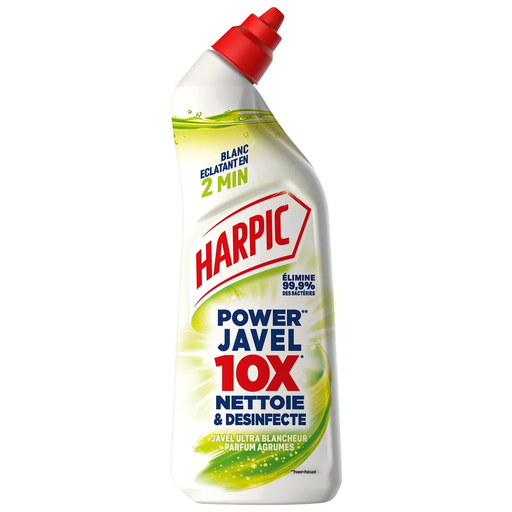
Why this choice suits this profile: this 750 ml gel is applied directly under the rim of the bowl. It’s ideal for everyday maintenance when you want a whitening formula with a citrus fragrance.
Its gel texture lets you target the areas that need treating, rather than pouring an uncontrolled amount into the whole bowl.
750 ml bottle, nozzle designed to reach the rim, sodium hypochlorite formula and citrus fragrance.
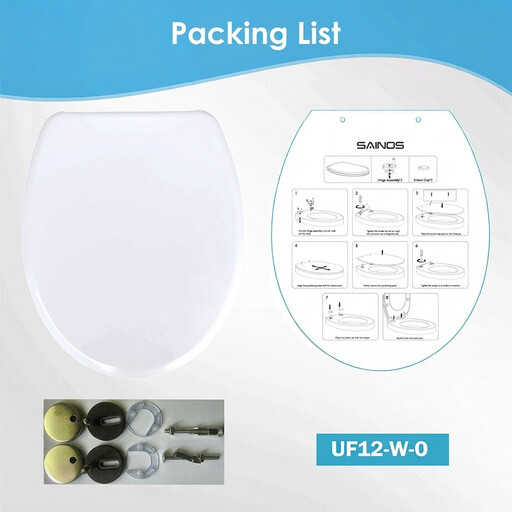
Why this choice suits this profile: its soft-close mechanism and removable design are ideal for households that value comfort and easy cleaning.
The stated dimensions of 44.6 × 37.3 cm should be compared with your toilet bowl before purchase. This reduces the risk of a poor fit.
Smooth surface, one-hand removal and soft-close for both seat and lid.
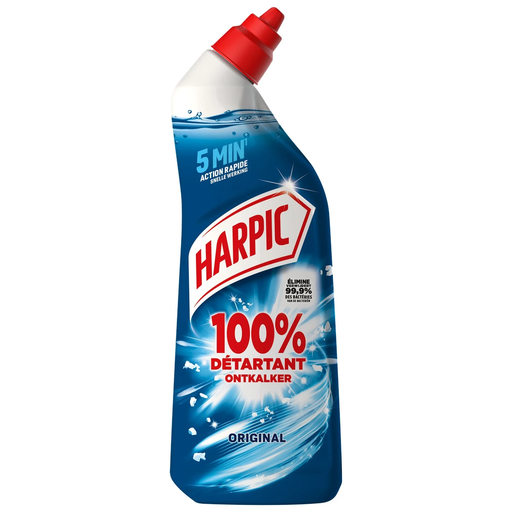
Why this choice suits this profile: households with very hard water can benefit from a formula specifically designed for mineral deposits and stubborn stains.
It targets a very specific problem – limescale – rather than piling on functions that may not match your needs.
750 ml format, stated action time of 5 minutes and contains hydrochloric acid.
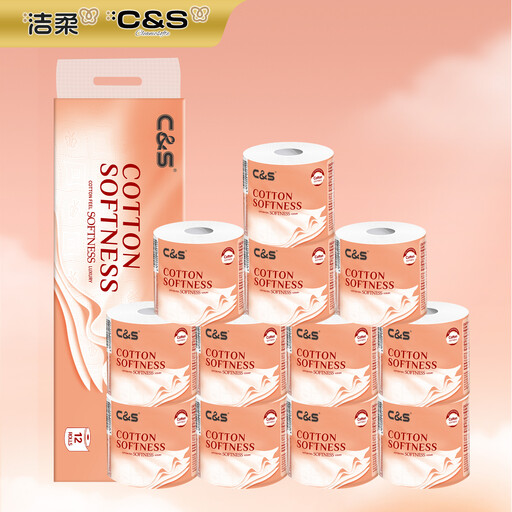
Why this choice suits this profile: its 12-roll pack and 4-ply thickness are ideal for households that want to avoid restocking too often.
The product page states the composition and sheet size, while recommending not to flush too much at once.
12 rolls, 4 plies, embossed texture and fibres stated to be made from virgin wood pulp.
A regular, well-planned routine is often enough:
A toilet block can complement this routine by releasing a scent with every flush. Some models clip onto the rim, while others sit inside the cistern. If you choose a cistern block, make sure it doesn’t interfere with the flush mechanism or water supply, and follow the manufacturer’s instructions.
We’ve put together a full, real-time selection of products that meet these strict criteria as well as European safety standards.
Choose a limescale remover for toilets whose label clearly states it can be used on sanitary surfaces. Follow the action time, wear the recommended protective gear and never mix it with a chlorinated product or bleach.
In a household, light maintenance several times a week helps to limit deposits. The frequency of a full clean then depends on the number of users, water hardness and room ventilation. Items that are frequently touched, such as the toilet seat and flush button, should also be cleaned regularly.
No. Depending on its design and the manufacturer’s instructions, a toilet block mainly works between cleans. It does not replace applying a cleaner to the bowl, scrubbing away marks or maintaining the external surfaces.