
Livraison le jour même ou le lendemain

Qualité garantie

Débloquez vos offres de bienvenue: Livraison GRATUITE | Jusqu'à -80 % | 30 jours d'essai gratuits à JoyPlus
Téléchargez l'application
Buying toilet paper seems straightforward. However, several details can affect comfort, how long it lasts and the price you actually pay. A pack of 24 rolls is not necessarily more economical than a compact format, while very thick paper may require extra care with certain plumbing systems.
The Joybuy Product Recommendation Officer’s selection is therefore based on practical criteria: number of sheets, thickness, material, stated origin, advertised compatibility with septic tanks and total quantity.
Two packs of 6 rolls can contain very different quantities. Check the number of sheets per roll and, where available, the total length. For example, a compact roll with 420 sheets may last longer than a standard roll with 130 or 150 sheets.
To compare several offers, use this simple calculation:
Pack price ÷ total number of sheets = cost per sheet.
This method is far more reliable than claims such as “family pack” or “maximum savings”.
2-ply toilet paper generally offers a good balance between softness, consumption and flushing. 3-ply toilet paper feels thicker, but that does not automatically mean it will be softer or stronger in every situation.
Texture, embossing, sheet size and the quality of the cellulose also affect comfort. If you are looking for soft toilet paper, compare these different features rather than relying solely on the number of plies.
Even when a product is presented as toilet paper suitable for septic tanks, it must be used in accordance with the instructions. The amount flushed at once, the toilet’s flush flow rate and the condition of the pipes are also important.
A product advertised as dissolving quickly or being biodegradable should not therefore be flushed in large quantities. Packaging may also distinguish between a biodegradable tube and one that is simply recyclable, so take the time to read the information on the pack.
For everyday use, compare at least:
A pack of 30 rolls containing 240 sheets per roll represents 7,200 sheets. By contrast, 24 rolls of 150 sheets amount to 3,600 sheets. The number of rolls alone is therefore not enough to assess the balance between quantity and price.
Descriptions such as 100% cellulose, “virgin fibres” or “fibre blend” provide a clearer picture of the product’s composition. Some products also display certification, such as FSC, which relates to the origin of materials sourced responsibly according to the relevant standard.
For toilet paper made in France, check the stated origin on the product page or packaging. The products below include several references advertised as made in France, while others are of Italian origin or made outside France.
Scented products, lotions and plant extracts are not necessarily suitable for everyone. When choosing toilet paper for sensitive skin, look instead for product information stating that it is fragrance-free, detailing its composition and specifying any tests carried out by the manufacturer.
This information describes the product but does not constitute medical advice. If irritation persists, seek advice from a healthcare professional.
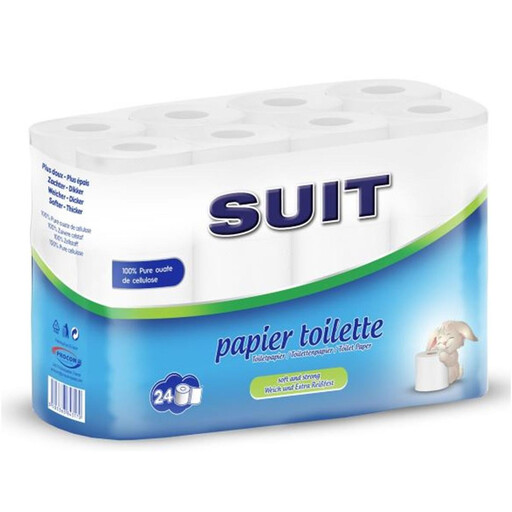
Why this choice suits this profile : The pack of 24 rolls is ideal for households that want to shop less frequently. Each roll contains 150 sheets and the product is advertised as being made in France.
The number of rolls and sheets is clearly stated, making it easier to assess how much you are actually buying. The product page also recommends not flushing an excessive amount at once.
2-ply, 24 rolls, 150 sheets per roll and advertised compatibility with septic tanks, provided the usage instructions are followed.
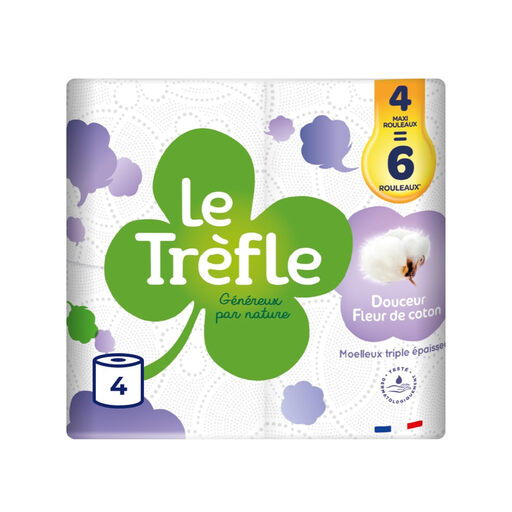
Why this choice suits this profile : This product is designed for shoppers who prefer a thicker feel, with three plies, maxi sheets and a lotion with cotton extract advertised as dermatologically tested.
The product page specifies the number of plies, the presence of lotion, the sheet format and the advertised FSC certification. This allows you to check the actual features rather than relying on a simple promise of softness.
3-ply, 4 rolls, advertised as made in France, cellulose wadding and stated compatibility with septic tanks, subject to following the instructions.
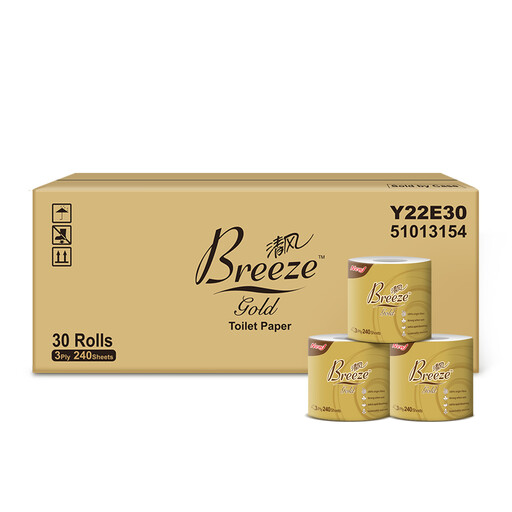
Why this choice suits this profile : With 30 rolls and 7,200 sheets in total, this pack is suitable for large families, substantial stockpiles and certain professional purchases.
The total quantity is broken down clearly, helping you avoid confusing the size of the packaging with its actual contents. Despite the claim that it dissolves in water, the product page recommends flushing the paper in small quantities.
3-ply, 240 sheets per roll, 30 rolls, material advertised as being made from 100% virgin wood pulp and perforations for easy sheet separation.
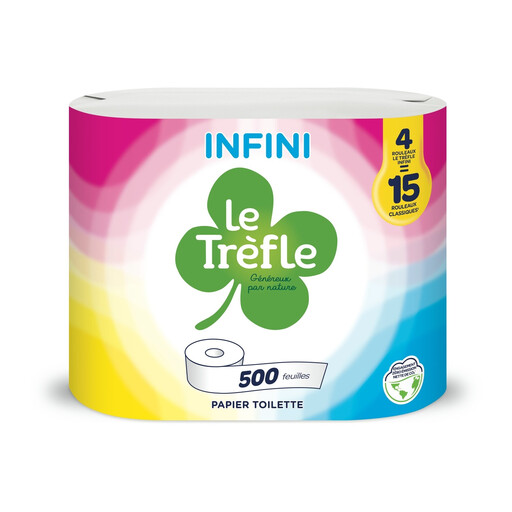
Why this choice suits this profile : With 500 sheets per roll and 2,000 sheets in total, this format reduces how often you need to replace rolls while taking up less space than a large supply of standard rolls.
The product page clearly states 4 rolls, 500 sheets per roll and a length advertised as 3.5 times greater than that of a standard roll. The stated origin is Italy.
2-ply, maxi rolls, 500 sheets per roll, cellulose wadding and a light fragrance mentioned on the product page.
Choose a product whose product page explicitly states that it is compatible with septic tanks. Even so, use a reasonable amount and avoid flushing several compacted sheets at once. Maintaining the system and following the septic tank manufacturer’s recommendations remain essential.
Not necessarily. The cost depends on the pack price, the number of sheets and the amount used each time. Compare the cost per sheet and the total number of sheets rather than looking only at the number of plies.
It depends entirely on the number of people in the household, your habits and the format you choose. A pack of toilet paper in bulk or maxi rolls mainly allows you to shop less frequently. To estimate your needs, monitor your consumption for a few weeks, then compare it with the total number of rolls or sheets in the pack.