
Livraison le jour même ou le lendemain

Qualité garantie

Débloquez vos offres de bienvenue: Livraison GRATUITE | Jusqu'à -80 % | 30 jours d'essai gratuits à JoyPlus
Téléchargez l'application
A clean toilet doesn’t always need the same product. A household dealing with hard water, a heavily used toilet or a public venue will have different needs. Yet product packaging is full of promises: ‘5-in-1’ action, long-lasting freshness, enhanced whiteness or fast disinfection.
The risk is buying a product that isn’t right for the job, then ending up with several different products without getting the results you want. Here are the things to check before choosing a toilet cleaner, along with a selection to suit different needs.
A toilet block releases fragrance and cleaning agents with every flush, but it won’t necessarily replace a toilet limescale remover gel. Older limescale and scale deposits generally need a formula specifically designed to dissolve them, with a contact time stated on the label.
Conversely, using a powerful acidic product as a matter of course for everyday cleaning may be excessive. Start by identifying the problem: everyday marks, unpleasant smells, limescale deposits or the need to disinfect.
Disinfection depends on the formula, the amount applied, the contact time and the conditions specified on the label. Some products list specific standards, such as EN 1276 or EN 13697. Read these details in the context of how the product should be used: neat or diluted, the surface it is intended for and how long it needs to work.
A toilet disinfectant won’t remove stubborn marks without brushing. The product needs to remain in contact with the surface for the recommended time before rinsing.
Mixing toilet bleach with an acidic limescale remover, ammonia or another cleaner can release dangerous gases. Take the same precaution when switching products: rinse the toilet bowl thoroughly before using a different formula.
Wear gloves if the label recommends them, ventilate the room and keep products out of children’s reach. Corrosive formulas require particular care around the eyes and skin, and on certain metal surfaces.
A thick gel clings to the sides of the bowl for longer than a very runny liquid. This is useful under the rim, where a product that runs off quickly may have less time to work. Active foam can also cover hard-to-reach areas, while powder needs to be measured carefully and may require hot water.
Also check the safety cap, nozzle shape and application method. An angled bottle makes it easier to reach under the rim, particularly when using a toilet bowl cleaner several times a week.
Compare the volume, how often you’ll use the product and how soon you’ll need to replace it. The stated lifespan of a toilet block — sometimes several weeks — depends on how often you flush and how hard your water is. For liquid products, stick to the recommended dose: using more won’t necessarily make it work better, and will increase the amount of substances discharged into wastewater.
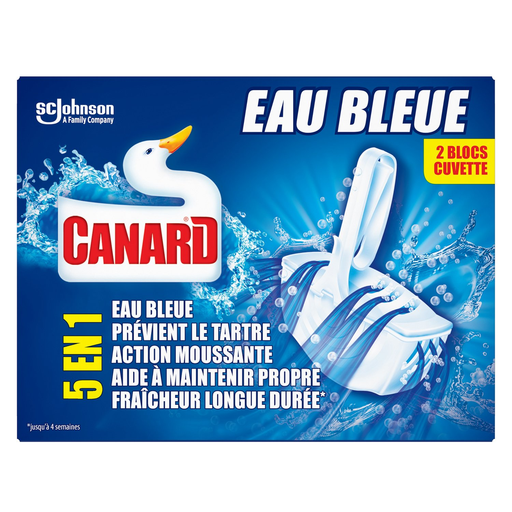
Why this is a good choice for you : This block takes seconds to fit and releases its cleaning agents with every flush. It’s ideal if you want to keep your toilet feeling fresh without having to measure out a product every time you clean.
Its role in ongoing maintenance is clearly different from that of a powerful limescale remover: it isn’t intended to replace occasional deep cleaning.
72 g block, water turns blue according to the product description, with action lasting up to four weeks depending on use.
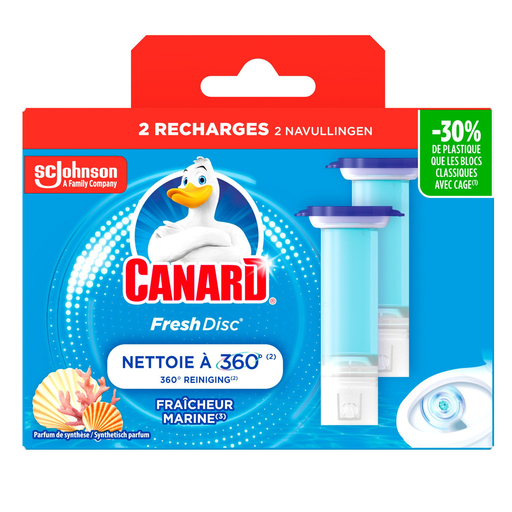
Why this is a good choice for you : This refill pack is for those who prefer discreet application, a steady release and less handling.
The pack contains 12 refill discs, so you can work out the cost of ongoing maintenance without having to keep buying the applicator.
Cage-free format, with the pack offering up to 16 weeks of action and compatibility with septic tanks under normal conditions of use.
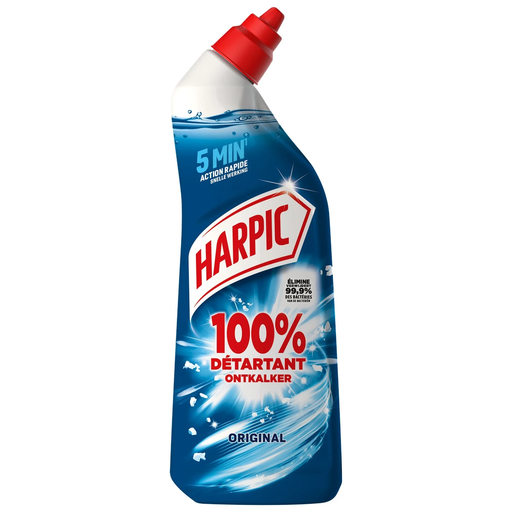
Why this is a good choice for you : Its hydrochloric acid-based formula targets limescale deposits and stubborn stains. It may be suitable for occasional treatment in heavily used toilets.
The stated contact time is five minutes, so you won’t have to guess how long to leave the product on. Never use it with bleach.
750 ml bottle, application under the rim, with EN 1276 and EN 13697 standards listed in the supplied information.
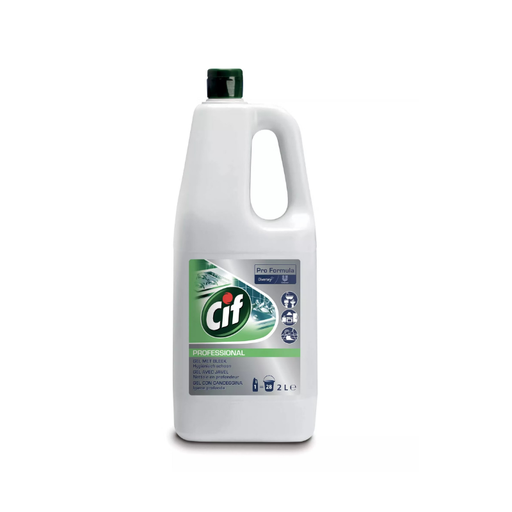
Why this is a good choice for you : The 2-litre size and option to use it neat or diluted make it suitable for cleaning teams tackling several water-resistant surfaces.
The instructions distinguish between using the product neat on a surface and diluting it for floors and walls, so you’ll need to adjust the dose to suit the job.
Gel texture designed to cling to vertical surfaces, 2-litre size and suitable for use on several water-resistant surfaces.
We’ve put together a comprehensive, regularly updated list of products that meet these demanding selection criteria and European safety regulations.
Choose a toilet limescale remover or descaling gel whose label clearly states that it is designed to tackle scale. Follow the recommended contact time, brush the bowl and rinse. Never use an acidic formula with toilet bleach or another chlorine-based product.
No. A toilet block helps keep the bowl fresh between cleans and usually adds a touch of fragrance with every flush. It doesn’t replace brushing, periodic descaling or cleaning under the rim.
It depends on the model, the water flow and how often you flush. Stated lifespans often range from a few weeks to several months for refills. Replace the block when it has dissolved or the freshness starts to fade, following the manufacturer’s instructions.