
Livraison le jour même ou le lendemain

Qualité garantie

Débloquez vos offres de bienvenue: Livraison GRATUITE | Jusqu'à -80 % | 30 jours d'essai gratuits à JoyPlus
Téléchargez l'application
A clean toilet bowl isn't always maintained with the same product. Between disinfectant toilet gel, limescale remover, toilet blocks and deodorisers, marketing promises can quickly muddy the waters. A fragranced formula won't necessarily tackle limescale, while a very powerful product isn't always suitable for daily use or a septic tank.
Before buying a toilet cleaning product, keep three pitfalls in mind:
Start by determining the main problem in your toilet:
A block placed in the bowl or cistern doesn't necessarily replace a thorough manual clean. It mainly works with each flush, depending on its position and the manufacturer's recommendations.
Toilet cleaning products can contain surfactants, fragrances, disinfectants, bleach or acids. In particular, check for:
Never mix a bleach toilet gel with an acid product, ammonia or any other cleaner. Dangerous gases can be released. Ventilate the room, keep bottles out of reach of children and rinse thoroughly if contact occurs with skin or eyes, following the label instructions.
A fast-acting product may suit a household that cleans its bowl regularly. For ingrained marks, a longer dwell time may be recommended. Claims like "no-brush" or "long-lasting" don't guarantee that all stains will disappear, regardless of the circumstances.
Also consider the format: 750 ml bottles are common for regular maintenance, while toilet blocks and gel discs are designed to release their formula gradually. If your home has a septic tank, only choose a product whose label explicitly states it is compatible.
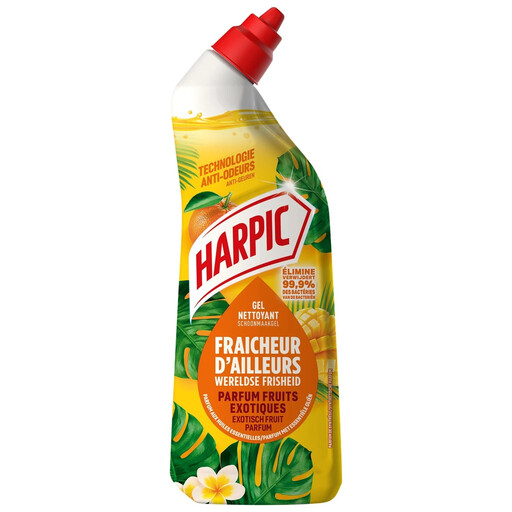
Why this choice suits this profile: With its 750 ml, this gel is suitable for regular toilet maintenance in a household, applied under the rim before flushing.
The product page distinguishes between the disinfectant action, the anti-odour function and the prevention of stains and limescale. Fragrance is therefore not its only selling point.
A gel to apply under the rim, with an exotic fruit fragrance, containing benzalkonium chloride stated at 0.29 g per 100 g.
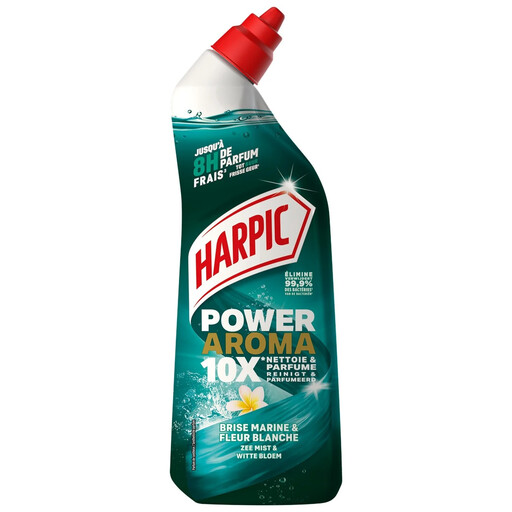
Why this choice suits this profile: It combines cleaning with a fragrance claimed to last up to 8 hours, for those who care about the atmosphere of their bathroom.
The stated freshness duration is clearly separated from the cleaning and disinfecting actions. You must therefore follow the dwell time and rinsing instructions.
A formula containing benzalkonium chloride stated at 0.29 g per 100 g, with an ocean breeze and white flower fragrance.
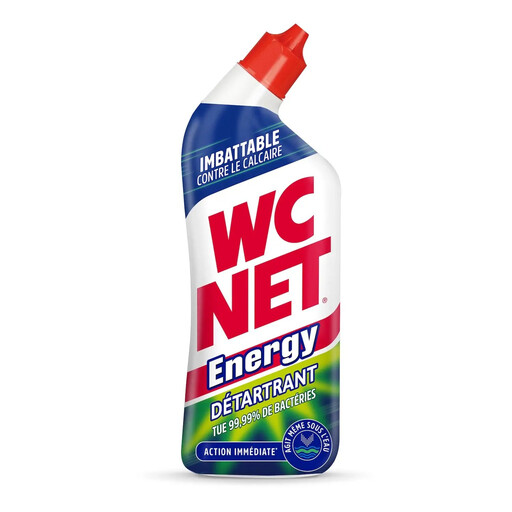
Why this choice suits this profile: Its descaling-focused formula suits homes where limescale builds up quickly, especially where the water is very hard.
It doesn't present itself as a simple fragrance product: the page mentions a clinging formula, underwater action and a dwell time that can be extended for stubborn deposits.
A 750 ml gel containing hydrochloric acid, with a precision nozzle and presented as effective against limescale.
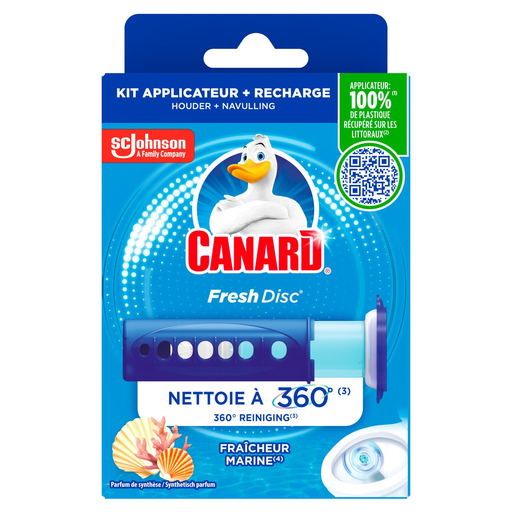
Why this choice suits this profile: The disc is applied using an applicator, with no cage or scrubbing, then releases the gel with each flush.
The gradual release is presented separately from standard cleaning. This product therefore doesn't automatically replace a limescale remover applied directly to the bowl.
Up to 630 flushes claimed, an anti-limescale action and an applicator made from 100% recycled plastic, excluding colourant.
We've put together a comprehensive list, updated in real time, of products that meet these strict selection criteria as well as European safety regulations.
An acid-based limescale remover is generally designed to tackle limescale deposits. Check its ingredients, dwell time and the warnings on the label. For routine maintenance, an anti-limescale block can help limit deposits, but it doesn't necessarily replace an occasional descaling treatment.
Not always. Some products claim a no-brush action on everyday stains, but old or thick deposits may need a good scrub. Always follow the product's instructions.
It all depends on the number of flushes, the water flow and the model chosen. The products shown generally claim a duration ranging from a few weeks to several hundred flushes. Replace them when the block has dissolved or when the feeling of freshness disappears, without exceeding the packaging instructions.