
Livraison le jour même ou le lendemain

Qualité garantie

Débloquez vos offres de bienvenue: Livraison GRATUITE | Jusqu'à -80 % | 30 jours d'essai gratuits à JoyPlus
Téléchargez l'application
Choosing a toilet cleaner might seem trivial, but the cleaning products aisle is a jungle of overblown claims and broken promises. Between fragrances that mask odours without treating them and "limescale-fighting" formulas that surrender to tough buildup, it's easy to feel misled. As the Head of Product Recommendations at Joybuy, my mission is to help you see things more clearly. Let's break down the common pitfalls to avoid and the criteria that truly make a difference.
Before we even compare products, let's review the most common disappointments that lead to pointless purchases.
To make the right choice every time, focus on these three parameters that define the effectiveness and suitability of a toilet maintenance product.
Each format serves a specific purpose. There's no one-size-fits-all solution—only the one that fits your routine and expectations.
A product's effectiveness can be found on its label. Understanding the role of active ingredients is the key to making the right choice.
An "all-in-one" product is a compromise. For optimal results, it's often wiser to choose a specialised product or to alternate between formulas.
Here are a few options that cater to different user profiles, taking into account the criteria we've just discussed.
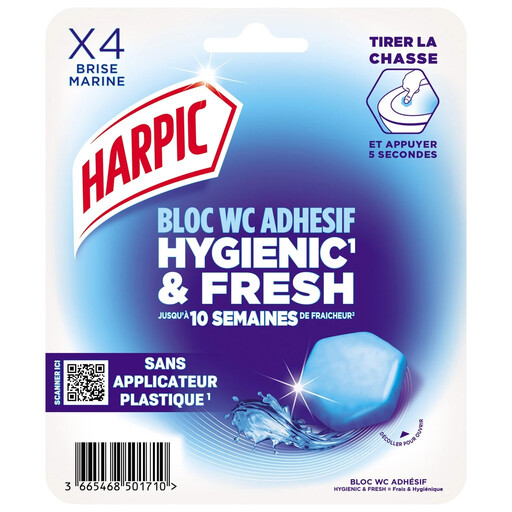
Why we recommend it: Ideal for those looking for a "set and forget" solution to maintain freshness and hygiene between deep cleans. Its cageless adhesive format is discreet and incredibly easy to apply.
This product makes no unrealistic claims. Its function is clear: to maintain hygiene and provide fragrance, not to deep-clean limescale. It also avoids any application headaches thanks to its direct adhesive system.
Hygienic application without a plastic cage. Continuous action with every flush for constant freshness.
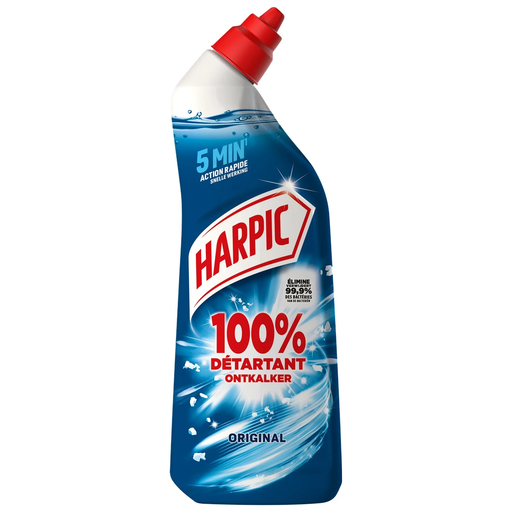
Why we recommend it: This is the go-to solution for tough cases. This gel tackles encrusted limescale head-on, making it the ally of households dealing with very hard water and stubborn deposits.
Here, there's no false "anti-limescale" promise. Its formula, based on hydrochloric acid (9g per 100g), is specifically designed for radical, curative action, not just preventative maintenance.
Concentrated formula for fast action on limescale. Dual effectiveness: it also eliminates 99.9% of bacteria (EN1276 and EN13697 standards).
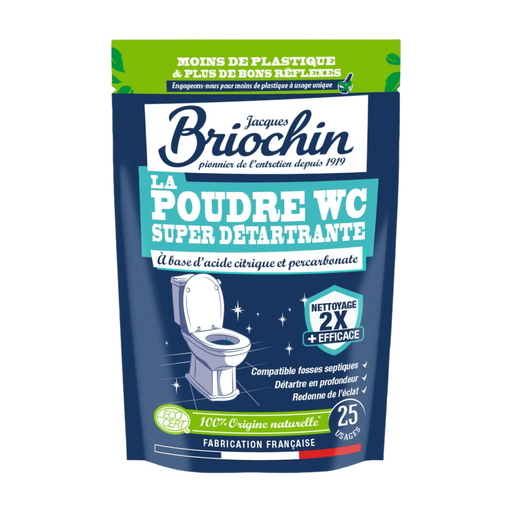
Why we recommend it: Perfect for consumers who are conscious of their products' impact. This Ecocert-certified powder uses natural-origin ingredients to effectively descale and clean, without controversial synthetic active agents.
This product avoids the fragrance-masking trap by focusing on pure cleaning action, with no superfluous scents. Its composition is transparent and minimalist, relying entirely on the effectiveness of citric acid.
100% natural-origin composition certified by Ecocert. Versatile: can be used for regular maintenance as well as a deep-treatment for thorough descaling.
We have analysed and selected dozens of products that meet our strict criteria for effectiveness.
1. What's the difference between a descaling gel and a toilet block? Think of it as curative vs. preventative treatment. A descaling toilet gel is made for a deep clean, applied manually to treat existing limescale. A toilet block is a continuous maintenance solution: it prevents limescale from forming and maintains freshness with every flush. It's an excellent supplement, but it won't replace a targeted attack on established buildup.
2. Are toilet cleaners safe for septic tanks? It depends on their composition. Very aggressive formulas (bleach, certain strong acids) can disrupt the bacterial balance of a tank. However, most commercial products today are formulated to be compatible with normal use (for example, Duck Deep Action Gel clearly states this). The rule of thumb: always check this information on the packaging. Eco-certified products are, by definition, the safest option.
3. How often should you deep-clean your toilet? For optimal hygiene, a complete cleaning with a disinfecting or descaling toilet gel is recommended at least once a week. This frequency should, of course, be adjusted based on the number of people in your household and the hardness of your water. Using a block or an adhesive disc as a supplement is a great trick for maintaining a high level of cleanliness and spacing out deep cleans.