For a toddler’s snack, don’t automatically choose an organic protein bar intended for the general public. Organic certification relates to how a product is made, not its recommended age or texture. Choose a snack with a minimum age that matches your child’s age, then check the ingredients, allergens and serving instructions. A fruit and cereal bar labelled suitable from 12 months is one example, although it is not a protein bar.
Who is this choice for?
Parents of children aged 12 months and over
They’re looking for a portable snack with an age recommendation, texture and serving instructions that are right for their child, rather than choosing a bar simply because it is marketed as high in protein. HiPP Organic says its oat, strawberry and raspberry bar is suitable from 12 months and should be eaten while seated and under supervision.
Shoppers who care about organic products
They want to recognise organic certification without confusing it with an age recommendation. The DGCCRF explains that organic logos confirm compliance with organic production rules; choosing a snack for a toddler requires further checks.
Shoppers comparing adult bars with children’s snacks
They’re weighing up a general-purpose organic protein bar against a product with an appropriate minimum age. For a child, the product category name is no substitute for checking the specific product’s age recommendation and serving instructions.
What should you check?
| Criteria |
What to check |
Who is it for? |
| Age and texture |
Compare the stated minimum age with your child’s age. Check the stated texture and serving instructions. |
When choosing a snack that a child can eat while seated and under supervision, I’d first look for a product that suits their age and how they eat; around 50% of shoppers would give this suitability priority. |
| Organic certification and ingredients |
Look for organic certification on the product, then read the ingredients list and allergen information for the specific product you’re buying. |
If I choose an organic snack, I also want to know what it contains before offering it to a child; around 30% of shoppers would prioritise this check. |
| Protein claims |
Don’t take the word ‘protein’ as an age recommendation. Look for an appropriate age range on the product you’re considering for your child. |
When choosing between a protein bar and a children’s snack, I want to understand who each is intended for before making a decision; around 20% of shoppers would put this question first. |
Mistakes to avoid
-
Assuming ‘organic’ means suitable for a certain age
According to the DGCCRF, organic certification relates to production rules. On its own, it doesn’t tell you whether the texture or serving instructions are suitable for a toddler.
Check the minimum age and product instructions first, then use organic certification as an additional consideration.
-
Choosing a general-purpose protein bar for a child’s snack
A bar sold as a high-protein snack won’t necessarily have an age recommendation for toddlers.
For a child, only choose a product whose label states an appropriate age, and read its serving instructions.
-
Relying on the product range rather than the recipe
Ingredients and possible traces vary from product to product. Carrefour France, for example, lists possible traces of milk, soya, nuts and mustard for the HiPP oat, strawberry and raspberry bar.
Read the label on the pack you’ve bought, paying particular attention to the ingredients and allergen information.
-
Forgetting the serving instructions
HiPP Organic says its bar, suitable from 12 months, must be eaten by a child who is seated and under supervision.
Before offering a snack bar, check the instructions for that specific product and make sure you can follow them.
Useful brands to know
HiPP Biologique
The brand offers an organic oat, strawberry and raspberry bar labelled suitable from 12 months. It’s a fruit and cereal bar, not a protein bar.
- HiPP describes this product as soft and melt-in-the-mouth, and says it should be eaten while seated and under supervision.
- The Carrefour France product listing notes that it contains oats and may contain traces of milk, soya, nuts and mustard.
Carrefour Bio
Its organic cereal, seed and almond bar shows that a general-purpose bar with organic certification isn’t automatically a snack for toddlers.
- The recipe listed by Carrefour France includes sunflower and pumpkin seeds, almonds, linseeds and oats.
- The product listing notes possible traces of milk, peanuts and other nuts. Check the stated age before considering this product for a child.
Biofair Nutrition
The brand offers organic protein bars, including a 33 g almond variety, as part of a general-purpose protein snack range.
- The ‘organic protein bar’ category is clearly identified in its range.
- That category alone doesn’t mean a bar is suitable as a snack for a toddler.
A baby snack on Joybuy
This selection features a baby biscuit whose title states a minimum age of 8 months. It is neither a protein bar nor the HiPP fruit and cereal bar mentioned above.
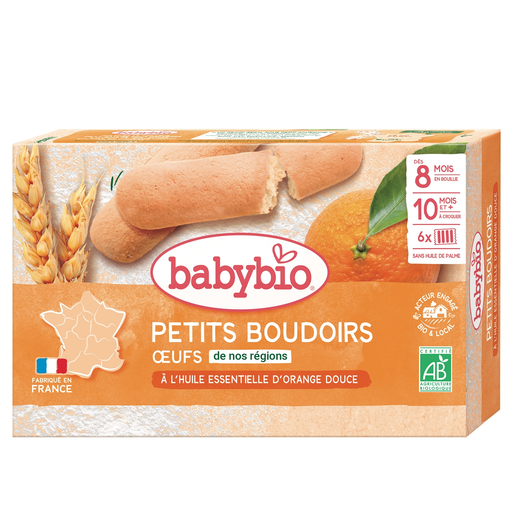 Image unavailable
BABYBIO orange sponge finger biscuits from 8 months, 120 g
A biscuit to consider for a child who has reached the stated age and can eat while seated under supervision. This 120 g pack is not a protein bar. Check the packaging for organic certification and allergen information, including the gluten and egg listed for this product.
View on Joybuy
Frequently asked questions
Is organic certification enough to choose a bar for a toddler?
No. According to the DGCCRF, organic certification confirms compliance with organic production rules. When choosing a snack, also check the minimum age, texture, ingredients, allergens and serving instructions.
From what age can you offer a bar?
Follow the minimum age for the specific product and take account of how your child eats. HiPP Organic labels its oat, strawberry and raspberry bar ‘suitable from 12 months’; this age guidance doesn’t apply to all bars.
How should you offer the HiPP bar labelled suitable from 12 months?
For this product, HiPP Organic says the child must eat while seated and under adult supervision. Also check the texture and instructions on the pack you’ve bought.
Where can you find allergen information on a pre-packed bar?
In the European Union, the official Your Europe portal explains that any allergens present must be highlighted in the ingredients list. Also read any ‘may contain’ information on the packaging of the product you’ve bought.


