Parents looking for a regular snack
For a child under 3, choosing a regular snack is about more than the taste of a sweet. Manger Bouger recommends introducing sugary products as late as possible and limiting them.


For a regular snack for a child under 3, it’s better to choose something suitable for their age than a luxury praline. Manger Bouger recommends introducing sugary products as late as possible and limiting them. Unsweetened fruit purée may be an option depending on the stage of weaning; in every case, check the texture, ingredients and any guidance specific to your child.
For a child under 3, choosing a regular snack is about more than the taste of a sweet. Manger Bouger recommends introducing sugary products as late as possible and limiting them.
If an ingredient needs to be avoided, check the exact product. The praline recipes featured by Lindt and Carrefour list nuts and milk, along with other ingredients or possible traces depending on the product.
A praline chosen for its festive feel won’t necessarily be suitable as a regular snack for a toddler. A premium positioning is no substitute for checking the ingredients and nutritional information.
For a child under 3, first consider whether you’re buying a regular snack: Manger Bouger advises limiting sugary products and describes a gradual progression through different textures.
| Consideration | What to check | Who is this for? |
|---|---|---|
| Sugary products | Check the product category and its nutritional information; don’t choose a sweet as a regular snack. | For an everyday snack, I’m looking for something other than a praline to offer regularly. Limiting sugary products would be the priority for around 42% of consumers. |
| Allergens | Read the ingredients and allergen declaration for the exact product; don’t rely on the range name alone. | If my child needs to avoid an ingredient, I need to know what’s in the recipe I choose. This would be the main concern for around 25% of consumers. |
| Age and texture | Compare the age guidance and texture with your child’s chewing ability, and look out for any crunchy pieces. | While my child is still getting used to firmer textures, crunchy pieces matter more than how the chocolate looks. Around 33% of consumers would put texture suitability first. |
Smart packaging or a recipe designed for tasting doesn’t change the fact that a praline is a sugary product. Manger Bouger recommends delaying their introduction until after the age of 3 and limiting them.
For a regular snack, start by choosing a different type of food that’s suitable for your child’s age, rather than comparing pralines based on their presentation.
The products described by Lindt and Carrefour include ingredients such as almonds or hazelnuts, as well as milk; their compositions are not interchangeable.
Check the label on the exact product if your child needs to avoid an ingredient, and follow any individual medical advice.
According to Manger Bouger, children should progress gradually through different textures. The almond praline bar described by Lindt contains pieces of brittle, which should be considered separately from its taste or presentation.
Before offering a food, consider the textures your child can actually manage. Don’t choose a recipe with pieces they’re not yet able to eat.
These examples show how to check the ingredients of specific products; they are not recommendations to give pralines to a toddler as a snack.
The Signature range includes a milk chocolate bar filled with almond praline and pieces of brittle.
Carrefour Original Dessert Praliné combines hazelnut praline with milk chocolate.
If you’re considering something other than a praline for a toddler’s snack, this selection includes two fruit purées. It also includes a vegetable purée intended for first spoonfuls; its product name doesn’t specify that it’s suitable as a snack. Check the age guidance and label for each product before offering it to your child.
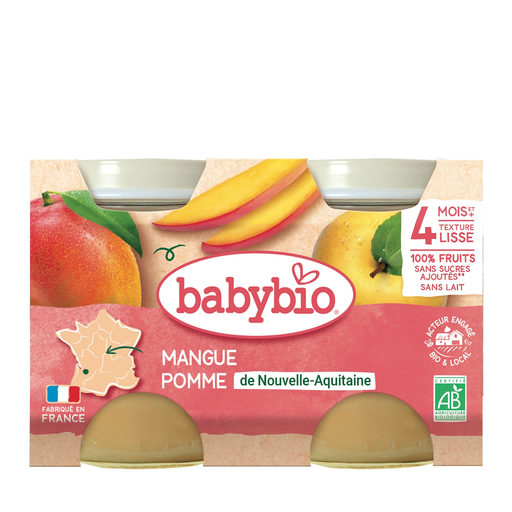 Image unavailable
A fruit option to consider for a snack if the age guidance and texture are suitable for your child. The product name states that it contains no added sugars and comes in two 130 g pots; this doesn’t mean the fruit contains no sugars. Check the information on the packaging before serving.
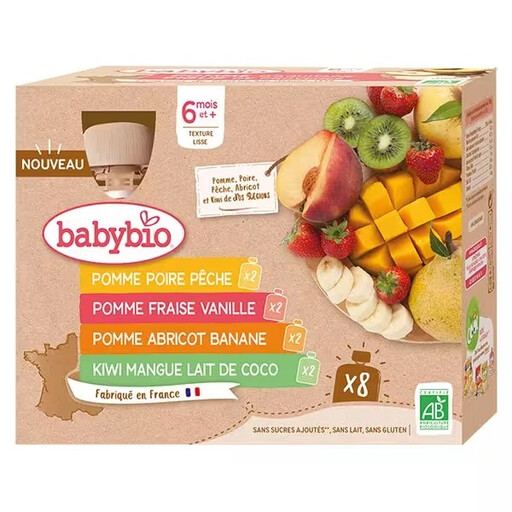 Image unavailable
For a fruit snack, check that the variety and serving method are suitable for your child. The pack contains eight 90 g pouches and is labelled as suitable from 6 months. If your child needs to avoid certain foods, check the ingredients for each variety. Until your child can eat independently, serve the purée from a spoon or in a bowl, and don’t let them play with the cap.
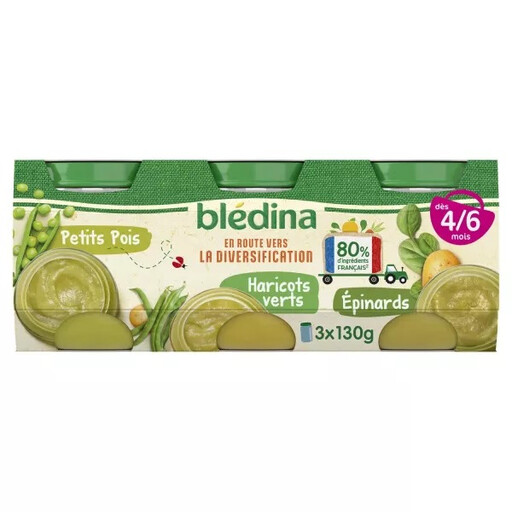 Image unavailable
This vegetable purée may be suitable for first spoonfuls, but don’t assume that it replaces a fruit snack. The product name lists potatoes, green beans and spinach, and states that the pack contains three 130 g pots for babies aged 4 to 6 months. Check the packaging for the age guidance and serving instructions for the exact product.
It’s not the right choice for a regular snack: Manger Bouger recommends introducing sugary products as late as possible and limiting them for children under 3. A praline’s premium status doesn’t change this guidance.
Yes. The products described by Lindt France and Carrefour France list ingredients such as nuts and milk, but their other ingredients and trace-allergen declarations differ. Read the label for the exact product and follow any individual medical advice that applies to your child.
First, check the product’s age guidance, texture and ingredients. Manger Bouger lists unsweetened fruit purées among the possible foods during weaning; the right choice depends on your child’s stage.