
Livraison le jour même ou le lendemain

Qualité garantie

Débloquez vos offres de bienvenue: Livraison GRATUITE | Jusqu'à -80 % | 30 jours d'essai gratuits à JoyPlus
Téléchargez l'application
Selection guide by the Joybuy Product Recommendation Officer
From 10 months onwards, your child's diet gradually becomes more varied. Choosing a toddler milk isn't just about taste or price – the recommended age, composition, format and your family's routine all come into play. With options ranging from infant formula from 10 months, organic toddler milk, powdered versions and liquid formats, it's not always easy to know where to start.
A product labelled "from 10 months" doesn't necessarily mean it's suitable for children aged 12 months and over. Always check the age range printed on the packaging and the product page. Some formulas are suitable from 10 months to 3 years, while others are only suitable from 12 months.
Just because a product boasts added iron, vitamin D, omega-3 or fibre doesn't mean it's the better choice. Instead, look closely at the amount per 100 ml of prepared milk, the ingredients list and the allergens. Recipes can also differ in their lactose content, the type of vegetable oils used, the milk proteins and whether fish oil is included.
Liquid toddler milk is ready to use, but once opened, a carton usually needs to be kept in the fridge and consumed quickly. Powdered toddler milk is easier to transport and allows you to build up a stock, but each bottle must be prepared with precision.
A milk intended for children aged 1 to 3 years is part of a varied diet – vegetables, fruit, starchy foods, protein sources and dairy products all contribute to your child's nutritional intake. It doesn't replace balanced meals. For a 10-month-old baby, choose a product whose label clearly states "from 10 months".
Moving to a product designed for older children should take into account your child's habits and any recommendations given to your family. If your child has an allergy, feeding difficulties or specific needs, seek advice from a healthcare professional.
To compare products on a concrete basis, look at the following:
Nutritional claims should always be interpreted based on the values shown on the packaging. They are not a medical guarantee and do not replace personalised advice.
Liquid toddler milk is ideal for families who want to save time, both at home and on the go. Simply shake the carton, then serve the milk at room temperature or slightly chilled, following the storage instructions after opening.
Powdered toddler milk requires you to measure the water and number of scoops precisely. Prepare each bottle following the manufacturer's instructions, use the scoop provided and never keep a partly finished bottle. An opened tin must also be sealed tightly and used within the recommended time frame.
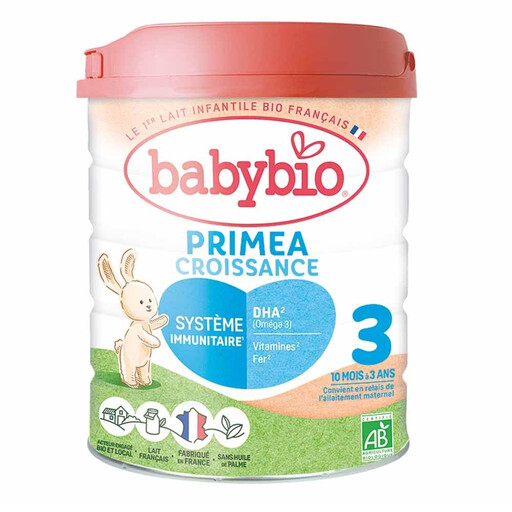
Why this choice suits this profile: Its 800 g format is ideal for regular use at home, with a preparation you can adapt to your family's needs.
The "from 10 months" age is clearly stated. The powder format also means you avoid paying the premium that often comes with ready-to-serve liquid milk.
An organic formula, with vitamins and minerals listed by the manufacturer, plus DHA and ARA from the omega-3 and omega-6 families.
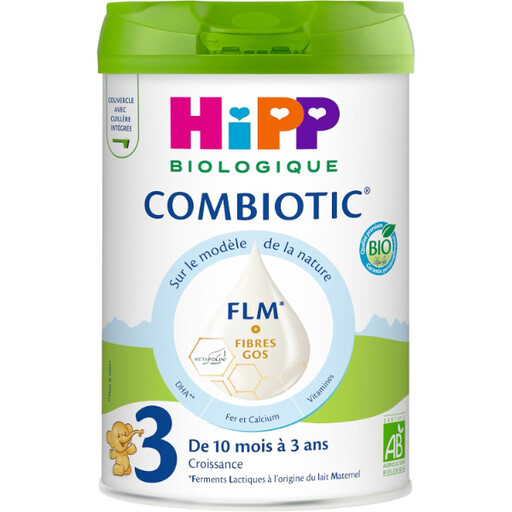
Why this choice suits this profile: This organic formula is aimed at parents who want to examine a detailed composition and the presence of several specific ingredients.
The product page details the nutritional values per 100 ml of prepared milk. This allows you to look beyond a simple marketing claim on the front of the box.
The COMBIOTIC complex, GOS fibres, DHA, iron and vitamins C and D, according to the composition communicated by HiPP.
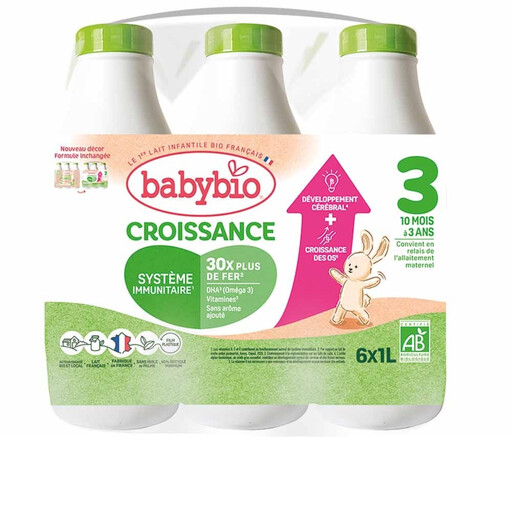
Why this choice suits this profile: The ready-to-use liquid format makes busy days, travel and repeated bottle preparation much simpler.
It eliminates the dosing errors that can happen with powder. However, once opened, it must be kept in the fridge and consumed within 48 hours.
Six 1-litre cartons, an organic milk and the declared presence of iron, vitamin D and essential fatty acids.
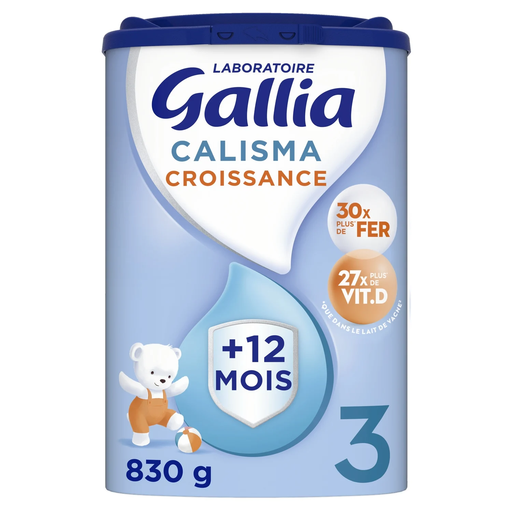
Why this choice suits this profile: This formula is designed for parents whose child has reached 12 months and who prefer a resealable tin for everyday use.
The 12-month age limit is clearly displayed. This helps you avoid choosing a product too early simply because it belongs to the same range.
An 830 g tin with a resealable lid, and iron, vitamin D, calcium and omega-3 fatty acid content listed on the product page.
We've selected a comprehensive, real-time updated list of products that meet these selection criteria as well as European safety regulations.
Start by checking the age on the packaging, then compare the iron, vitamin D, fatty acids, allergens and format. A milk suitable from 10 months can be available in powder or liquid form, depending on your routine and your child's preferences.
It depends on the packaging, the amount consumed and any current promotions. Liquid milk saves time, while powder is easier to store and takes up less space when travelling. To compare prices, look at the cost per litre of prepared milk rather than the price of the box alone.
Always follow the instructions on the label. Opened cartons generally need to be kept in the fridge and consumed within 48 hours. Powder should be stored in a tightly sealed tin, away from moisture, and used within the time recommended by the manufacturer.