For a child under 3, “reduced-fat” is not enough to make a frozen dessert a suitable regular choice after dinner. Manger Bouger advises against dairy products with 0% fat, and skimmed or semi-skimmed products, for children of this age, and recommends limiting ice cream and other sugary foods. Depending on your child’s age and diet, you could consider fruit, unsweetened fruit purée or a plain, non-reduced-fat dairy product. If you’re buying a frozen dessert as an occasional treat, also check the ingredients, allergens, serving size and storage instructions.
Who is this for?
Parents of under-threes looking for a lower-fat dessert
If you’re considering a reduced-fat frozen dessert after dinner, your child’s age is the key thing to bear in mind. Manger Bouger advises against dairy products with 0% fat, and skimmed or semi-skimmed products, for children under 3, and recommends limiting ice cream.
Parents considering a frozen dessert as an occasional treat
For an occasional purchase, check the exact recipe, including its sugar content, allergens and any possible traces. Also check the serving size and storage instructions on the packaging.
What should you look for after dinner?
For a child under 3, first check whether the dessert is suitable for their age and for a regular meal. The fat content alone isn’t enough to make a decision.
| What matters |
What to check |
Consumers concerned |
| A dessert that’s suitable for their age |
Check your child’s age and look out for dairy products with 0% fat, and skimmed or semi-skimmed products. |
For dinner with my child under 3, I want to avoid choosing ice cream as a regular dessert. Around 46% of consumers would make age suitability their main concern. |
| The “reduced-fat” claim |
Check the sugar and fat content per 100 g, as well as the ingredients list. |
If I’m looking for a lower-fat dessert, I want to know whether that really meets my needs for a toddler; around 36% of consumers would put this question first. |
| An occasional frozen treat |
Check the allergens and serving size, then follow the product’s storage instructions. |
For an occasional treat, I need to take any potential allergies into account and store the dessert as instructed. These precautions would be a priority for around 18% of consumers. |
Pitfalls to avoid
-
Assuming “lower fat” means “suitable for a toddler”
A “reduced-fat” claim doesn’t tell you whether a dessert is suitable for a child under 3, or whether it belongs in their regular evening meal. Manger Bouger advises against dairy products with 0% fat, and skimmed or semi-skimmed products, for children of this age, and recommends limiting ice cream.
Don’t choose ice cream based on its fat content alone. For a regular dessert, consider your child’s age and how sugary the product is first.
-
Assuming “organic” means it’s suitable
Picard’s organic vanilla ice cream contains 20 g of sugar per 100 g. So the “organic” label alone doesn’t tell you whether this dessert is suitable after dinner for a toddler.
Check the nutritional information and ingredients for the specific product you’re considering. Don’t assume it’s suitable based on the “organic” label alone.
-
Relying on the allergen information for a different recipe
Ingredients and possible traces vary between frozen desserts, even within the same retailer’s range. Information for another product won’t tell you what’s in the one you’re buying.
If your child has an allergy or needs to avoid certain foods, check the product information and packaging for the exact recipe. For a prescribed diet, follow the advice of the relevant healthcare professional.
-
Refreezing a dessert after it has thawed
Carrefour and Picard frozen dessert product pages specify storage at −18 °C and advise against refreezing a thawed product.
Follow the packaging instructions for transport and storage, and don’t refreeze the dessert if it has thawed.
Retailers to compare for frozen desserts
Carrefour
Carrefour offers a range of ice creams, sorbets and frozen desserts to share.
- Some Carrefour product pages provide details about ingredients, allergens, nutritional values and storage.
- Check the information for each product individually. A frozen dessert being part of the range doesn’t make it suitable as a regular after-dinner choice for a child under 3.
Auchan
Auchan offers ice creams, sorbets and frozen desserts in individual or sharing sizes.
- The Viennetta frozen dessert product page we checked at Auchan gives details including storage at −18 °C.
- The size or variety of the range alone isn’t enough to determine whether a recipe is suitable for a toddler’s meal.
E.Leclerc
E.Leclerc offers ice creams and sorbets under its own brands, including Bio Village.
- Its range includes several types of frozen dessert, including Bio Village organic bourbon vanilla ice cream.
- The “organic” label or tub format alone doesn’t tell you the fat content or whether the dessert is suitable after dinner for a child under 3.
Picard
Picard offers ice creams, sorbets, bars and other frozen desserts.
- The Picard product pages we checked provide information to help you assess each recipe: the organic vanilla ice cream contains 20 g of sugar per 100 g.
- The product name or “organic” label is no substitute for checking its ingredients and considering what’s suitable for your child’s age.
Fruit purées to consider instead of a frozen dessert
These fruit purées are options to consider if you’d like to avoid serving a frozen dessert after dinner. They aren’t frozen products: check the recommended age for each item, and for the one that doesn’t specify an age, make sure it’s suitable for your child before buying.
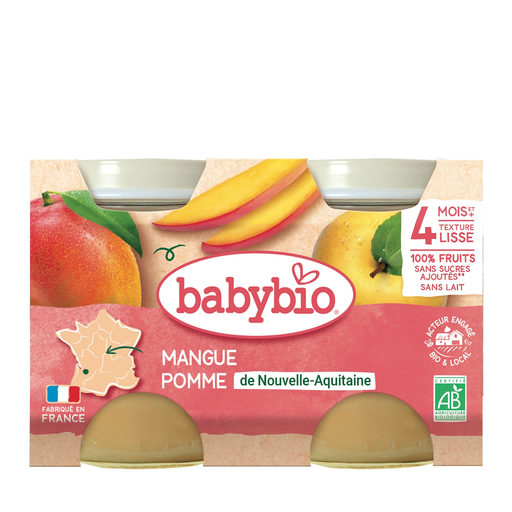 Image unavailable
Babybio apple and mango purée with no added sugar, 2 × 130 g
A fruit purée to consider instead of a frozen dessert, depending on your child’s stage of weaning.
The product title states that it’s suitable from 4 months. It also says “no added sugar”; check the full information on the packaging before serving it.
View on Joybuy
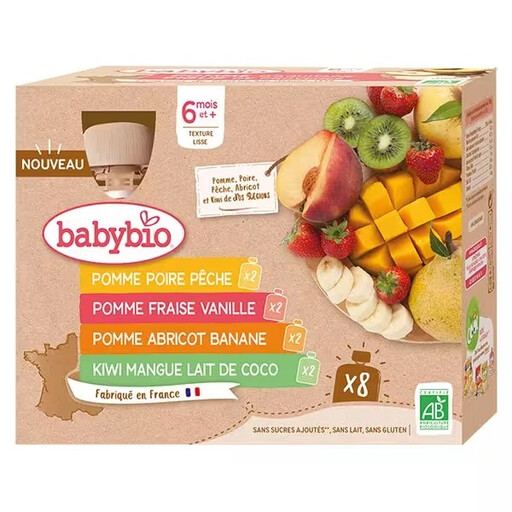 Image unavailable
Babybio mixed fruit purées in pouches, 8 × 90 g
A selection of fruit purées to consider as an alternative to frozen dessert, choosing a recipe that’s suitable for your child.
The product title states that it’s suitable from 6 months. The kiwi, mango and coconut variety contains coconut milk. If your child has an allergy, check the ingredients and any possible traces for the variety you choose on the packaging. Don’t let a child under 3 play with the cap.
View on Joybuy
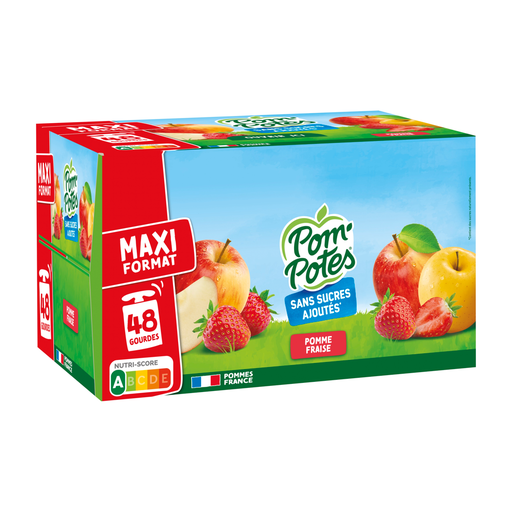 Image unavailable
POM’POTES apple and strawberry purée with no added sugar, 48 × 90 g
A fruit purée to consider if you’re looking for a non-frozen option to finish the meal.
The product title says “no added sugar”. Before serving it to a child under 3, check the packaging for the recommended age and serving instructions.
View on Joybuy
Frequently asked questions
Is a reduced-fat frozen dessert a better choice for a child under 3?
No. Having less fat doesn’t make ice cream suitable as a regular dessert for a toddler. Manger Bouger advises against dairy products with 0% fat, and skimmed or semi-skimmed products, for children under 3, and recommends limiting ice cream.
What could I serve instead of a frozen dessert after dinner?
Depending on your child’s age and diet, you could consider fruit or unsweetened fruit purée. A plain, non-reduced-fat dairy product may also be suitable when it’s appropriate to introduce one. Manger Bouger lists yoghurt, petits-suisses and fromage blanc among the dairy products that may be suitable from 1 year.
What should I check when buying a frozen dessert as an occasional treat?
Check the ingredients, allergens and any possible traces for the exact recipe, then check the serving size and storage instructions on the packaging. The Carrefour and Picard product pages we checked specify storage at −18 °C and advise against refreezing a thawed dessert.


