
Livraison le jour même ou le lendemain

Qualité garantie

Débloquez vos offres de bienvenue: Livraison GRATUITE | Jusqu'à -80 % | 30 jours d'essai gratuits à JoyPlus
Téléchargez l'application
A tissue box or kitchen roll holder can quickly become an essential item in the kitchen, bathroom, living room or home office. Some models that look very appealing in photos can turn out to be impractical in daily use: a roll that’s difficult to replace, an unstable structure, or a size that’s incompatible with refills sold in the UK.
Before placing an order, it’s worth focusing on the design, dimensions and installation method, rather than just the colour or the price.
A holder that’s too lightweight can slide the moment you pull out a sheet or a tissue. This is especially problematic with models placed on a smooth surface, such as a worktop, a bathroom shelf or a glass table.
Check for a sufficiently wide base, a non-slip bottom, or a design that minimises the risk of tipping over. For a freestanding kitchen roll holder, stability also depends on the height and the weight distribution between the base and the upper section.
Some tissue dispensers require you to dismantle several parts to replace the pack. An opening that’s too narrow can also compress the tissues and make them difficult to pull out evenly.
Choose a model with direct access to the compartment, a removable structure, or a sufficiently wide opening. This kind of detail matters particularly in high-traffic areas, such as family kitchens, commercial washrooms, hotels and restaurants.
A decorative tissue box may look nice, but it becomes useless if it doesn’t fit the size of your pack. The same issue can arise with a holder designed for kitchen roll or toilet roll.
Compare the external dimensions of the holder with those of the consumables you usually buy. Even when the product listing states compatibility with standard sizes, check the actual width, height and depth available.
Metal, particularly steel or iron, offers a sturdy structure suitable for multi-tier holders and freestanding models. It works well in spaces where several rolls need to be kept accessible. However, the finish should be cleaned with a soft cloth and a non-abrasive product to preserve the coating.
Robust plastic is often lighter and easier to move. It can be a good choice for a tissue storage box placed on a desk, a chest of drawers or a shelf. For fabric or cotton models, check the care instructions: an unsuitable wash can distort the product.
In a small bathroom, a vertical holder or a compact tabletop tissue box reduces the space taken up on the vanity unit. In the kitchen, a freestanding kitchen roll holder frees up wall space without the need for drilling.
Measure the available area before you buy:
A multi-tier metal holder can accommodate several rolls and keep spare supplies out of sight in a cupboard. However, it must be placed on a level floor and not be overloaded.
A freestanding holder can easily be moved from the kitchen to the utility room or bathroom. A removable or collapsible model makes cleaning and replacing tissues simpler. A foldable version can also be practical for temporary storage or a flexible professional space.
For a tissue holder intended for the bathroom, choose a design that can withstand everyday splashes and is easy to wipe clean. Whatever model you choose, avoid placing it near a significant heat source or in a spot where it could fall.
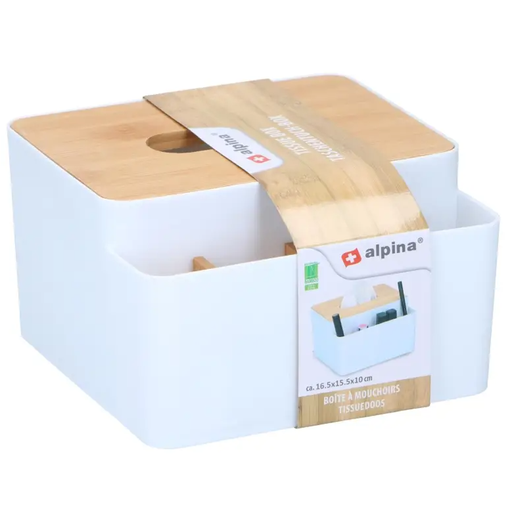
Why this choice suits this profile: Its compact size is ideal for a desk, bedroom, bathroom or living room, with no special installation required.
The top opening makes it easy to remove and refill tissues, while the base is designed to stay firmly in place on a stable surface.
Stated dimensions of 16.5 × 15.5 × 9.7 cm, white plastic, clean with a soft, damp cloth.
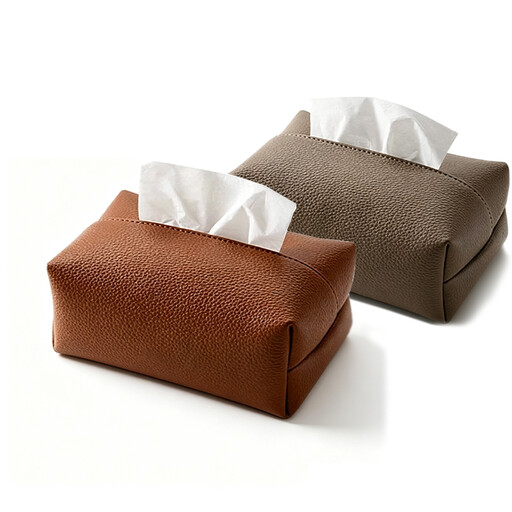
Why this choice suits this profile: The set of two allows you to coordinate several spaces, for example the living room and bedroom.
The cover hides the original pack and avoids choosing an accessory purely for its colour, without any real storage function.
Two tissue holders included, brown and grey colour combination, intended for use in living spaces.
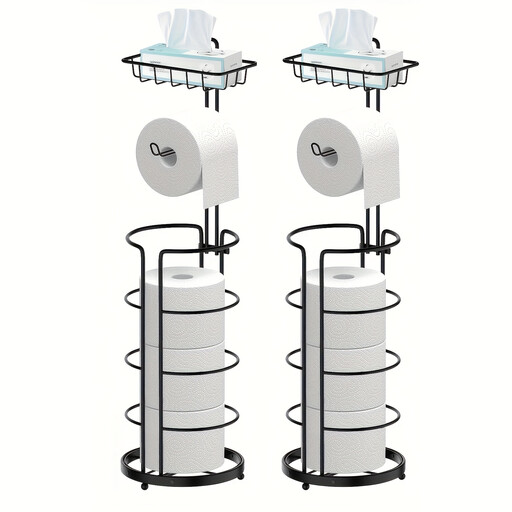
Why this choice suits this profile: Its vertical, multi-tier design is suitable for washrooms, kitchens, utility rooms and public-facing establishments.
The floor-standing design avoids wall drilling and keeps several rolls within easy reach, provided the intended capacity is respected.
Self-supporting metal structure, black finish, multiple tiers and installation limited to assembly.
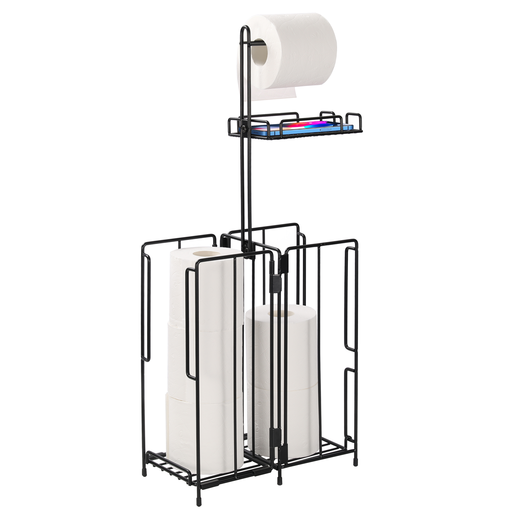
Why this choice suits this profile: Its foldable design meets the need for flexible storage in a home or a professional space that may change over time.
The folding mechanism reduces the footprint when not in use, while the double-sided structure distributes the spare rolls.
Metal with protective coating, multi-tier storage, self-supporting and foldable structure.
We’ve put together a comprehensive, real-time updated selection of products that meet these demanding criteria and comply with European safety regulations.
A freestanding model requires no drilling. Place it on a flat, dry surface with enough clearance to easily remove the tissues. For a wall-mounted model, check the type of fixing supplied and its compatibility with your wall surface before you start.
It depends on the frequency of use, the weight of the rolls and the maintenance. A metal holder should be protected from persistent moisture and cleaned without abrasive products. Regularly check the screws, joints and stability of the base.
It all depends on the internal size and the width of the opening. A dispenser designed for folded tissues may not necessarily accept wider napkins. Check the stated dimensions and measure your consumables before ordering.