Hosts avoiding added sugars
You’re preparing a salad, side dish or hot meal and want a tin with no added sweetening ingredient, without assuming that sweetcorn is free from naturally occurring sugars.


For an evening at home, choose tinned sweetcorn labelled ‘no added sugars’, then check the ingredients and the ‘of which sugars’ line: this wording does not mean the sweetcorn contains no sugar at all. If salt matters too, look for a product explicitly labelled ‘no salt’. To work out how much to serve, compare the drained weight and the storage instructions after opening.
You’re preparing a salad, side dish or hot meal and want a tin with no added sweetening ingredient, without assuming that sweetcorn is free from naturally occurring sugars.
You want to choose sweetcorn based on its salt content as well as added sugars. A product explicitly labelled ‘no salt’ meets this requirement, provided its pack size works for your recipe.
You need to plan how much sweetcorn will be available after draining and choose a pack size that suits the dishes you’re making, without leaving too many leftovers.
First, distinguish between no added sugars and the total amount of sugars. Then check the salt, the amount you can actually use and any other features that matter for your recipe.
| What to consider | What to check | Who is it for? |
|---|---|---|
| Added sugars | The ‘no added sugars’ wording, the ingredients and the ‘of which sugars’ line per 100 g. | If I want to avoid an added sweetening ingredient, I also need to distinguish this from the sugars that occur naturally in sweetcorn. Around 40% of consumers put no added sugars first. |
| Salt | The ingredients and salt value per 100 g; look for an explicit ‘no salt’ claim if this is a deciding factor. | If I want to season my own dishes, I prefer to choose a tin based first on its salt content. This would be the top priority for around 30% of consumers. |
| Pack size | The drained weight and storage instructions after opening. | When I’m preparing several dishes, I want enough sweetcorn without opening more tins than I need. Around 20% of consumers prioritise the usable amount and managing leftovers. |
| Production and origin | Any organic or origin information specific to the product you choose, without assuming it tells you about its ingredients. | If the production method or origin guides my purchase, I look for this information on the specific product. Around 10% of consumers would make it their top priority. |
Tinned sweetcorn with no added sugars can still contain sugars that occur naturally in the sweetcorn. So the wording on the front of the tin alone doesn’t tell you the total amount of sugars.
Check the ingredients and the ‘of which sugars’ line per 100 g if the amount matters to you.
Products with no added sugars can have different ingredients: some contain salt, while a particular product may be salt-free.
If salt is a deciding factor, check the nutrition information and look for an explicit claim on the product you choose. Don’t assume it’s salt-free just because it’s organic.
The drained weight tells you how much sweetcorn is available for your recipe. Once the tin is open, follow the manufacturer’s storage instructions.
Estimate how much to serve based on the drained weight, and follow the time limit on the packaging for refrigerated leftovers.
An opened tin that isn’t used within this time may lead to food waste.
Bonduelle offers a sweetcorn product labelled ‘no added sugars’, which is worth considering for a salad or hot recipe.
A supermarket own-brand sweetcorn product is labelled ‘no added sugars’ and comes in a 285 g drained-weight pack.
An organic product may appeal to people looking for both no added sugars and no salt.
Auchan’s sweetcorn range includes several products, including options labelled ‘no added sugars’.
E.Leclerc offers, among other things, 285 g of Eco+ vacuum-packed sweetcorn kernels.
These products include sweetcorn kernels and baby corn, two different forms to choose between depending on your recipe. If you’re looking for a no-added-sugar option, check the label on each product rather than relying on its name or pack size.
 Image unavailable
Worth considering for a salad or hot side dish made with sweetcorn kernels. The stated pack size is 285 g; check the drained weight and the ‘no added sugars’ claim on the packaging.
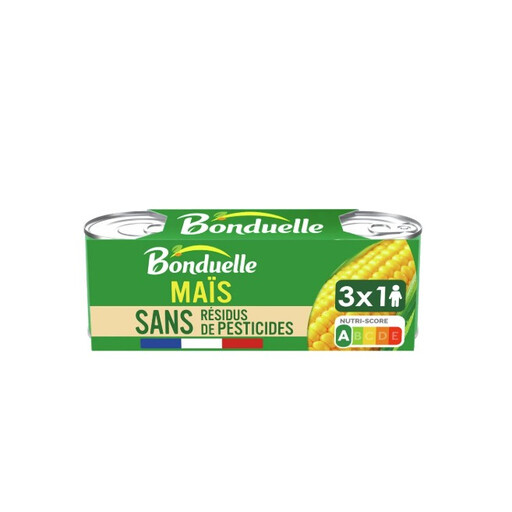 Image unavailable
This pack may suit you if you want to divide the sweetcorn between several dishes. The stated format is ‘1/4 x 3’; check the drained weight and the claim about added sugars before deciding how much to buy.
 Image unavailable
You can open the two tins separately for different dishes. The title gives the pack size as 2 × 140 g but doesn’t specify the drained weight. Check this, along with the ‘no added sugars’ claim if it’s essential to your choice.
 Image unavailable
Worth considering if your recipe calls for sweetcorn kernels. The stated pack size is 400 g; compare the drained weight with the amount you need, and check the label for added sugars.
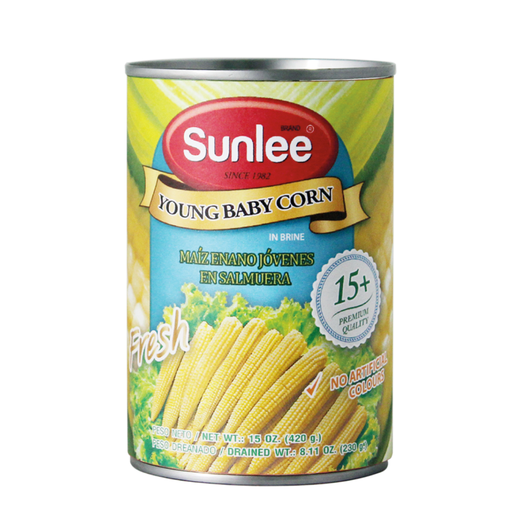 Image unavailable
Baby corn is suited to recipes that call for this form of corn rather than sweetcorn kernels. The stated pack size is 420 g; check the drained weight and label if no added sugars is an important factor.
No. This claim doesn’t exclude sugars that occur naturally. The Bonduelle product described by the brand contains sweetcorn, water and salt, and has 5.1 g of sugars per 100 g. Check the ‘of which sugars’ line if you’re comparing total sugars.
Look for a product explicitly labelled ‘no salt’ and check its ingredients, as well as the claim about added sugars. Carrefour’s product information for Géant Vert organic sweetcorn describes a product with no salt or added sugars, made with sweetcorn and water. Don’t assume these features apply to other products from the brand.
Follow the time limit and storage conditions on your packaging. For the product described here, Bonduelle advises storing it at a maximum of 4 °C and using it within 48 hours of opening. Anses also recommends monitoring the temperature in the coldest part of your fridge.
This wording refers to a minimum durability date, after which the product isn’t automatically out of date. However, according to the Ministry of Agriculture, it may have lost some of its quality. Check that the tin is intact and that the contents are in good condition, then follow the manufacturer’s instructions.