Students grabbing lunch between lectures
If you’re having them without cooking, with bread or salad, fillets and boneless options save you the trouble of preparing a whole fish.


For lunch between lectures, choose fillets or a boneless option if you want to eat them straight from the tin with bread or salad. Whole sardines are a good choice if you don’t mind the bones. Then check the amount of fish, the recipe and the storage instructions after opening: an opened tin won’t keep like an unopened one in the cupboard.
If you’re having them without cooking, with bread or salad, fillets and boneless options save you the trouble of preparing a whole fish.
If you’re keeping several tins for later, check the size, drained weight and best-before date. Choose portions that you’ll be able to finish at lunchtime, too.
Oil, sauce, ingredients, salt and nutritional values vary from one product to another. Compare the labels on the tins you’re considering, checking whether the values are for the drained product.
For lunch at uni, start by thinking about how you’ll eat the sardines, then check the portion size and recipe. If you plan to save some for later, the storage instructions after opening are particularly important.
| What to consider | What to check | Who this matters to |
|---|---|---|
| Easy to eat | Look for “fillets” or “boneless” on the label and choose a portion you can finish. | Between lectures, I want to open the tin and eat without having to handle whole sardines. Around 42% of shoppers would put ease of eating first. |
| Size and storage | Compare the drained weight, number of tins and storage instructions before and after opening. | If I’m preparing lunches for several days, I need tins that are easy to store and portions that suit each meal. Around 33% of shoppers would prioritise this. |
| Recipe and label | Check the ingredients, allergens and nutritional values per 100 g, noting whether they’re for the drained product where applicable. | If I’m choosing based on the oil, sauce or salt content, I need to check the specific product. Around 25% of shoppers would make this their priority. |
Two tins that look the same size may contain different drained weights. A multipack may not give you the portions you want to take with you.
Check the drained weight and number of tins, then choose a size that suits your lunch.
Once a tin has been opened, the storage instructions change. The manufacturers of the Saupiquet and Connétable products described here say to refrigerate them and eat them within two days of opening.
If you don’t have access to a fridge, choose a portion you can finish in one sitting. For any other product, follow the instructions on its packaging.
You may have to throw away any leftovers if you can’t store them as instructed.
According to the DGCCRF, bulging, rust or dents can indicate that a metal tin has deteriorated.
Discard any tin showing these signs, and don’t eat its contents if you’re unsure.
The oil, sauce and nutritional values vary from product to product. A value given for drained fish can’t be compared directly with one calculated on a different basis.
Read the ingredients and nutritional information on the tin you’ve chosen, and check what the per-100 g values are based on.
Saupiquet’s range includes sardine fillets in extra virgin olive oil in a 100 g tin.
The range includes whole sardines in olive oil and boneless options. This distinction matters if you’re eating lunch straight from the tin on campus.
Carrefour offers several sardine recipes under this brand, including varieties in sunflower oil and extra virgin olive oil.
This range from E.Leclerc includes whole sardines, fillets, several recipes and multipacks.
This Joybuy selection includes boneless sardines, fillets and other tinned sardines. If you’re choosing a tin to eat between lectures, check the format listed for each product and read its storage instructions after opening.
 Image unavailable
A 140 g tin to consider for a no-cook lunch with bread or salad. If boneless sardines are a must, check that the tin says so. After opening, follow its instructions for keeping it chilled.
 Image unavailable
The boneless option is a good choice if you want to eat sardines straight from the tin at lunchtime. This 98 g tin is packed in water. To compare the amount of fish with another product, check the drained weight on the packaging.
 Image unavailable
The fillets are handy for quickly topping bread or adding to a salad. The product is labelled 115/81 g; check the packaging to see what these two weights refer to. Once opened, refrigerate and eat within 24 hours.
 Image unavailable
This 135 g tin can make a handy no-cook lunch if you’re happy to check how the fish is presented before choosing. The recipe lists sardines, extra virgin olive oil and salt. Check the packaging to see whether the sardines have bones if that matters to you.
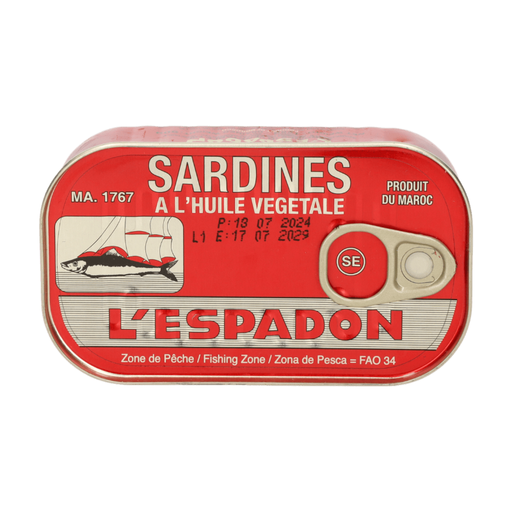 Image unavailable
This 125 g tin could be a handy store-cupboard option for a no-cook lunch. If you’re looking for fillets or a boneless option, check how the fish is presented on the tin before buying. After opening, follow the refrigeration instructions.
Yes, as long as the tin remains unopened and you follow the storage instructions on the packaging. For metal tins, the DGCCRF warns that bulging, rust or dents can indicate deterioration. If in doubt, don’t eat the contents.
Follow the instructions for the product you’ve bought. For the Saupiquet and Connétable products described here, the manufacturers advise refrigerating after opening and eating within two days. If you don’t have access to a fridge, choose a portion you can finish in one sitting.
No. This is a best-before date, which is different from a use-by date. Follow the storage instructions on the packaging and discard any tin that is bulging, rusty or dented, even if the date hasn’t passed.