When shopping for organic food, first check which ingredients in the tin are labelled organic. For example, Carrefour says its Carrefour Extra tuna contains 27.3% organic extra virgin olive oil. A fishing label such as MSC answers a different question. To compare recipes, also look at the ingredients, drained weight and nutritional values in relation to how you plan to use the tuna.
Who is this guide for?
People who pay close attention to organic ingredients
If you’re putting together an organic shopping basket, read the ingredient list for the specific product: an oil labelled organic doesn’t mean that every ingredient is organic. Drained weight also helps you compare the amount of tuna in two different pack sizes.
People who pay close attention to fishing labels
If fishing practices are your priority, look for a clearly identified label on the tin. France’s Ministry of Agriculture describes the public Sustainable Fishing label as a guide to environmental, economic and social requirements; it is not a substitute for an organic claim.
People who keep tuna on hand for quick meals
Whether you’re making a salad, sandwich or pasta dish, choosing tuna in spring water or oil will affect your recipe. Also check the pack size, whether it needs draining and the storage instructions once opened.
Which criteria should you prioritise?
When shopping for organic food, start with the ingredients and claims on the specific product. Then choose a recipe that suits your dish, and assess the fishing label and pack size separately.
| Criterion |
What to check |
Who is it for? |
| Organic ingredients |
The ingredient list and which ingredients are identified as organic. |
I want to know exactly which ingredients in the tin I’m putting in my basket are organic; around 31% of consumers prioritise this check. |
| Recipe and ingredients |
Whether it contains water or oil, then the salt and fat per 100 g on a like-for-like basis. |
If I want to season the tuna myself, I’d rather look at tuna in spring water before tuna in oil; around 25% of consumers prioritise the ingredients. |
| Fishing label |
The name of the label shown and the tuna species listed, without confusing a fishing label with an organic claim. |
If fishing practices are my deciding factor, a clearly named certification matters more than a general statement on the packaging; this is a priority for around 25% of consumers. |
| Pack size and storage |
The net weight and, where stated, the drained weight; storage instructions once opened. |
I’m looking for a pack size that suits the meal I have planned, so I don’t leave an opened tin unused; for around 19% of consumers, convenience comes before other criteria. |
Common pitfalls to avoid
-
Confusing an organic claim with a fishing label
The organic farming rules set out by INAO and the requirements for the public Sustainable Fishing label described by France’s Ministry of Agriculture relate to different things.
Check separately which ingredients are identified as organic and whether the product carries a fishing label.
-
Confusing net weight with drained weight
The liquid in some tins is included in the net weight. For example, Carrefour lists a drained weight of 104 g for its Carrefour Extra tuna in organic olive oil.
To compare how much tuna you’ll get, look for the drained weight on each tin rather than comparing the total weight alone.
-
Assuming tuna in spring water and tuna in oil are equivalent
Carrefour states that its Carrefour Extra tuna in organic olive oil contains 13 g of fat per 100 g; Petit Navire lists 1.0 g per 100 g drained for its MSC tuna in spring water. Take the products and the stated basis into account when comparing them.
Choose according to the dish you’re making and check the nutritional information for the specific product, particularly the fat and salt content.
-
Assuming a label addresses methylmercury
Anses highlights the particular sensitivity of unborn babies and young children to methylmercury. An organic claim or a fishing label doesn’t address this issue.
If you’re in one of the groups concerned, consult Anses guidance rather than relying solely on an organic claim or fishing label.
Brands to consider
These examples show how recipes and claims can vary. Always check the exact product before assuming a feature applies to another product from the same brand.
Carrefour Extra
Carrefour offers skipjack tuna in organic extra virgin olive oil, with a stated drained weight of 104 g.
- The ingredient list specifies that organic extra virgin olive oil makes up 27.3% of the product.
- The recipe contains 13 g of fat per 100 g. Compare it with tuna in spring water if this matters to you.
Petit Navire
Petit Navire offers MSC tuna in spring water, made with tuna, water and salt.
- For this product, the brand lists 1.0 g of fat and 1.0 g of salt per 100 g drained.
- The MSC claim refers to the fishing label shown; it doesn’t mean the tin is organic.
Saupiquet
Saupiquet offers MSC whole tuna in spring water, suited to quick meals among other things.
- The brand describes this product as a recipe that doesn’t need draining.
- For this product, Saupiquet advises keeping it refrigerated and using it within two days of opening; the MSC claim is not an organic claim.
Sol&Mar (Lidl)
Lidl offers MSC skipjack tuna in sunflower oil for dishes such as salads and sandwiches.
- The tuna in oil recipe makes it easy to distinguish from tuna in spring water when choosing your ingredients.
- The MSC claim shown isn’t enough to classify this tin as an organic product.
Auchan Cultivons le Bon
Auchan’s range includes skipjack and yellowfin tuna in spring water under this brand.
- The listed species and preparation give you a starting point for comparing products on the shelf.
- When shopping for organic food, check the claim and ingredients on the specific product you choose: a tin being part of the range doesn’t determine whether it’s organic.
Tinned tuna available on Joybuy
These products let you compare tuna in spring water with tuna in oil for meals made using store-cupboard tins. If an organic claim is essential for your shopping, check the exact product before choosing.
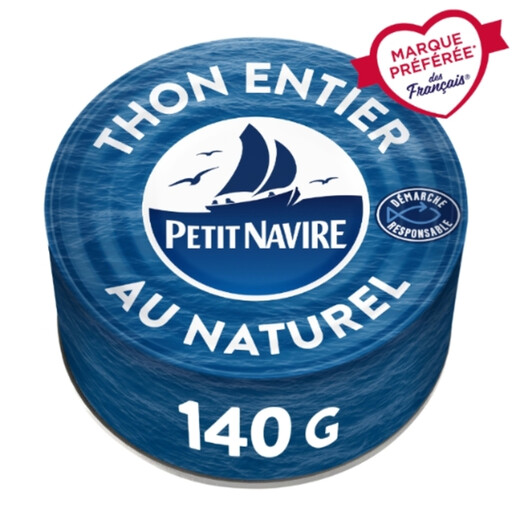 Image unavailable
Petit Navire tuna in water, 140 g
A recipe in water to consider if you’d like to add your own seasoning to a salad or sandwich.
The stated total weight is 140 g. Check the drained weight and any organic or fishing claims on the exact product.
View on Joybuy
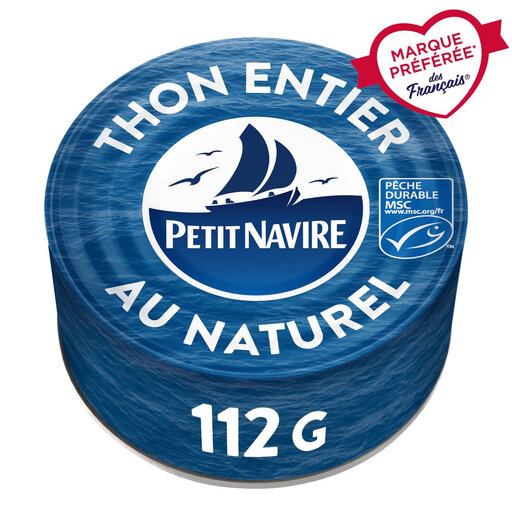 Image unavailable
Petit Navire MSC tuna in spring water, 160 g, including 112 g drained
This product is useful for comparing tuna in spring water with an MSC fishing label against products with an organic claim.
The total weight is 160 g, including 112 g drained. Check the ingredients separately if your shopping needs to meet an organic criterion.
View on Joybuy
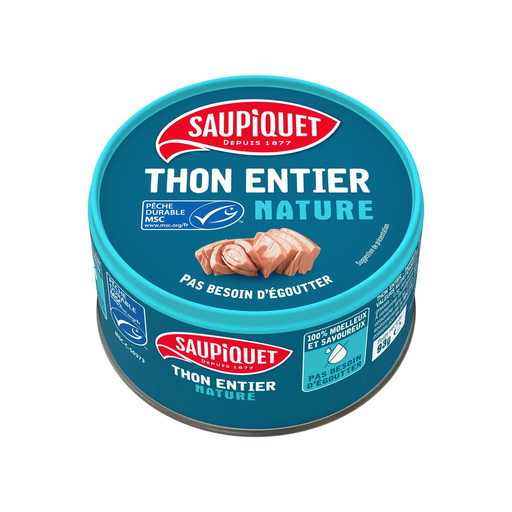 Image unavailable
Saupiquet whole tuna in spring water brine, 93 g
The 93 g size is worth considering for a dish that calls for a small tin of tuna in spring water.
To compare the amount of fish with another tin, check its drained weight; also look for any organic or fishing claims you’re after.
View on Joybuy
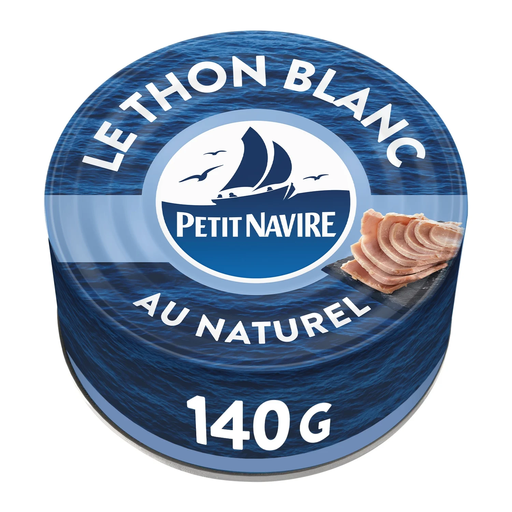 Image unavailable
Petit Navire white tuna in brine, 140 g
This tin in brine is worth considering if you prefer to season the tuna as you prepare your meal.
The stated total weight is 140 g. Check the drained weight to compare pack sizes, as well as any organic or fishing claims you’re looking for.
View on Joybuy
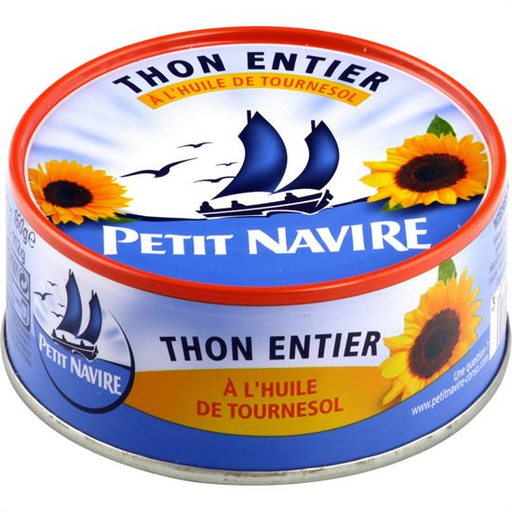 Image unavailable
Petit Navire whole tuna in sunflower oil, 160 g
This tuna in sunflower oil suits a different type of dish from tuna in spring water.
The stated total weight is 160 g. Check the drained weight and nutritional information to compare recipes, then look for any organic or fishing claims that matter to you.
View on Joybuy
Frequently asked questions
Does a tin of tuna described as organic contain only organic ingredients?
Don’t assume so from the name alone: check the ingredient list on the exact tin. For its Carrefour Extra tuna, Carrefour specifies that organic extra virgin olive oil makes up 27.3% of the product. In France, INAO sets out the European rules that apply to organic farming claims.
Does the MSC label or the Sustainable Fishing label replace an organic claim?
No. A fishing label and an organic claim relate to different criteria. France’s Ministry of Agriculture describes the public Sustainable Fishing label as covering environmental, economic and social requirements for fishing; check the organic claims on your chosen tin separately.
How should I store tuna once the tin is open?
Follow the instructions for the product you’ve bought. For its MSC whole tuna in spring water, Saupiquet advises keeping it refrigerated and using it within two days of opening.
Do organic or MSC claims address precautions around methylmercury?
No. These claims don’t replace advice on eating fish. Anses highlights the particular sensitivity of unborn babies and young children to methylmercury; those concerned can consult its specific guidance.


