Shoppers focused on how much tuna they can use
You’re comparing tins of different sizes and want to choose a quantity of drained tuna you can realistically use.


When choosing tinned tuna in this context, start with the recipe you want to include in your meal. Then compare the nutritional values per 100 g, the ingredients and the drained weight. A larger tin may suit you if you can use its contents in line with the storage instructions after opening. Tuna in oil or with added seasoning should be compared separately from tuna in spring water.
You’re comparing tins of different sizes and want to choose a quantity of drained tuna you can realistically use.
You prefer to check the ingredients and nutritional values of each recipe before choosing your own seasoning and accompaniments.
You check the salt content and storage instructions after opening, especially if you won’t use the whole tin in one meal.
When comparing tinned tuna, start by checking the recipe and drained weight. Then read the nutritional information and choose a size that suits the meals you have planned.
| Criterion | What to check | Who it matters to |
|---|---|---|
| Amount of tuna you can use | Compare the drained net weight with the amount you expect to eat. | If I’m comparing several tins, I want to know how much fish they contain once drained, without buying more than I need. Around 34% of shoppers would prioritise this usable quantity. |
| Recipe and nutritional values | Check the ingredients, kcal, protein and fat per 100 g, taking account of the basis shown on the label. | When planning a meal, I want to tell the difference between tuna in spring water and a recipe containing oil or seasoning. This would be the top criterion for around 33% of shoppers. |
| Salt content | Check the “salt” entry per 100 g for the specific product. | If the rest of my meal is already salty, I want to know how much salt is in the tin I’m adding. Around 20% of shoppers would make this a priority. |
| Texture and storage | Choose between chunks, whole tuna or fillets to suit your recipe, then check the storage instructions after opening. | If I want to keep the fillets intact or save some of the tin for another meal, texture and storage will guide my choice. Around 13% of shoppers would prioritise these factors. |
If a tin contains liquid, its total weight won’t tell you how much drained fish you’ll get.
Check the drained net weight, then choose an amount that makes sense for the meals you plan to prepare. The DGCCRF states that, in this case, prepacked foods must show this weight.
Tuna in spring water and seasoned tuna can have different ingredients and nutritional values. For example, Saupiquet’s product information lists 134 kcal per 100 g for its plain fillets and 156 kcal per 100 g for its lemon fillets.
Compare the labels for the specific products, particularly their fat, protein and salt content. Don’t assume you know what’s in them from the word “tuna” alone.
The right quantity for you also depends on how you’ll use the contents after opening.
Before choosing a size, read the storage instructions for the product you’re buying and plan which meals you’ll use the leftovers in.
Any portion not used in line with the instructions on the packaging may go to waste.
Anses warns that tuna, a wild predatory fish, can contain methylmercury and recommends eating a variety of fish species. Specific precautions apply in particular to pregnant or breastfeeding women and young children.
Vary the fish you eat and check the Anses recommendations for your circumstances before making tuna a regular part of your diet.
A single brand may offer tuna in spring water as well as other recipes. Compare the information for the specific product rather than making assumptions about the whole range.
Several plain options let you compare salt content and nutritional values across the brand’s range.
Plain fillets and lemon fillets suit different recipe preferences.
The multipack of whole tuna in spring water may be worth considering if you want to split the contents across several meals.
E.Leclerc’s Eco+ range includes a plain skipjack tuna chunks product.
Auchan offers, among other products, whole skipjack tuna in spring water and Pouce tuna chunks in spring water.
These products include tuna in water, brine and oil. To choose between them, check the format and quantities shown, then compare the labels of the products that suit your planned meals.
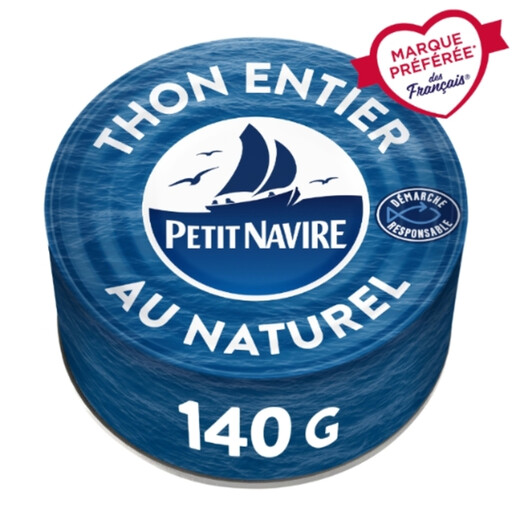 Image unavailable
This tuna in water is worth considering if you want to season it yourself. The tin is listed as 140 g; check its drained weight too when planning your portions.
The product information says that after opening, you should transfer the contents to a non-metallic container, refrigerate them and eat them within 24 hours.
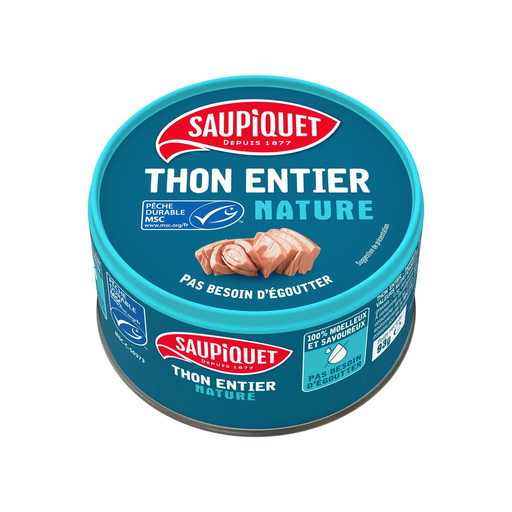 Image unavailable
The listed 93 g size may suit you if you’re looking for a small tin of whole tuna for one meal. Before comparing it with another product, check its drained weight and the basis used for the nutritional values on the label.
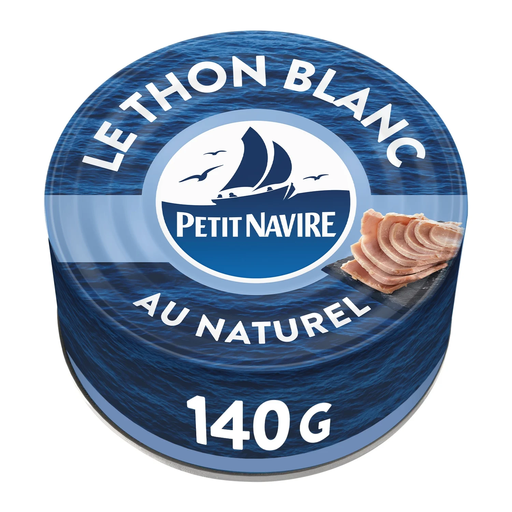 Image unavailable
This tin of white tuna in brine is listed as 140 g. If you’re comparing the amount of fish with other tins, check the drained net weight on the packaging.
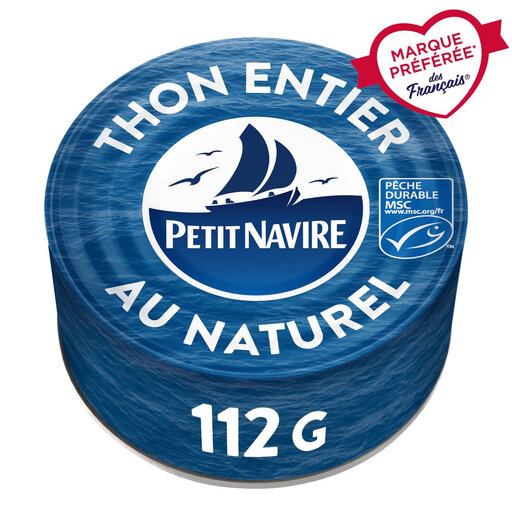 Image unavailable
This plain tuna is listed as having a drained weight of 112 g, from 160 g of product in total, so you can plan your recipe accordingly. To compare its nutritional values with another tin, check the “per 100 g” basis on the label.
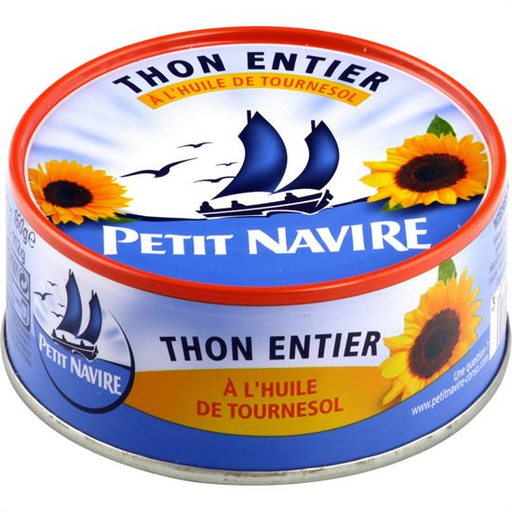 Image unavailable
This tuna in sunflower oil offers a different taste and cooking option from tuna in water. The listed size is 160 g; check the ingredients and nutritional values for this specific product before adding it to your meal.
Check the drained net weight to find out how much fish you’ll get when the tin contains liquid. The DGCCRF states that, in this case, prepacked foods must include this information.
No, you’ll need to compare the specific recipes. Saupiquet lists 134 kcal and 31 g of protein per 100 g for its plain fillets, compared with 156 kcal and 7.7 g of fat per 100 g for its lemon fillets. Check the ingredients and the basis for comparison on each label too.
Follow the instructions for the product you’ve bought, as they can vary from one product to another. Joybuy’s product information for a 140 g tin of Petit Navire tuna says to transfer the contents to a non-metallic container, refrigerate them and eat them within 24 hours.
Yes. Anses recommends eating a variety of fish species and notes that wild predatory fish such as tuna may contain methylmercury. Check its specific recommendations if the meal is for someone who is pregnant or breastfeeding, or for a young child.