Students planning meals around their supplies
If you keep a tin handy for a simple dinner, check the drained tuna weight and choose a size you can use without leaving leftovers.


For a quick dinner when you don’t have a freezer, a tin of tuna is the simplest option. Compare the drained net weight, recipe and quantity you’ll use. Tuna in oil suits a different seasoning preference, while frozen fillets require a freezer, defrosting and cooking according to the product instructions.
If you keep a tin handy for a simple dinner, check the drained tuna weight and choose a size you can use without leaving leftovers.
An unopened tin can be stored in a cupboard. Do check how to store any leftovers, though, as instructions vary from product to product.
If you’re thinking of cooking fillets or steaks, check whether the fish is fresh or frozen. Make sure you can follow the storage and preparation instructions on the packaging.
For a student dinner, first decide whether you need a cupboard staple or want to cook fish that needs to be kept chilled. Then compare the sizes and recipes within your chosen category.
| Criteria | What to check | Who is it for? |
|---|---|---|
| Usable quantity | The drained net weight and how many portions the pack provides. | I want to plan my dinner without confusing the contents’ total weight with the amount of tuna I’ll actually eat; around 36% of consumers would make this their priority. |
| A meal without a freezer | Storage conditions before opening and instructions for keeping any leftovers. | When I need to prepare a meal quickly, I look for an ingredient I can keep in the cupboard before opening; around 29% of consumers would put this convenience first. |
| Fish to cook | Whether it’s labelled ‘fresh’ or ‘frozen’, plus storage conditions and preparation instructions. | I’d rather cook a fillet or steak than open a tin, as long as I can store and cook it as instructed; around 21% of consumers would prioritise this. |
| Recipe and instructions | Ingredients, salt per 100 g, allergens and instructions for after opening. | Before choosing a tin, I want to know what’s inside and how to store any leftovers; this would be the main criterion for around 14% of consumers. |
For tuna packed in liquid, the total weight includes the liquid too. The DGCCRF states that the drained net weight must be shown for foods presented this way.
Check this weight and choose a quantity that suits the meal you’re planning.
Instructions after opening vary between the products we checked: the Saupiquet tin sold on Joybuy says to consume within 24 hours, while the Pouce product we checked says 48 hours.
Follow the instructions on your tin, transfer leftovers to a suitable container and refrigerate them as directed.
A tin that’s too large for your meal may leave you with a portion to use within that time.
Tuna fillets can also be sold in tins. The product category is what tells you how to store and prepare it.
For fresh or frozen products, follow the label and maintain the cold chain, as recommended by Anses.
Oil is part of the recipe, so it changes the ingredients in the dish you’re making.
Check the type of oil and the nutritional information on the tin if you plan to use its contents as part of your seasoning.
The range includes tuna in spring water and tins bearing the MSC label.
Saupiquet offers tuna in spring water in several sizes, including an MSC-labelled whole tuna product.
This range includes a tin of whole yellowfin tuna in spring water, with a drained net weight of 140 g.
The range includes whole yellowfin tuna in spring water, tuna pieces and multipacks.
The products we checked include tinned tuna pieces and fillets in spring water.
One of the products we checked is a tin of skipjack tuna in sunflower oil bearing the MSC label.
This selection includes tins of tuna in spring water or oil for a cupboard-ready meal, as well as frozen tuna steaks for a dinner you can cook. Choose based on your storage options and the type of preparation you have in mind.
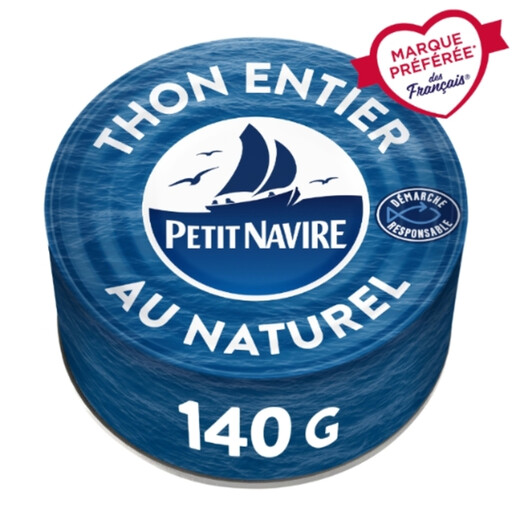 Image unavailable
A tin to consider for adding tuna to a salad or sandwich without needing a freezer before opening.
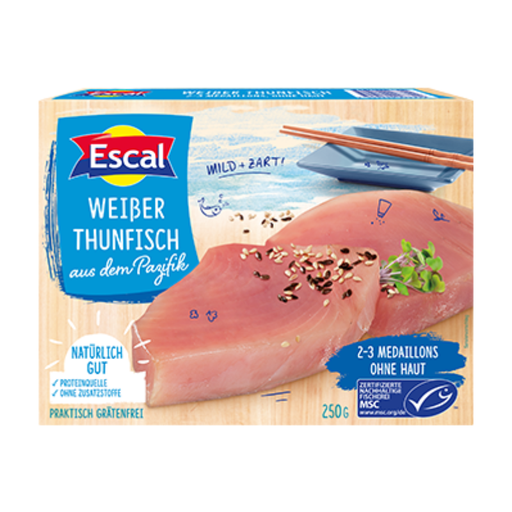 Image unavailable
An option for cooking tuna if you have a freezer and can follow the defrosting and cooking instructions.
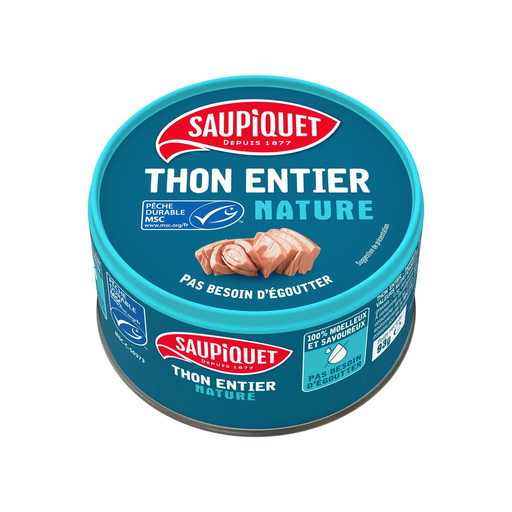 Image unavailable
This size is a good choice if you want to use tuna in spring water quickly in a simple meal.
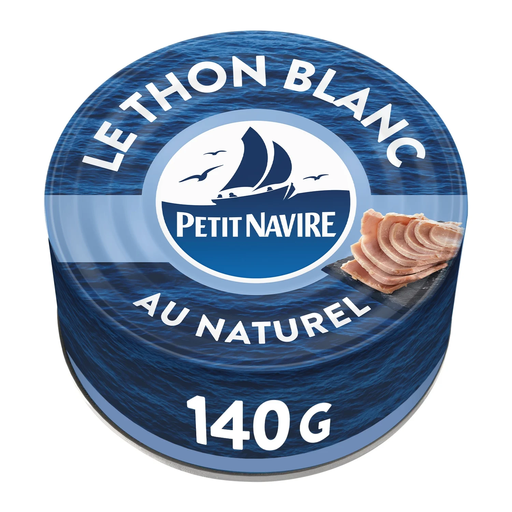 Image unavailable
This tin is an option for a sandwich or salad if you like tuna in brine.
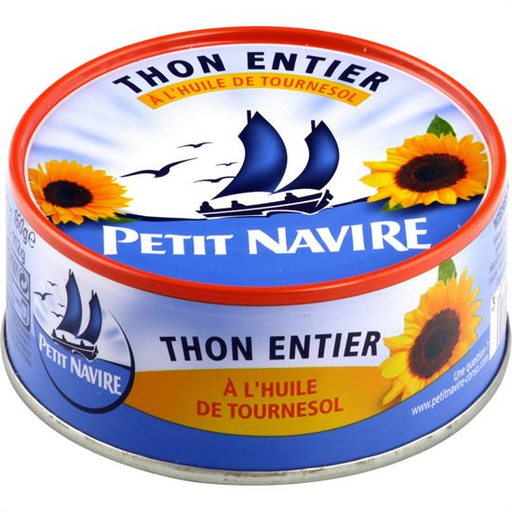 Image unavailable
This recipe could work well in pasta or a salad if you want to include the sunflower oil in your dish.
For tuna packed in liquid, check the drained net weight. This shows the weight of the tuna without the liquid, rather than the total weight. The DGCCRF states that this information must appear on the labels of the products concerned.
Follow the instructions for that particular tin and refrigerate the leftovers in the container specified. The products we checked give different time limits after opening, so don’t apply one brand’s instructions to another.
No, they’re used differently. An unopened tin can be stored in a cupboard, while a frozen fillet needs to be kept cold and prepared according to the packaging. Check that the product is clearly labelled ‘frozen’ before planning to store it in the freezer.
Check the product name, ingredients, allergens, nutritional information and stated quantity. For tuna packed in liquid, the DGCCRF states that the drained net weight must also be shown. Finally, read the storage instructions for that particular tin.