Parents preparing quick meals
Whether you’re making a salad, pasta or a sandwich, the drained weight helps you choose the right amount for your meal and plan what to do with any leftovers.


For quick meals, choose a drained weight that suits your recipe: a small tin helps avoid leftovers, while a larger size is handy if you’re making several portions. Check the ingredients and storage instructions once opened. If the meal is for someone who is pregnant or breastfeeding, or for a child under 3, also take account of the Anses recommendations on eating tuna.
Whether you’re making a salad, pasta or a sandwich, the drained weight helps you choose the right amount for your meal and plan what to do with any leftovers.
Anses includes tuna among the wild predatory fish covered in its advice for vulnerable groups. When choosing a tin, you should also consider the recommendations that apply to the person who will be eating it.
It’s important to distinguish between meals for adults and those for young children. Anses highlights the particular vulnerability of children under 3 to contaminants, so check its specific recommendations before planning to serve tuna to your child.
Start by checking how much drained tuna you need for the meal, then look at the storage instructions after opening and the ingredients. Precautions for the person eating the tuna are a separate consideration from the tin size.
| What to consider | What to check | Who is it for? |
|---|---|---|
| Amount you can use | Compare the drained weight of tins and multipacks with the amount your recipe requires. | When I’m preparing several plates, I want enough tuna without opening more tins than necessary; around 36% of consumers are said to prioritise this usable quantity. |
| Quick meals and leftovers | Choose a size that suits the meal and read the storage instructions for once the tin is open. | When I’m making just one meal, I’d rather finish the tin than store an opened portion; this is said to be a priority for around 29% of consumers. |
| Family precautions | If the meal is for someone who is pregnant or breastfeeding, or for a child under 3, check the Anses recommendations on tuna. | Before serving tuna to someone covered by these recommendations, I want to know how to vary the fish we eat at home; around 21% of consumers are said to make this their main concern. |
| Recipe and product details | Read the ingredients, the salt content per 100 g and the details specific to the product you’re considering. | If texture or an MSC label matters for my recipe, I check the specific tin rather than relying on the brand alone; around 14% of consumers are said to prioritise this. |
A tin sized for several portions could leave you with unused tuna after a small meal. Storage instructions vary by product.
If you’re not planning a second recipe, choose an amount closer to what you need. Follow the instructions on the tin for any leftovers.
Anses lists tuna among the wild predatory fish associated with methylmercury and gives specific recommendations for some vulnerable groups.
Vary the types of fish you eat and check the Anses recommendations that apply during pregnancy or breastfeeding, or when preparing food for a child under 3.
An MSC label or a mention of fishing practices doesn’t, by itself, tell you about a product’s ingredients, salt content or size.
Check the exact label, ingredients, nutritional information and drained weight of the product you choose.
The brand offers products including tuna steaks in spring water and options described as reduced in salt.
The brand offers tuna steaks in spring water carrying the MSC label.
This range includes tuna steaks in spring water, including multipacks.
These ranges include tuna in spring water, sold as steaks or pieces depending on the product.
These ranges include skipjack tuna in spring water, including a POUCE product sold as pieces.
These Petit Navire products give you a choice of tinned tuna options for family meals. Compare their drained weights where shown, then check the ingredients and instructions on each tin.
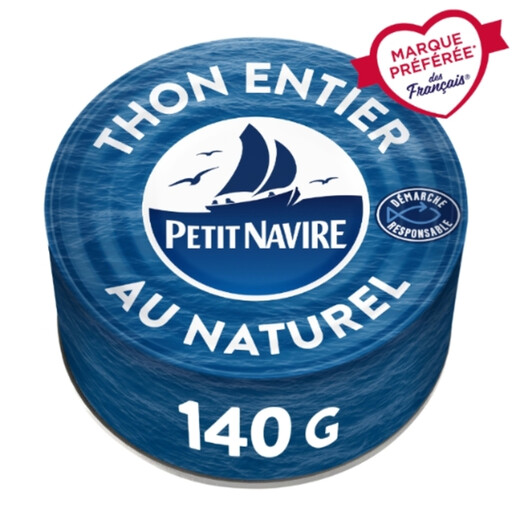 Image unavailable
For a salad or sandwich, this tin contains 98 g of drained tuna out of 140 g in total. The listed ingredients are skipjack tuna, water and salt.
Once opened, transfer any leftovers to another container, refrigerate and eat within 24 hours, following the instructions for this product.
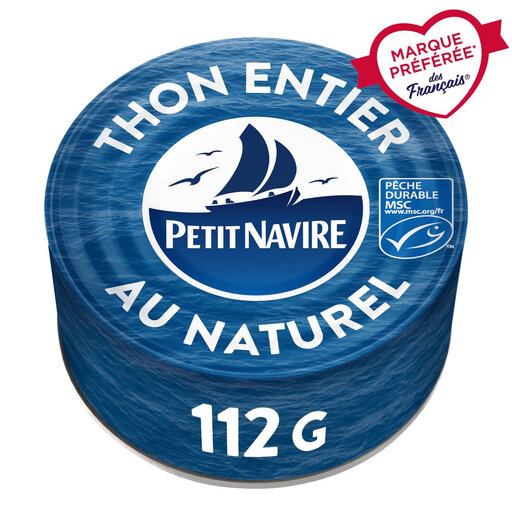 Image unavailable
This 160 g tin contains 112 g of drained tuna. It’s a good choice if that amount suits your recipe and you’re looking for the MSC label on the product you choose.
Once opened, refrigerate the contents and eat within two days, following the instructions for this product.
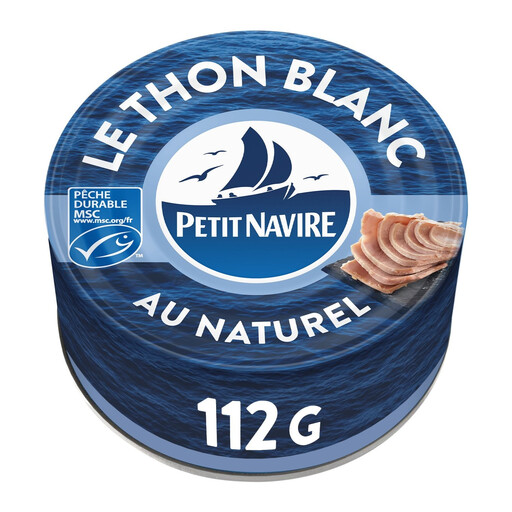 Image unavailable
This white tuna in spring water carries the MSC label and is listed as 112 g. If the amount of fish you can use matters for your recipe, check the drained weight on the tin.
Once opened, refrigerate the contents and eat within two days, following the instructions for this product.
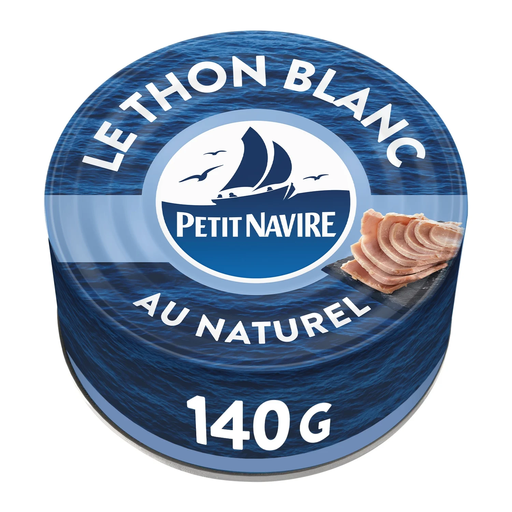 Image unavailable
This 140 g tin contains white tuna in brine. Check the drained weight if you need to plan a precise amount for your meal.
The product information warns that small pieces of bone may remain. Once opened, transfer the contents out of the tin, refrigerate and eat within 24 hours, following the instructions for this product.
Check the drained weight to find out how much tuna you’ll have once the liquid has been drained. For example, a 140 g Petit Navire tin listed on Joybuy contains 98 g of drained tuna. Check this information for each size you’re considering.
Before planning to eat tuna regularly, check the Anses recommendations that apply to your situation. The agency lists tuna among the wild predatory fish associated with methylmercury and recommends eating a variety of fish.
No. The general guideline of two portions of fish a week, including one portion of oily fish, doesn’t replace the specific Anses recommendations for children under 3. Check the advice for your child’s age before serving them tuna.
Transfer leftovers to a sealed food container and refrigerate them, following the storage time on your tin. The instructions quoted for some Petit Navire and Saupiquet products specify 24 hours, while the Auchan POUCE product information says 48 hours. These storage times aren’t interchangeable.
Before serving, check the ingredients and allergen information for the exact product. The Petit Navire, Saupiquet and Auchan tuna product information mentioned here lists tuna or fish, but you should always check the label on the tin you’ve chosen.