Shoppers who pay close attention to organic claims
If you want the fish itself to be certified organic, check which ingredient the claim applies to. Agence Bio confirms that wild-caught tuna cannot be certified organic.


For savoury crêpes, don’t look for wild tuna with an organic certification: according to Agence Bio, products from fishing cannot receive this certification. Instead, choose tuna in spring water if you’d like to make your own filling, or a recipe with organic olive oil if that’s the ingredient you’re interested in. Either way, check the ingredients and drained net weight.
If you want the fish itself to be certified organic, check which ingredient the claim applies to. Agence Bio confirms that wild-caught tuna cannot be certified organic.
Tuna in spring water lets you choose what goes into the filling. A product that’s already drained, such as the one from Petit Navire, saves you a step in preparation.
If MSC certification matters to you, distinguish it from a fishery taking part in a programme aimed at achieving certification. Neither means that the tuna is organic.
First, check which ingredient the organic claim applies to, then choose the recipe and amount of tuna that suit your savoury crêpes.
| What to consider | What to check | Who it’s for |
|---|---|---|
| What the organic claim means | Which ingredient is identified as organic, and its proportion if stated. | I don’t want to mistake organic oil for organic tuna. Around 46% of shoppers would put this distinction at the top of their list of concerns. |
| Recipe and preparation | The ingredients list, whether it contains oil and whether it’s marked ‘already drained’. | If I’m filling and seasoning the crêpes myself, I want to know what’s in the tin before adding anything else; around 36% of shoppers would prioritise this flexibility. |
| How much you’ll need | The drained net weight of each tin and how many crêpes you’re filling. | If several guests choose a tuna filling, I want to make sure there’s enough to go round; around 18% of shoppers would have this as their priority. |
The claim may refer to the oil or another agricultural ingredient. According to Agence Bio, fish from fishing cannot be certified organic; the European Commission also excludes fishery products from using the EU organic logo.
Check the ingredients list to see which ingredient is explicitly identified as organic.
MSC certification and a fishery programme aiming to achieve it are two different things. Neither claim certifies the tuna as organic.
If fishing information guides your choice, read the exact wording on the tin.
The total weight of a tin may include liquid, so it won’t necessarily tell you how much drained tuna you’ll have for your crêpes.
Compare drained net weights and adjust the number of tins to suit the fillings you’re planning.
A product made with organic extra virgin olive oil makes it clear exactly what the organic claim refers to.
The range includes tuna in spring water, including a product that’s already drained and ready to use in a filling.
According to Saupiquet, its MSC Natural Whole Tuna is available in several sizes.
These two tins of tuna in spring water let you prepare a filling and choose what to add to it. The MSC claim in their product names shouldn’t be confused with organic certification.
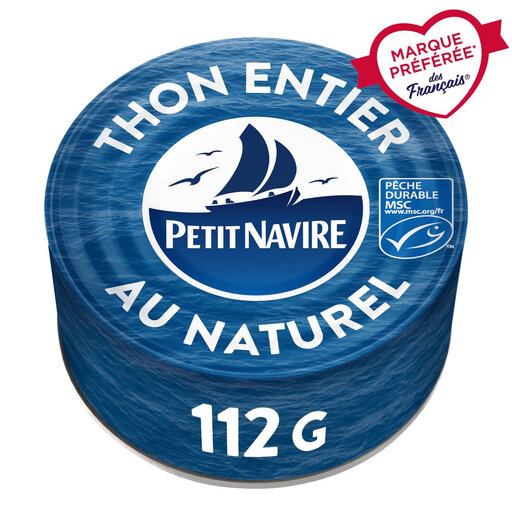 Image unavailable
Ideal for a savoury crêpe filling that you can make and season yourself.
The product name states a drained net weight of 112 g and a total weight of 160 g. If MSC is important to you, check the wording on the packaging.
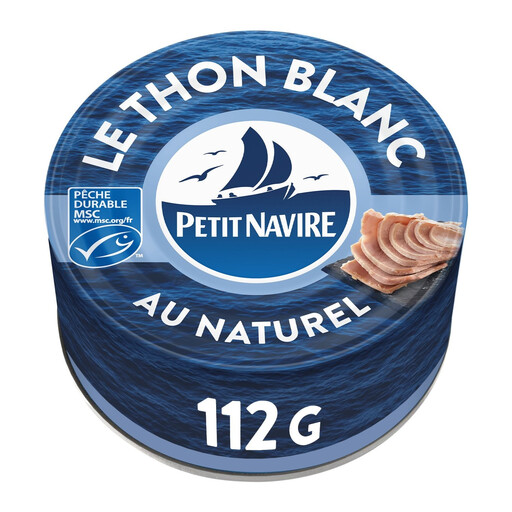 Image unavailable
Make a white tuna filling in spring water and choose for yourself what to add.
The product name states a size of 112 g. Check the packaging to distinguish the total weight from the drained net weight and confirm the MSC claim.
No. Agence Bio says that products from fishing cannot be certified organic because their production conditions cannot be controlled in the same way as those of farmed animals. The European Commission also states that the EU organic logo cannot be used on fishery products.
It may refer to an agricultural ingredient rather than the fish. Carrefour, for example, states that its Carrefour Extra product contains 27.3% organic extra virgin olive oil, or 27.3% organic ingredients.
Tuna in spring water is a good choice if you want to decide on the seasoning and other ingredients in the filling yourself. If you’d like to keep preparation to a minimum, look for products marked as already drained. Also check the ingredients and drained net weight before working out how much you’ll need.
No. The MSC claim relates to fishing, not organic certification of the fish. Also check whether the product is MSC-certified or comes from a fishery taking part in a programme aimed at achieving certification: Petit Navire presents these as distinct situations, depending on the product.