Couples who care about presentation
For salads, toast or a dish where the tuna will be clearly visible, look for the words “whole” or “fillets”. Check the ingredients too, along with any warnings about bones.


For dinner for two, a multipack of small tins means you can open just one and keep the rest sealed. A large tin is better suited to meals where you’ll need several portions. If you want the tuna to hold its shape on the plate, look for whole tuna or fillets. Before choosing a format, compare the drained weight per tin, the ingredients and the storage instructions once opened.
For salads, toast or a dish where the tuna will be clearly visible, look for the words “whole” or “fillets”. Check the ingredients too, along with any warnings about bones.
A multipack of small tins lets you open just one for dinner and keep the others sealed. Check the drained weight of each tin, not just the weight of the multipack.
For pasta or a topping, choose tuna in spring water or tuna in oil, depending on how much of the liquid it’s packed in you want to use in your recipe.
First decide how many tins you plan to open, then choose the type of tuna based on how you’ll serve it. The ingredients and storage instructions can then help you choose between similar products.
| What to consider | What to check | Who is it for? |
|---|---|---|
| Appearance and texture | Look for “whole”, “fillets”, “chunks” or “flakes”, and check for any warning about bones. | I want the tuna to hold its shape in a salad or on toast; around 37% of consumers prioritise presentation. |
| Portions and stock | The number of tins and the drained weight of each one, as well as the total weight of the multipack. | I’m planning several meals, but would rather open only the amount I need tonight. Portion size comes first for around 36% of consumers. |
| Ingredients and storage | The ingredients, the stated salt content and the instructions for storing the tin once opened. | If I’m seasoning the dish myself or might have some tuna left over, I want to know what’s in it and how long it will keep. These points are priorities for around 27% of consumers. |
A multipack of small tins and one large tin leave you with different amounts of opened tuna after dinner for two. Carrefour lists a tin with a drained weight of 560 g, for example, while Auchan lists a Petit Navire multipack of 4 × 140 g.
Choose a multipack if you want to open the tins as you need them; save a large tin for a recipe that will use the whole amount.
With a large tin, you’ll need a plan for using the tuna left over once it’s opened.
For tinned food packed in liquid, the total weight includes the liquid too. The DGCCRF says the drained weight must be stated on the label.
To compare the amount of fish, check the drained weight per tin and for the whole multipack.
Instructions vary by product. For its 81 g tuna fillets in spring water, Auchan says to transfer the contents to an airtight container, refrigerate at +4 °C and eat within 24 hours.
Read the instructions on the tin you’ve bought before planning to keep any leftovers.
According to the DGCCRF, dents, rust or a bulging tin may be signs that the contents have deteriorated.
Check that the tin is intact and don’t eat the contents if you have any doubts.
The brand’s tuna in spring water range includes single tins and multipacks. Auchan, for example, lists a multipack of 4 × 140 g.
Saupiquet offers a range of MSC-certified whole tuna in spring water, which is worth considering if you want the fish to hold its shape on the plate.
Carrefour lists a Classic’ multipack of 2 × 140 g drained weight, as well as a 560 g drained-weight tin of tuna in spring water.
E.Leclerc lists whole albacore tuna in spring water under this brand, in formats including 140 g, 2 × 140 g, 280 g and 3 × 93 g.
Auchan lists 81 g skipjack tuna fillets in spring water, which could work well as a starter or in a meal served with other ingredients.
Lidl has listed a 750 g drained-weight tin of skipjack tuna in sunflower oil.
These are single tins, not family-size multipacks. They let you compare tuna in spring water with tuna in oil for dinner. Before deciding how many tins to open, check how much your recipe needs.
 Image unavailable
A single tin to consider if you’d like to season the tuna yourself. It contains 98 g of drained tuna; the listed ingredients are tuna, water and salt.
After opening, the product description says to transfer the contents to a non-metallic container, refrigerate and eat within 24 hours.
 Image unavailable
This single tin of tuna in spring water leaves you free to season it as you like for salads or toast. It contains 112 g of drained tuna from a total weight of 160 g; the listed ingredients are tuna, water and salt.
The product description says to refrigerate after opening and eat within two days.
 Image unavailable
Its whole shape is a good choice if you want to serve the tuna in visible chunks. The stated 93 g is the tin’s net weight. Check the drained weight on the packaging to compare the amount of fish.
The product description says to transfer the contents to a non-metallic container, refrigerate and eat within 24 hours of opening.
 Image unavailable
This single tin is suited to recipes where the oil it’s packed in forms part of the seasoning. The tuna is described as whole; check the drained weight on the packaging if the amount of fish is important.
After opening, the product description says to transfer the contents to a non-metallic container, refrigerate and eat within two days.
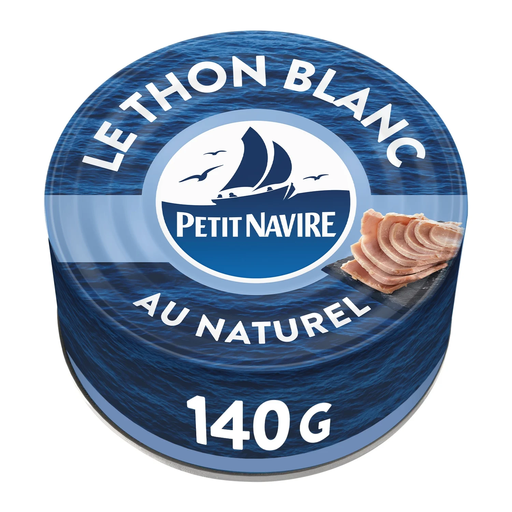 Image unavailable
This single tin can be used in salads or on toast, with seasoning of your choice. The listed ingredients are tuna, water and salt. Check the drained weight on the packaging to see how much tuna you’ll have.
The product description warns that bones may be present and advises against using a tin that is damaged, bulging or leaking.
Compare the drained weight, then see how it’s divided up. According to the DGCCRF, the drained weight must be stated for food sold in a liquid. A multipack of 4 × 140 g drained weight adds up to 560 g, but lets you open four tins separately.
Yes. According to the DGCCRF, passing a best-before date does not by itself mean the food is unsafe to eat, as long as the packaging is intact, although its flavour may have changed. Don’t confuse a best-before date with a use-by date, and check the condition of the tin.
Follow the instructions for the product you’ve bought rather than assuming one rule applies to all tins. For its 81 g tuna fillets in spring water, Auchan says to transfer the contents to an airtight container outside the tin, store at +4 °C and eat within 24 hours.
Don’t eat the contents if you’re unsure the tin is intact. The DGCCRF says rust, dents or bulging may be signs that the contents have deteriorated.