What should you check?
When serving tuna at breakfast, start with the recipe, then check whether the format and instructions for use after opening suit the way your service is organised. Salt content and the information you give customers are still worth checking, even when no sugars are declared.
| Criteria |
What to check |
Consumers concerned |
| Recipe and sugars |
The ingredients list and the ‘of which sugars’ line per 100 g, particularly if the recipe is seasoned. |
If I want to serve tuna without a sauce at the buffet, I need to be able to distinguish a plain recipe from a flavoured one before checking the sugars. Around 42% of consumers would prioritise this simple ingredients list. |
| Portions and storage |
The net weight, drained weight and product-specific storage instructions after opening. |
If the food is served in portions, I look for a pack size that matches the number of covers so I can manage leftovers. This would be the top priority for around 33% of consumers. |
| Salt and product information |
Salt per 100 g on a comparable basis, along with the ingredients and information needed to present the product. |
When preparing buffet information, I need to be able to compare salt levels and clearly identify the fish in the food being served. Checking these details would be a priority for around 25% of consumers. |
Brands and retailers to know
These examples are for comparing specific products; their characteristics should not be assumed to apply to every tinned product from a brand.
Petit Navire
The range includes a 160 g MSC Tuna in Spring Water product presented by Petit Navire.
- For this product, Petit Navire lists tuna, water and salt, and declares 0 g of sugars and 1.0 g of salt per 100 g drained.
- The MSC label and these values apply to this specific product; check the size and label of any other tin.
Saupiquet
Saupiquet offers MSC whole tuna in spring water in several sizes, from 93 g to 280 g, according to its product page.
- The product described by Saupiquet declares 0 g of sugars and 1 g of salt per 100 g; the manufacturer says it does not need draining.
- After opening, Saupiquet recommends refrigerating it and consuming it within two days. Check that these instructions apply to the product you choose.
Carrefour
Carrefour offers, among other products, a 93 g drained tin of Carrefour Classic’ whole tuna in spring water.
- The stated drained weight helps you plan portions for serving.
- To compare this product with others for sugars or salt, check its nutritional information.
Auchan
Auchan offers, among other products, 81 g packs of tuna fillets in spring water.
- The product information for these Auchan fillets declares less than 0.5 g of sugars and 0.71 g of salt per 100 g.
- For these fillets, Auchan says to transfer them to an airtight container, store at +4 °C and consume within 24 hours after opening. Check the ingredients and instructions for the product you actually buy.
E.Leclerc / Pêche Océan
E.Leclerc stocks a 140 g drained tin of Pêche Océan whole albacore tuna in spring water.
- The product information for this item lists albacore tuna, water and salt, and declares 0 g of sugars and 1 g of salt per 100 g drained.
- Availability of this product depends on the E.Leclerc store.
Tinned tuna available on Joybuy
This selection includes tuna in spring water in sizes that can help you plan portions or prepare a buffet, as well as a sunflower oil recipe to consider separately. The size in a product title does not replace the drained weight or the instructions on the packaging you choose.
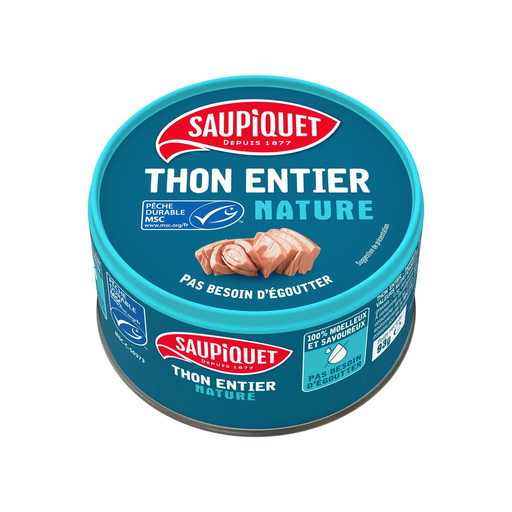 Image unavailable
Saupiquet Whole Tuna in Spring Water, 93 g
For portioned service, the 93 g size makes it easier to plan how many tins you need. Check the drained weight and instructions for use after opening on the packaging.
View on Joybuy
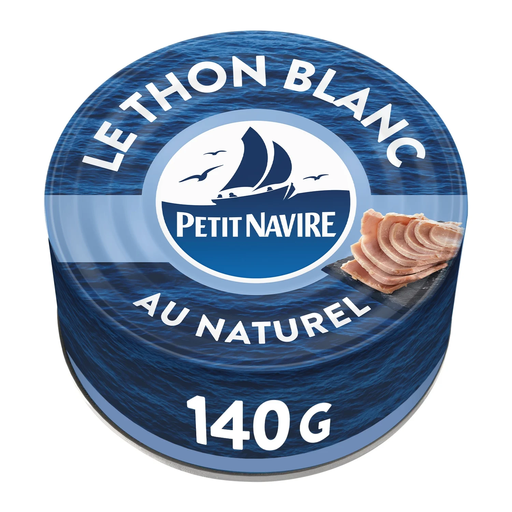 Image unavailable
Petit Navire White Tuna in Brine, 140 g
If you’re preparing tuna to serve cold, match this 140 g size to the number of portions you plan to serve. Check the drained weight and storage instructions after opening.
View on Joybuy
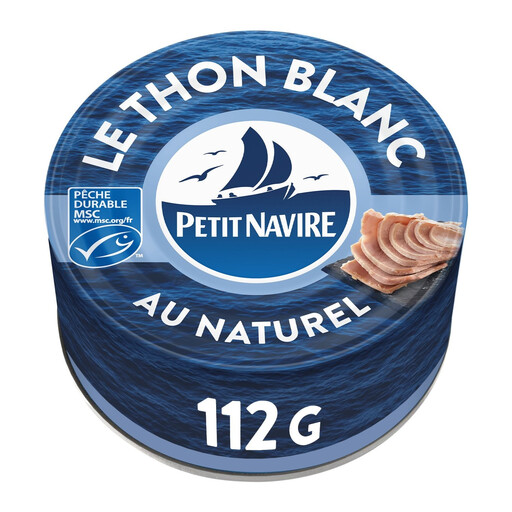 Image unavailable
Petit Navire MSC White Tuna in Spring Water, 112 g
To plan portions, start with the 112 g size shown in the product name. Check the drained weight and storage instructions before deciding how much to open.
View on Joybuy
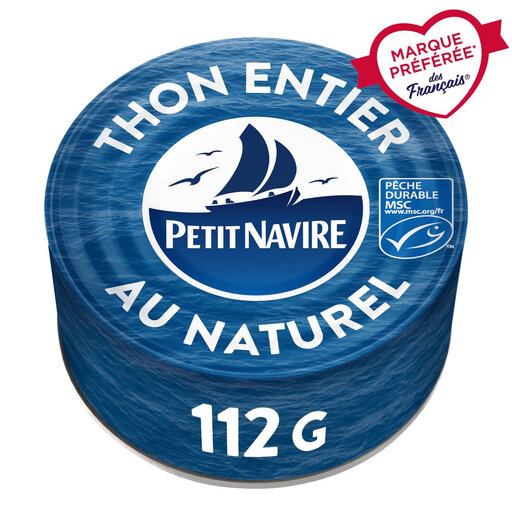 Image unavailable
Petit Navire MSC Tuna in Spring Water, 112 g drained, 160 g total
To calculate the portions of tuna you’ll actually serve, the title distinguishes 112 g drained from 160 g total. Also plan how to store any contents left over after opening.
View on Joybuy
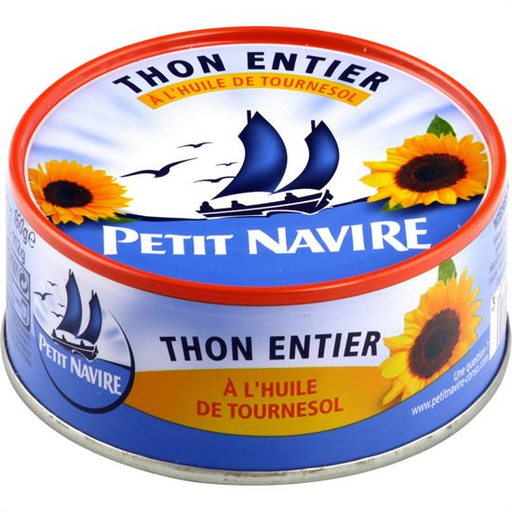 Image unavailable
Petit Navire Whole Tuna in Sunflower Oil, 160 g
If a tuna recipe in oil suits your buffet, this 160 g tin is a different option from tuna preserved in water. Check its ingredients list and nutritional information before comparing it with products in spring water.
View on Joybuy
Frequently asked questions
Is tuna in spring water with 0 g of sugars ‘reduced sugar’?
No. A value of ‘0 g of sugars’ is not enough to establish that the tin carries a ‘reduced sugar’ claim. Some Petit Navire and Saupiquet products in spring water declare 0 g per 100 g; for the tin you buy, check the claim actually shown on the packaging and its nutritional information.
Can you leave opened tuna on the buffet?
Plan your service around the instructions for the product you choose rather than assuming that an opened tin can be left on the buffet. For the products reviewed, Auchan says to refrigerate its fillets at +4 °C and consume them within 24 hours, while Saupiquet recommends refrigerating its MSC whole tuna in spring water and consuming it within two days.
How should you tell customers that fish is present?
Clearly identify the fish in the information provided for the tuna you serve, and also check the ingredients of any accompanying dish. Service Public Entreprendre provides guidance on allergen information for processed foods; for the requirements that apply to your buffet, follow your venue’s procedures and the rules in force.
Which values should you compare between two tuna products in spring water?
First compare the ingredients, sugars and salt per 100 g on a like-for-like basis, then check the drained weight and instructions for use after opening. The product information reviewed includes 0.71 g of salt per 100 g for Auchan tuna fillets and 1 g per 100 g for some Petit Navire and Saupiquet products. Always check the product and pack size you choose.


