Shoppers focused on usable quantity
If you’re comparing tins of different sizes for everyday meals, check the drained net weight. The total weight doesn’t always tell you how much tuna you’ll actually have on your plate.


If you’re mixing tuna with other ingredients, flakes or chunks can work well. If you want the pieces to remain visible, look for whole tuna instead. Before you order, compare the drained net weight and check the recipe, nutritional information and details for the exact product you’ve chosen. ‘In spring water’ and ‘MSC certified’ don’t necessarily describe every tin from a particular brand.
If you’re comparing tins of different sizes for everyday meals, check the drained net weight. The total weight doesn’t always tell you how much tuna you’ll actually have on your plate.
The size of the pieces may matter less in a quiche or mixed dish than it does in a salad. E.Leclerc and Carrefour catalogues distinguish between flakes, chunks and whole tuna.
If ingredients, nutritional values, species or an MSC claim are important to you, read the details on the tin you’ve selected rather than relying on the brand name alone.
Start by checking how the tuna is presented and how much your recipe needs. Then compare the ingredients and the claims specific to each tin.
| Criteria | What to check | Who is this for? |
|---|---|---|
| Usable quantity | Compare the drained net weight, if shown, and the number of tins your recipe needs. | When I’m preparing several portions, I check what’s actually in the tin so I don’t confuse the total weight with the amount of fish. Around 36% of consumers are thought to prioritise this usable quantity. |
| How the tuna is presented | Look for ‘flakes’, ‘chunks’ or ‘whole’, then choose a format that suits your dish. | For a salad, I sometimes want pieces that stay visible, whereas flakes work for me in a mixed dish. Around 29% of consumers are thought to prioritise the way the tuna is presented. |
| Ingredients | Read the ingredients and nutritional information. When comparing two nutritional values, make sure they’re based on the same measure, such as per 100 g. | If I’m looking for tuna in spring water, I want to tell the difference between a tin containing water and salt and one prepared in oil or sauce. Around 21% of consumers are thought to put ingredients first. |
| Fishing claims | Check the species and whether the specific product carries an MSC claim. | When certification or species guides my choice, I check the tin itself rather than assuming the claim applies to the whole brand. This is thought to be the main criterion for around 14% of consumers. |
These formats aren’t quite interchangeable. Flakes are easy to mix into a dish, while chunks that hold their shape can be a better fit for a salad.
Choose the format to suit the dish you’re making, and check the product description before placing your order.
Petit Navire and Saupiquet offer products that carry the MSC claim, but it applies to the products specified, not automatically to every tin from either brand.
Check the name, recipe and claims on the tin you’ve selected.
The right quantity also depends on the number of portions and the storage instructions for the product you buy.
Before choosing a size, check the instructions on the tin and plan to use any opened tuna within the stated time.
A tin that’s too large for the meal can leave you with unused tuna.
The brand offers tuna in spring water, including a 160 g MSC-certified albacore product.
Saupiquet offers whole tuna in spring water with MSC certification in several sizes.
The Carrefour catalogue includes flakes, chunks and whole tuna in spring water.
The E.Leclerc catalogue features Eco+ and Pêche Océan products, including skipjack and albacore tuna in spring water.
An Auchan product listing for Saupiquet whole tuna in spring water with MSC certification includes details such as the ingredients and species for that product.
This selection includes tuna in spring water, brine, sunflower oil and tomato sauce. Decide which recipe and format you want before choosing a tin for your dish.
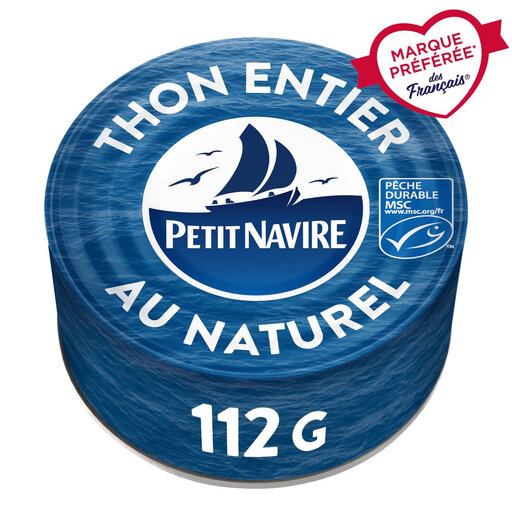 Image unavailable
A spring-water option to consider for a salad or a dish where the drained weight matters. The title gives a total weight of 160 g, including 112 g drained. Check the MSC claim on the product you choose.
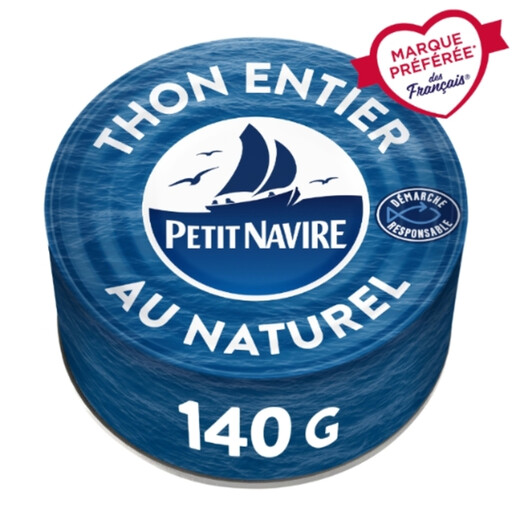 Image unavailable
A size to consider if you’re after tuna in water for a simple dish. Check the drained weight on the packaging before comparing how much usable tuna you’ll get.
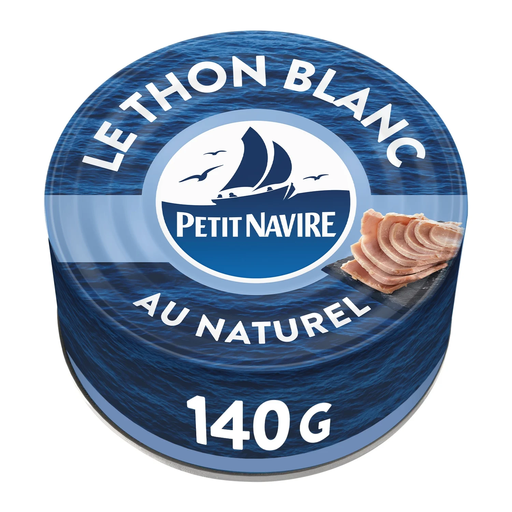 Image unavailable
This tuna in brine could work well in a salad or sandwich. The title gives a weight of 140 g; check the drained weight and storage instructions after opening on the tin.
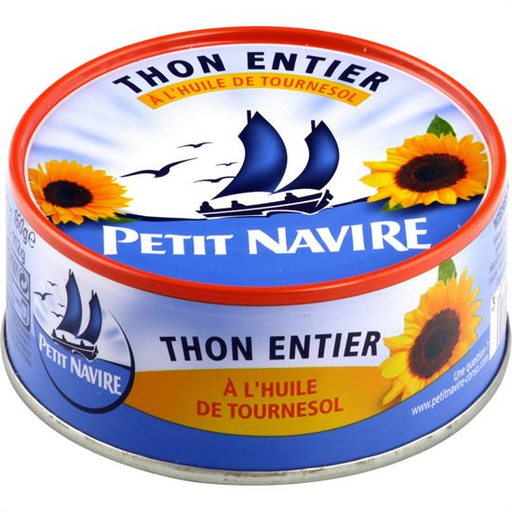 Image unavailable
Worth considering for a recipe that works well with tuna in oil. This is whole tuna in sunflower oil, not tuna in spring water. Also check how much drained tuna your dish needs.
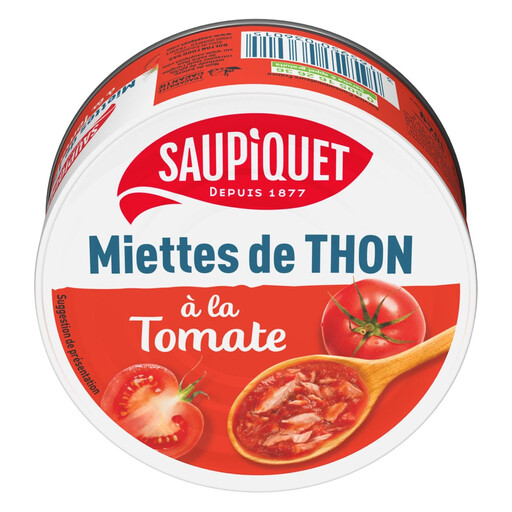 Image unavailable
Tuna flakes in tomato sauce are worth considering for a mixed dish, such as pasta or quiche. This sauced recipe isn’t a like-for-like alternative to tuna in spring water, so check the ingredients before ordering.
First, check the product description, quantity, ingredients and nutritional information for the item you’ve selected. To compare two sizes, also look at the drained net weight if it’s shown on the listing or packaging. The DGCCRF highlights the importance of labelling information for prepacked foods.
Follow the instructions on the tin you’ve bought, and refrigerate any opened tuna if the label says to. Saupiquet advises eating its MSC-certified whole tuna in spring water within two days of opening. This guidance doesn’t automatically apply to other products.
No. An MSC claim shown for a Petit Navire product or a Saupiquet range doesn’t certify every tin from that brand. Check for the claim on the exact product you’re ordering.