For a family dinner, first decide between plain tuna that you can season yourself, a product that’s already drained to save you a step, and a pack size that suits the number of people you’re serving. The “reduced sugars” claim is no substitute for checking the nutritional information: compare the sugars, salt and ingredients of the specific product, especially if you prefer tuna in oil or with added seasoning. If the meal is for someone who is pregnant or breastfeeding, or a child under 3, also take account of Anses recommendations on tuna.
Who is this choice for?
Families putting together a quick meal
For a salad, pasta, quiche or sandwiches, the choice depends as much on the number of portions as on how much preparation is involved. A product that’s already drained saves you that step; a multipack or larger pack may suit you if you’ll use the quantity.
Households comparing sugars, salt and ingredients
The “reduced sugars” claim doesn’t tell you everything about what’s in a tin. Some plain tuna products show 0 g of sugars per 100 g, but their salt content varies, so always check the label of the specific product.
Households with people who need to take extra care
Anses lists tuna among the wild predatory fish that pregnant or breastfeeding women and children under 3 should limit. So choosing what to serve for dinner also means thinking about how often you eat it and the variety of fish on offer.
What should you check first?
First decide how you’ll use the tuna in your meal, then compare the drained net weight and nutritional information of products suited to that preparation.
| Criteria |
What to check |
Who it matters to |
| Quick preparation |
Look for “already drained” and check there’s enough to use for your meal. |
I want to put dinner together without spending time draining several tins; around 29% of consumers would prioritise this time-saving convenience. |
| Ingredients and nutrition |
Check the ingredients, “of which sugars” and salt per 100 g on the specific product. |
I want to choose my own seasoning without assuming that plain tuna or a claim on the packaging tells me everything about its ingredients; around 29% of consumers would prioritise checking ingredients, sugars and salt. |
| Pack size and portions |
Check the drained net weight and how much you need, especially for a larger pack or multipack. |
When several people are sharing a dish, I want enough for everyone without opening lots of tins; around 21% of consumers would put pack size and portion count first. |
| People who need to take extra care |
Consider whether someone who is pregnant or breastfeeding, or a child under 3, will be eating, as well as the variety of fish being served. |
If someone this applies to is sharing dinner, I need to take account of Anses recommendations on tuna rather than choosing based only on the recipe; around 21% of consumers would prioritise this precaution. |
Mistakes to avoid
-
Assuming all tinned tuna has the same sugar content
Petit Navire’s plain white tuna and Saupiquet’s plain tuna chunks each show 0 g of sugars per 100 g, according to their respective product information. This figure doesn’t automatically apply to seasoned recipes.
Check the “of which sugars” line and ingredients list for the product you choose rather than assuming a general claim about tuna tells you what’s in it.
-
Choosing a tin size without checking how much tuna you can use
Individual tins, multipacks and larger tins don’t all suit the same needs when several people are sharing a dish.
Compare the drained net weight and consider how you’ll use the contents after opening before settling on a pack size.
-
Assuming all plain tuna has the same salt content
Petit Navire and Saupiquet’s product information gives the salt content per 100 g as 0.5 g for Petit Navire’s whole plain tuna “-25% salt” and 1.3 g for Saupiquet’s plain tuna chunks.
Compare the “salt” figure per 100 g for the specific products, taking into account any seasoning you add to the dish.
-
Serving tuna regularly to someone who needs to take extra care without varying the fish
Anses classifies tuna among the wild predatory fish that pregnant or breastfeeding women and children under 3 should limit. Choosing plain tuna or a product with an MSC claim doesn’t change this precaution.
For meals where this applies, check Anses recommendations and vary the types of fish you serve.
Brands to compare
These ranges offer products and pack sizes to compare. The features mentioned relate to the specific products listed, not to every product from each brand.
Petit Navire
The plain tuna options include white tuna, an already-drained version and a product labelled “-25% salt”.
- Petit Navire says its plain white tuna contains 0 g of sugars per 100 g, while its “-25% salt” version contains 0.5 g of salt per 100 g.
- These figures don’t apply to the whole range. Also compare the drained net weight and ingredients of the tin you choose.
Saupiquet
The range includes plain tuna as well as tuna in oil and seasoned recipes.
- Saupiquet says its plain tuna chunks contain 0 g of sugars and 1.3 g of salt per 100 g.
- Other products may have different recipes and storage instructions once opened, so check the product information or label.
Carrefour Classic'
One plain whole tuna product is sold as a pack of two tins, each with a drained net weight of 140 g.
- Carrefour lists skipjack tuna, water and salt as the ingredients for this product.
- Check the nutritional information and quantity separately for every other pack size.
E.Leclerc : Eco+ et Pêche Océan
These ranges let you compare products including whole tuna and chunks, in plain or oil-based recipes.
- The products listed by E.Leclerc include a range of presentations and pack sizes.
- The pack size or recipe of one product doesn’t tell you what’s in the others.
Auchan
The range shown by Auchan includes different plain tuna products, including fillets and various pack sizes.
- Auchan’s plain tuna fillets list skipjack tuna, water and salt as ingredients, with less than 0.5 g of sugars and 0.71 g of salt per 100 g.
- For these fillets, Auchan recommends transferring the tuna to an airtight container, storing it at +4 °C and eating it within 24 hours of opening. Follow the instructions for each product.
Lidl et Sol&Mar
Lidl has featured a family-size Petit Navire pack and a Sol&Mar product in sunflower oil carrying the MSC label.
- These examples let you compare a family-size pack with a recipe in oil.
- The Sol&Mar product in oil isn’t plain tuna; check what’s available at your local store.
Tinned tuna on Joybuy
These products include tuna in brine and oil, as well as different pack sizes for putting together a family dinner. To compare portions, check the drained net weight of each tin.
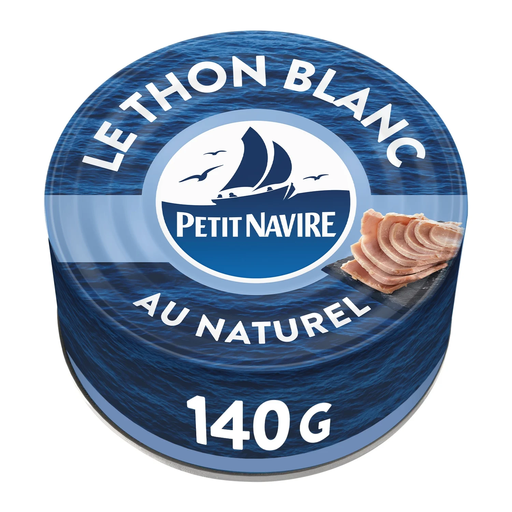 Image unavailable
Petit Navire White Tuna in Brine 140 g
A brine-packed option to consider if you’d like to season a salad or sandwiches yourself.
The stated pack size is 140 g. Check the drained net weight to work out how much you’ll need for your meal, and follow the storage instructions after opening.
View on Joybuy
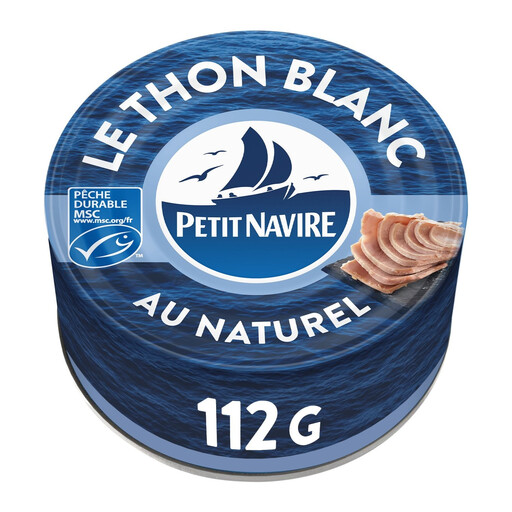 Image unavailable
Petit Navire MSC Plain White Tuna 112 g
Worth considering for a dish you’d like to season yourself if the MSC label is one of your priorities.
The stated pack size is 112 g. Compare the drained net weight and nutritional information for this product before planning your portions.
View on Joybuy
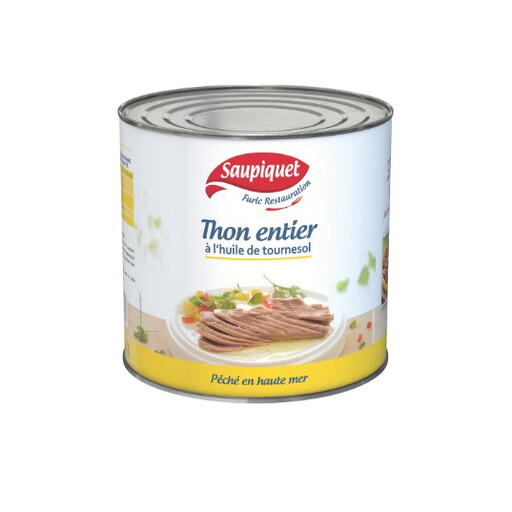 Image unavailable
Saupiquet Tuna in Vegetable Oil 2.4 kg
This large pack in oil may suit you if you’re planning to use a substantial amount of tuna for meals over a short period.
The stated pack size is 2.4 kg. Check the label for the full ingredients list, drained net weight and storage instructions after opening. This isn’t a plain tuna recipe.
View on Joybuy
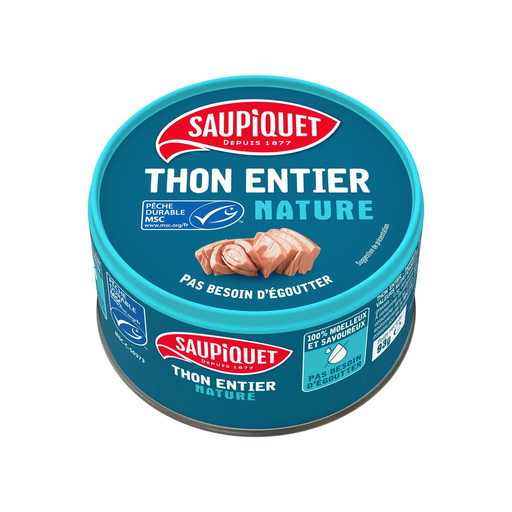 Image unavailable
Saupiquet Whole Tuna in Brine 93 g
This small pack in brine is suitable for a dish you want to season yourself.
The stated pack size is 93 g. For a shared meal, compare the drained net weight with the quantity you need and follow the instructions after opening.
View on Joybuy
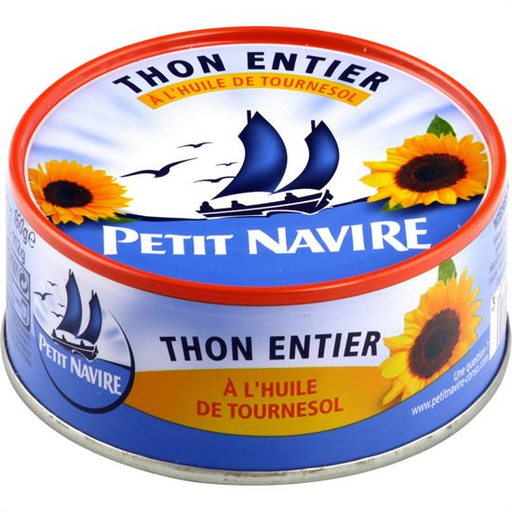 Image unavailable
Petit Navire Whole Tuna in Sunflower Oil 160 g
This sunflower oil recipe is an option if you prefer this type of seasoning for pasta, a salad or sandwiches.
The stated pack size is 160 g. Don’t treat it as plain tuna: compare its fat content and drained net weight with those of the other products you’re considering.
View on Joybuy
Frequently asked questions
Does the “reduced sugars” claim help you choose tinned tuna?
It’s no substitute for checking the nutritional information for the specific product. Petit Navire and Saupiquet list 0 g of sugars per 100 g for some plain tuna products; check the “of which sugars” line and ingredients separately for recipes in oil or with added seasoning.
Which tuna should you choose for pasta or a family salad?
Plain tuna lets you put together your own seasoning; a product clearly labelled as already drained saves you this step if speed is more important. If you’re serving several people, compare the drained net weight of the packs you’re considering and the salt content of each specific product.
How long can you keep tuna after opening?
Follow the instructions on the tin you choose, as they vary between products. Saupiquet recommends keeping its plain tuna chunks in the fridge and eating them within 2 days; for its plain tuna fillets, Auchan recommends transferring them to an airtight container, storing them at +4 °C and eating them within 24 hours.
What should you bear in mind if someone who is pregnant or breastfeeding, or a young child, is sharing the meal?
Anses lists tuna among the wild predatory fish that pregnant or breastfeeding women and children under 3 should limit. The brand, pack size and MSC label don’t replace this precaution. Vary the fish you serve and check Anses recommendations when planning meals that include fish.
Is the MSC label enough to help you choose between two tins of tuna?
No. It relates to the fishery certification of the product carrying the label, not its ingredients or pack size. If this matters to you, check that the specific tin has the label, then compare the recipe, salt content and drained net weight too.


