Couples planning a last-minute special dinner
For a quick starter or main course for two, look for the words “already drained” and “whole tuna”. They can help you choose a tin that’s easy to serve with minimal preparation.


For a quick starter or main course for two, choose whole tuna that’s already drained if you want to keep preparation to a minimum. Tuna in spring water lets you create your own seasoning; a recipe in oil works well when you want that oil to be part of the dish. In either case, check the drained weight and ingredients of the tin you choose.
For a quick starter or main course for two, look for the words “already drained” and “whole tuna”. They can help you choose a tin that’s easy to serve with minimal preparation.
If you’re planning to add lemon, herbs, sauce or olive oil, start by checking the preserving liquid and reading the ingredients list. Tuna in spring water and tuna in oil leave different amounts of room for your own seasoning.
Whether you’re buying for one meal for two or stocking up, compare the drained weight with the net weight. If you won’t use the whole tin, check the storage instructions for after opening too.
First decide whether you want to serve the tuna without draining it, and whether its oil should be part of the recipe. Then check how much fish you’ll have for the two plates.
| What matters | What to check | Who it matters to |
|---|---|---|
| Quick to serve | Look for “already drained” or check whether draining is mentioned; choose whole pieces if presentation matters. | If I want to serve a starter without any extra preparation, ease of serving matters more than the preserving liquid; around 36 % of consumers would prioritise this. |
| Creating your own seasoning | Check the preserving liquid and ingredients, and compare salt and fat per 100 g on the same basis. | If I’m making my own sauce, I prefer to choose the oil and other ingredients myself; this would be the main priority for around 29 % of consumers. |
| Oil as part of the dish | Check the type and amount of oil, along with the nutritional information for the exact product. | If I want the oil from the tin to be part of the seasoning, I look for a recipe that suits the dish; around 21 % of consumers would prioritise this use. |
| Pack size and leftovers | Check the net and drained weights, and the storage instructions for after opening. | If I also want to save some tuna for other meals, I need a pack size that matches what I can use; this would be the priority for around 14 % of consumers. |
The net weight includes the preserving liquid. Joybuy’s listing for a Petit Navire tin gives a net weight of 140 g but a drained weight of 98 g. These figures aren’t interchangeable when working out how much to serve.
Check the drained weight of the product you’re considering before deciding how many tins you’ll need.
Recipes in oil vary. Petit Navire lists 21 g of fat per 100 g for its already-drained tuna in olive oil; the ingredients list for a Pêche Océan product sold by E.Leclerc specifies 33,9 % sunflower oil. These details refer to two different products.
If you want the oil to be part of your seasoning, check its type and the nutritional information for the exact tin. Otherwise, tuna in spring water lets you add oil separately.
A 750 g tin may be more than you need for one dinner for two. Once opened, it needs to be stored according to the instructions for that specific product.
Choose a large tin if you’ve planned other portions. For any leftovers, follow the packaging instructions for transferring, refrigerating and using them.
If you haven’t planned another meal, some of the contents may go unused.
The tuna species, ingredients, salt content and certification claims can vary from one product to another, even within the same range.
Read the label of the product you choose, especially if the species or an MSC claim matters to you.
These ranges show different pack sizes and preserving liquids. Always compare the specific products rather than assuming their features from the brand name alone.
The range includes tuna in spring water, products that are already drained and recipes in olive oil.
Saupiquet offers whole tuna in spring water with an MSC claim, as well as fillets in olive oil.
The documented Carrefour product is a 750 g tin of skipjack tuna in sunflower oil.
E.Leclerc’s range includes whole tuna in spring water, recipes in oil and tuna flakes.
The Auchan range includes skipjack tuna in spring water, chunks, albacore slices and recipes in oil.
Lidl lists a 750 g tin of Sol&Mar skipjack tuna in sunflower oil with an MSC claim.
These tins let you compare tuna in spring water or brine with a recipe in sunflower oil. If you want to serve the tuna without draining it, check that this is stated for the product you choose; it isn’t something you can assume from the type of tin alone.
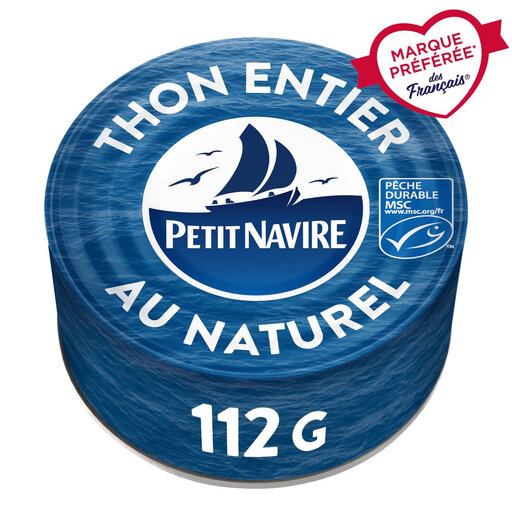 Image unavailable
Ideal for recipes where you want to add your own seasoning. The tin states 112 g drained weight from 160 g net weight. It contains tuna in water, with salt and natural flavouring. Check whether it needs draining before planning to serve it straight away.
After opening, the product description says to keep refrigerated and use within two days.
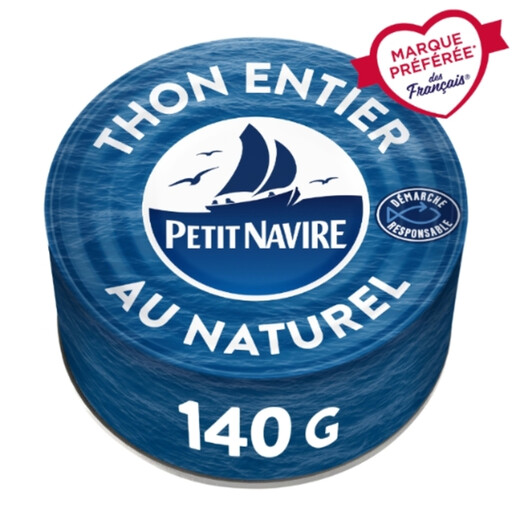 Image unavailable
For making a separate sauce for a salad or a dish for two. The tin states 98 g drained weight from 140 g net weight; the ingredients listed are skipjack tuna, water and salt. Check the basis used for the nutritional values on the packaging before comparing them with another product.
After opening, the description says to transfer the remaining tuna to a non-metallic container, refrigerate it and use within 24 hours.
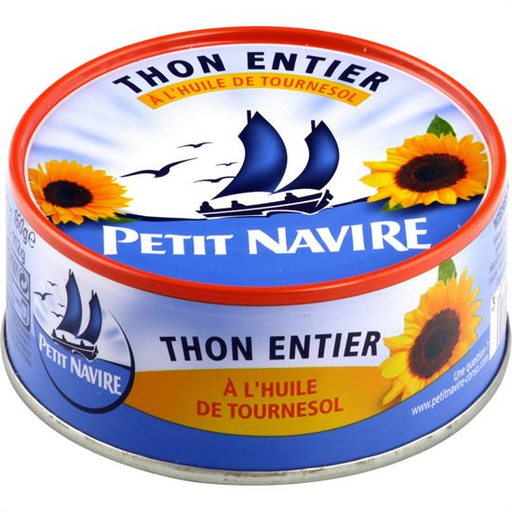 Image unavailable
Worth considering when you want sunflower oil to be part of the seasoning for a salad or pasta dish. The net weight is 160 g. To work out how much tuna you’ll serve and compare fat per 100 g, check the drained weight and the basis used for the nutritional values on the packaging.
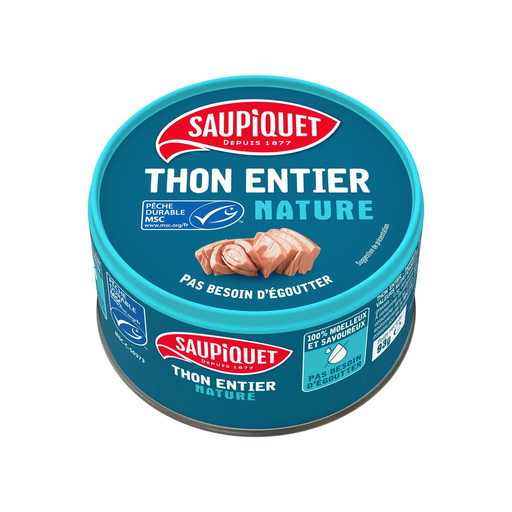 Image unavailable
This small tin can be used as the base for a starter that you season yourself. It contains tuna, water and salt, and has a net weight of 93 g. Check the drained weight to see how much tuna you’ll have, and don’t assume it can be served without draining.
After opening, the description says to transfer the remaining tuna to a non-metallic container, refrigerate it and use within 24 hours.
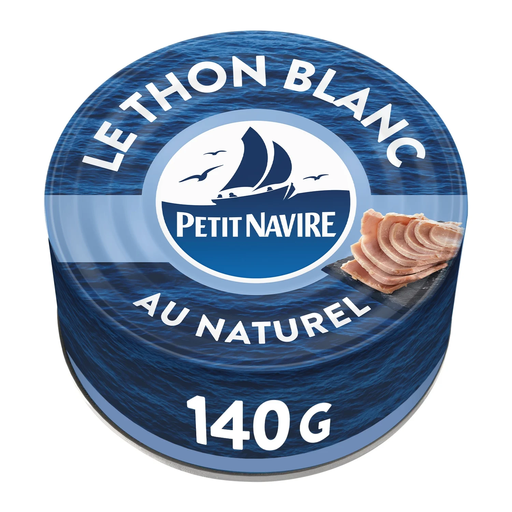 Image unavailable
For a salad or dish where you want to add the seasoning separately. The ingredients list includes tuna, water and salt; the net weight is 140 g. Check the drained weight to plan your meal for two, and see whether any preparation is needed before serving.
After opening, the description says to keep refrigerated and use within 24 hours.
Choose tuna in spring water if you want to make your own sauce, and a recipe in oil if you want that oil to be part of the dish. Nutritional values vary by product: Petit Navire lists 0,9 g of fat per 100 g for its already-drained tuna in spring water, compared with 21 g for its already-drained version in olive oil.
Not necessarily: the net weight may include the preserving liquid. A Petit Navire tin listed on Joybuy states a net weight of 140 g and a drained weight of 98 g. To work out how much fish you’ll have for a meal for two, look for the drained weight of the product you buy.
Follow the instructions on the tin you buy, as they vary by product. The description for a Petit Navire product sold on Joybuy says to transfer it to a non-metallic container, refrigerate it and use within 24 hours; Saupiquet says its whole tuna in spring water can be kept chilled for up to two days.
Yes, as long as you check the date and storage conditions on each tin. The French Ministry of Agriculture explains that a best-before date means the taste or texture may change after that date; check the wording on the packaging rather than assuming it from the product category.