Hosts preparing a Christmas buffet
You’re planning a selection of canapés, salads, pastries or fillings. The type of tuna and its drained weight help you choose tins to suit your recipes and the number of guests.


For a Christmas starter where you want the tuna pieces to remain visible, choose solid or chunk tuna in brine and work out how much you need using the drained weight. Tuna in oil or sauce is suitable if that flavouring is part of your recipe; check the ingredients and nutritional information first. Before adding a tin to your festive menu, check its condition, best-before date and storage instructions once opened.
You’re planning a selection of canapés, salads, pastries or fillings. The type of tuna and its drained weight help you choose tins to suit your recipes and the number of guests.
You’d like to keep a tin in the cupboard ahead of the festive season, then check whether its ingredients, salt content and fat content suit your recipe. The best-before date and storage instructions once opened matter too.
You want to be able to identify the species, any certification and fishing information for the product you buy. Check these details for each individual product rather than relying on the brand name alone.
First decide whether you want the tuna to stay in pieces or be mixed into your recipe. Then choose the type of tin, followed by a size that gives you the amount of drained tuna you need.
Choose this: for a salad or canapés where you want the tuna to remain recognisable and plan to add your own seasoning.
Bear in mind: you’ll need to season it as part of your recipe, and salt levels and pack sizes vary between products.
Choose this: if the oil from the tin will work in the dressing for a filling or a cold dish.
Bear in mind: the oil may be unnecessary if your recipe already contains a sauce or another oil.
Choose this: for a filling, quiche or mixed topping where you don’t need whole pieces, as long as any sauce suits the dish.
Bear in mind: a recipe that’s already seasoned gives you less flexibility to adjust the flavour. Check the ingredients and allergens.
| What to consider | What to check | Who this matters to |
|---|---|---|
| Texture and preparation | Solid tuna, chunks or flakes; in brine, oil or sauce. | If I’m making several starters, I want a texture that suits each one without forcing the same seasoning on every dish. Around 33% of consumers prioritise this versatility. |
| Ingredients | Ingredients list; salt and fat per 100 g. | When my recipe already contains a sauce, I want to know what the tin will add. For around 25% of consumers, ingredients are the top priority. |
| Usable quantity | Drained weight and the number of tins needed for the recipe. | To serve all my guests, I need to work out how much tuna I’ll have after draining, rather than relying on the total weight of the tin. This is the top priority for around 25% of consumers. |
| Traceability | Species, any certification and fishing information for the specific product. | If I want to identify the product’s supply chain, I check the details on the particular tin I’m buying, rather than assuming they apply to the whole range. Around 17% of consumers put traceability first. |
The liquid in the tin is included in the net weight, so two tins of a similar weight may contain different amounts of tuna once drained.
When planning your recipes, compare the drained weight shown for each product.
Oil, tomato or herbs will affect the ingredients and flavour of your dish, which may not suit a filling or a sauce that’s already seasoned.
Read the ingredients and compare the nutritional information per 100 g before choosing tuna in brine, oil or sauce.
The DGCCRF highlights bulging, rust and dents as signs to look out for on tinned food. Even if the best-before date hasn’t passed, you should still inspect the tin.
Check it when you buy it and before preparing the food. If the tin doesn’t look intact, don’t eat its contents.
The species, certification and fishing details may vary between products in the same range.
Check these details on the tin or product page for the specific item you plan to buy.
These examples can help you compare types of preparation and pack sizes. The details below apply to the specific products mentioned, not to every product from each brand.
The Petit Navire range includes tuna in brine and oil, as well as shredded tuna. The right choice depends on the texture and seasoning your recipe calls for.
Saupiquet’s MSC-certified solid tuna in brine is available in several sizes, according to its product information. It may suit a dish where you want the pieces to remain visible.
Carrefour offers a twin pack of solid tuna in brine, with two tins, each containing 140 g drained weight.
E.Leclerc’s Pêche Océan range includes solid yellowfin tuna in brine in several pack sizes, as well as other textures and preparations.
One Auchan Cultivons le Bon product is yellowfin tuna slices in brine, worth considering if this style suits your dish.
A Lidl product listing dated 25 September 2026 features Sol&Mar tuna in sunflower oil with an MSC label.
This solid tuna in natural brine is suited to Christmas dishes where you want to keep the pieces intact and add your own seasoning.
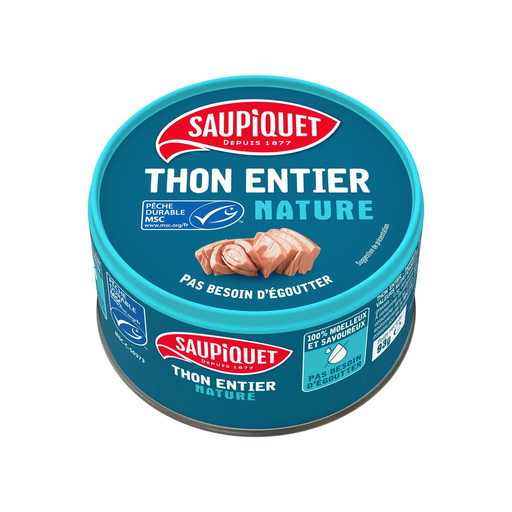 Image unavailable
Worth considering for a salad or filling where you want the tuna pieces to remain visible. The tin is labelled 93 g net weight; check its drained weight to work out how much you’ll need. Once opened, the instructions for this product say to transfer any leftovers to a non-metallic container, refrigerate and eat within 24 hours.
If the tin contains liquid, use the drained weight: this tells you how much tuna is left once drained. The total net weight includes the liquid too.
Follow the instructions on your tin for each stage. Before opening, Saupiquet recommends keeping one of its products in a cool, dry place. Once opened, storage times can vary by product. For its yellowfin tuna slices, Auchan advises transferring leftovers to an airtight container, storing them between 0 °C and +4 °C and eating them within 48 hours.
As the Ministry of the Economy points out, a best-before date does not mean the same as a use-by date. Always inspect the tin: the DGCCRF highlights bulging, rust and dents as signs to look out for. If the tin doesn’t look intact, don’t eat its contents.
Check the product name, ingredients and allergens, then the drained weight if the tin contains liquid. Nutritional information per 100 g lets you compare salt and fat in particular. Also check the date and storage instructions.
Yes. The Anses has specific recommendations for vulnerable groups, including pregnant people and children under 3. It notes that predatory wild fish such as tuna may contain methylmercury. Check the recommendations that apply to your situation rather than assuming all tins of tuna are the same.