Parents comparing how much tuna they can use
You want to know how much tuna will be left after draining so you can prepare dinner, rather than relying solely on the total weight shown on the tin.


For a children’s dinner, first compare the drained net weight with the amount you plan to serve, then check the ingredients and instructions for after opening. A smaller tin can help limit leftovers. An MSC label indicates that the fishery meets a certification standard, but it does not replace checking for the fish allergen or serving a variety of species, as recommended by Anses. For children under 3, also take account of its specific advice on wild predatory fish.
You want to know how much tuna will be left after draining so you can prepare dinner, rather than relying solely on the total weight shown on the tin.
You’re planning how much to serve your child and looking for a tin size that lets you share the contents or manage any leftovers properly.
You check the ingredients in tuna in spring water and want to serve children different species of fish, in line with Anses advice.
For a children’s dinner, start with the amount of fish you plan to serve, then check how much will actually be usable after draining. Ingredients and the fish allergen are separate considerations from the size of the tin.
| Criterion | What to check | Who it matters to |
|---|---|---|
| Drained quantity | Compare the drained net weight, not just the total weight of the tin. | For a shared dinner, I want to know how much tuna will go on the plates after draining; around 40% of consumers would prioritise this usable quantity. |
| Portions and leftovers | Check the size and the storage instructions after opening for the specific product you choose. | When serving a child, I want to adjust their portion without leaving an awkward amount of tuna to use up; nearly 30% of consumers would put portion control first. |
| Ingredients and variety | Read the ingredients and check for the fish allergen; also plan to serve other fish species at mealtimes. | I want to know what the tuna contains and avoid making it the only fish I serve my child; around 30% of consumers would prioritise these precautions. |
The size of the tin does not determine the portion. Manger Bouger says that a 50 g portion of fish is enough for children aged 4 to 6, with the amount increasing gradually to around 100 g by the age of 11.
Work out how many people you’re serving before opening the tin, and follow the packaging instructions if you’re keeping some for later.
Unused or improperly stored leftovers may go to waste.
A short ingredients list does not remove the fish allergen. Petit Navire also warns that some of its products may contain bones.
If your child is allergic to fish, don’t serve them tuna. Otherwise, read the label, check for any bones before serving and vary the fish species you offer.
A fishery label does not, by itself, tell you how much to serve, what the ingredients are or what precautions may be appropriate for your child’s age.
Consider certification separately: also check the drained net weight and label, and how often tuna features among the fish you serve.
The brand offers, among other products, MSC-certified tuna in spring water.
Saupiquet offers, among other products, 115 g fillets of skipjack tuna in spring water.
Carrefour describes a 140 g solid tuna product in spring water, with a drained net weight of 140 g.
One product of solid yellowfin tuna in spring water has a drained net weight of 140 g.
Auchan describes a 112 g drained product of skipjack tuna chunks in spring water.
The retailer describes its sourcing policy for tuna sold under its own brands.
These three Petit Navire products are tinned tuna options to consider when putting together a children’s dinner. The stated sizes don’t all tell you how much tuna will be left after draining, so check this information before dividing it into portions. These products contain fish and are not suitable for a child with a fish allergy.
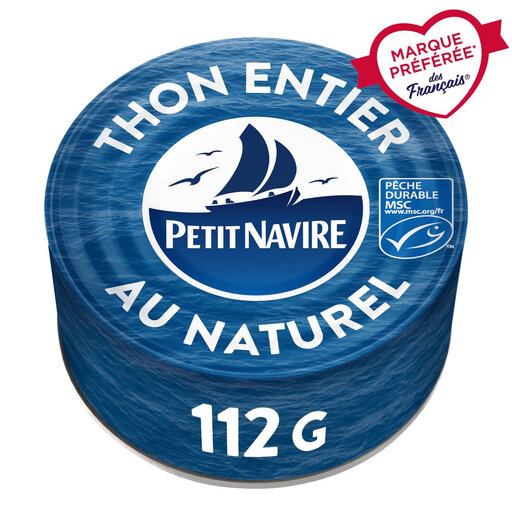 Image unavailable
Plan how much tuna to share across the meal: the Joybuy product details give a drained net weight of 112 g out of 160 g total. This product is listed as MSC-certified; check for any bones before serving.
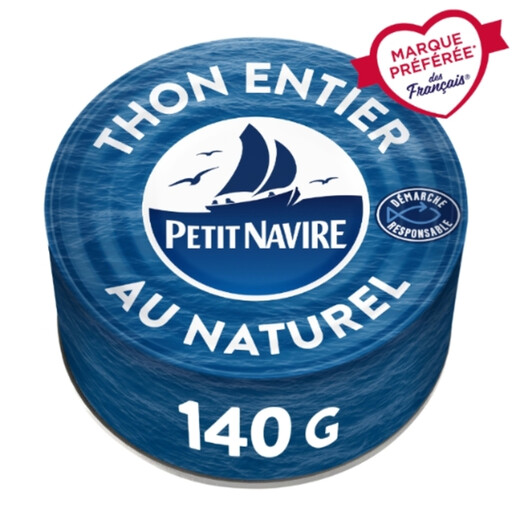 Image unavailable
A good option for a meal where you can adjust the portion to suit your child. The stated size is 140 g; check the drained net weight on the packaging before dividing up the contents.
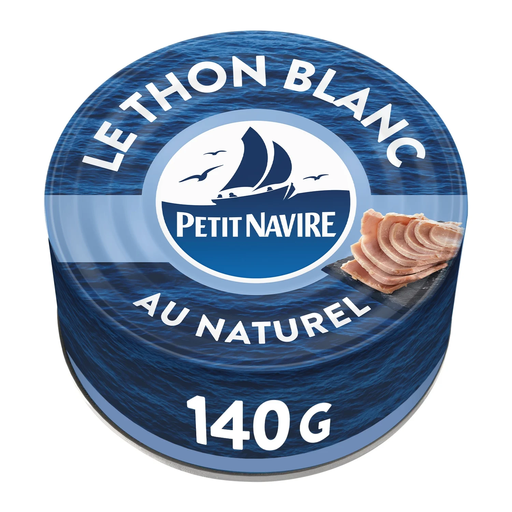 Image unavailable
For a dinner made with white tuna in brine. The stated size is 140 g; check the drained net weight to work out how much to serve.
Plan a portion that suits their age rather than serving the whole tin. For fish, Manger Bouger says that 50 g is enough for children aged 4 to 6. The amount then increases gradually to around 100 g by the age of 11. Also take account of the other parts of the meal.
It’s best to serve a variety of species rather than tuna every time. Anses recommends varying the types of fish you eat and highlights specific precautions around wild predatory fish for children under 3.
No. Tuna is a fish, even when it is sold in spring water. If your child is allergic to fish, avoid these tins and always check the allergens listed on the labels of foods you’re considering for the meal.
Follow the instructions for the product you bought, as these can vary. For example, Auchan advises transferring leftovers from its tuna chunks to an airtight container, storing them between 0 °C and +4 °C and eating them within 48 hours. The Joybuy product details for one Saupiquet product advise eating it within 24 hours of opening.