Anyone making crêpes for one or two people
If you want to avoid leftovers, compare smaller tins and, above all, their drained weight. Two tins with a similar net weight won’t necessarily contain the same amount of tuna.


For savoury crêpe fillings at Candlemas, start by choosing a tin based on its drained weight, which tells you how much tuna you’ll have once the liquid has been drained away. If you want visible chunks, look for the words ‘whole tuna’. To choose between two recipes, compare the ingredients, nutritional information and storage instructions after opening for each product.
If you want to avoid leftovers, compare smaller tins and, above all, their drained weight. Two tins with a similar net weight won’t necessarily contain the same amount of tuna.
If you want the tuna to remain recognisable in the filling, check for the words ‘whole tuna’. You can then flake the chunks to your preferred size for your crêpes.
If these factors matter to you, read the ingredients list, check the species and look at the traceability or fishing information for the specific tin you choose.
For a small batch, first estimate how much tuna you’ll need by checking the drained weight. Then decide whether you’d prefer visible chunks or a more finely flaked filling, and compare recipes that suit your choice.
| Criterion | What to check | Who is it for? |
|---|---|---|
| Usable quantity | Where shown, compare the drained net weight with the number of crêpes you want to fill. A 140 g net tin of Petit Navire lists a drained weight of 98 g. | I’m making just a few crêpes and want to avoid having a lot left over. Around 30% of consumers put this usable quantity first. |
| Texture | Check whether the tin says ‘whole’, ‘chunks’ or ‘flakes’, depending on how you plan to serve the tuna. | I want the chunks to be distinct in the crêpe rather than mixed completely into the filling. Texture would be the top priority for around 30% of consumers. |
| Ingredients | Read the ingredients and nutritional information, particularly the salt and fat per 100 g, for the products you’re comparing. | I prefer to decide for myself whether to add oil or other ingredients to my filling. Around 20% of consumers would put the ingredients first. |
| Fishing and traceability | Check the species and the exact wording of any certification, sourcing or origin claims on the product. | I want to know about the fishing practices associated with the tin I buy. This would be the top criterion for around 20% of consumers. |
Net weight includes the liquid. A 140 g net tin of Petit Navire lists a drained weight of 98 g. That second figure is the one to use when working out how much filling you’ll have.
If the tin lists a drained net weight, use that figure to estimate how much tuna you’ll need for your crêpes.
Ingredients and nutritional values vary from one product to another. Petit Navire’s product information lists 1 g of fat per 100 g for its MSC tuna in brine, compared with 10 g per 100 g for a sunflower oil variety.
If you’d like to add the fat to the filling yourself, consider a tuna in brine recipe. If you choose a tin in oil, take that oil into account when making your filling.
Instructions vary by product: Saupiquet advises keeping its MSC whole tuna in brine in the fridge for two days, while Joybuy’s product information for a 140 g Petit Navire tin says to transfer it to a non-metallic container and consume within 24 hours.
Follow the storage instructions on the product you’ve bought rather than applying the guidance for a different tin.
The Anses has specific recommendations on fish consumption for pregnant or breastfeeding women and children under 3, particularly because of methylmercury.
If anyone in your household falls into one of these groups, check the Anses recommendations for their circumstances. The size of the tin won’t answer this question.
The sizes and recipes below relate to specific products. Check the details on the tin you choose rather than assuming they apply to the whole brand.
The brand offers tuna in brine and in oil in a range of sizes.
Saupiquet’s product information for its MSC whole tuna in brine includes 93 g, 112 g and 140 g sizes.
Carrefour offers whole tuna in brine in a tin with a drained net weight of 140 g.
E.Leclerc offers a 140 g drained net weight tin of whole albacore tuna in brine under this brand.
Auchan offers whole skipjack tuna in brine in a 140 g tin.
These tins offer tuna in brine or oil for savoury crêpe fillings. Where stated, compare the drained weight, the tuna description and the ingredients to find the right option for your recipe.
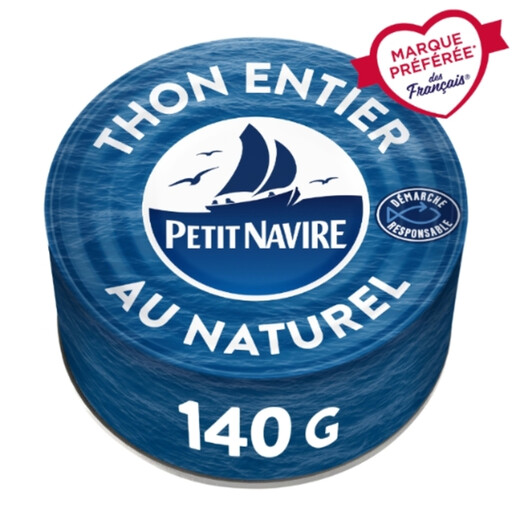 Image unavailable
This product lists both net and drained weights, making it easy to work out how much to use for a small filling.
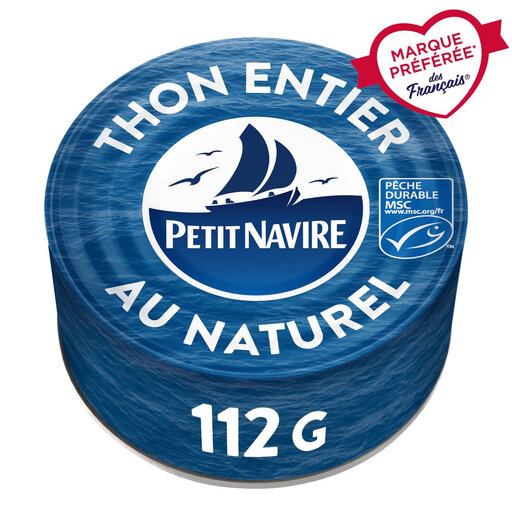 Image unavailable
This tin makes it easy to plan a tuna-in-brine filling using the 112 g drained weight shown.
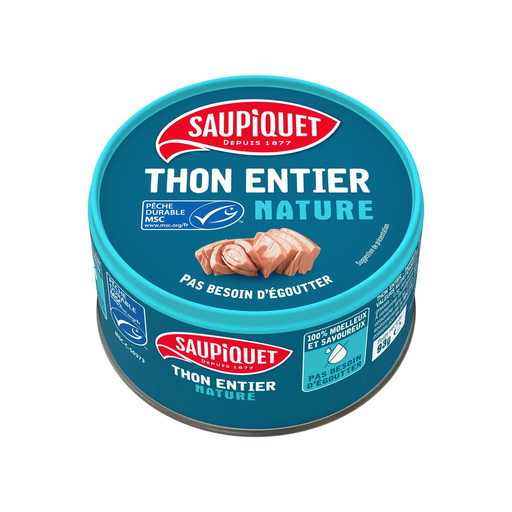 Image unavailable
The 93 g size may suit anyone making just a few crêpes and looking for distinct pieces of tuna.
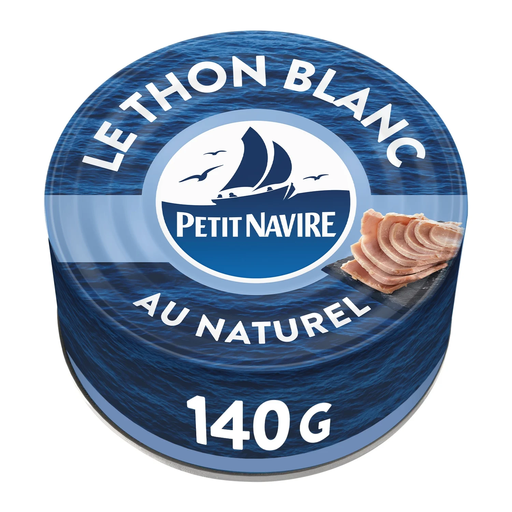 Image unavailable
This 140 g tin is an option if you want to use white tuna in brine in your recipe.
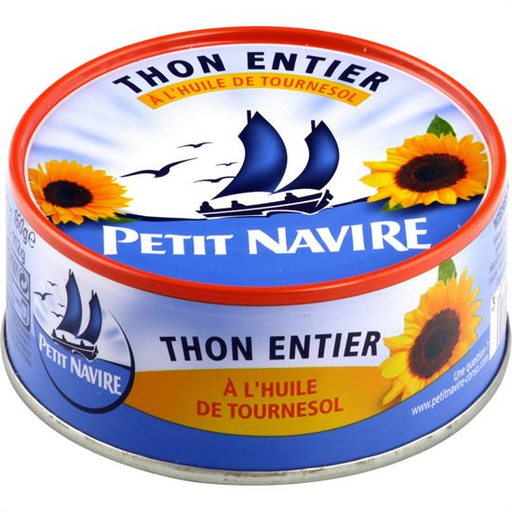 Image unavailable
Choose this recipe if you’d like the filling to include tuna and sunflower oil, rather than adding the fat separately.
It tells you how much solid product you’ll have when the tuna is packed in liquid. The DGCCRF requires this weight to be shown in such cases. For example, a 140 g net tin of Petit Navire lists a drained weight of 98 g.
Read the product name, ingredients, highlighted allergens, net quantity and nutritional information. For prepacked food sold in France, the DGCCRF also sets out the applicable labelling rules, including the requirement to show drained net weight when the product is packed in liquid.
Follow the instructions on the tin you’ve bought, as they vary from product to product. Saupiquet advises keeping its MSC whole tuna in brine in the fridge for two days; Joybuy’s product information for a 140 g Petit Navire tin says to transfer the contents to a non-metallic container, refrigerate and consume within 24 hours.
The Anses has specific recommendations on fish consumption for pregnant or breastfeeding women and children under 3, particularly because of exposure to methylmercury. If this applies to you, check its recommendations for your circumstances rather than choosing tuna based only on the size of the tin.
No. A fishing label on a product doesn’t tell you, on its own, how much tuna you’ll have once drained, what the ingredients are or what texture you can expect in your filling. Check these details separately on the tin you’re considering.