People keeping an eye on added sugars
You’re looking for a recipe with no added sugar, while remembering that naturally occurring sugars are still included in the nutritional information.


For a quick dinner, choose tinned sweetcorn with a recipe and pack size that suit your meal, then compare the sugars listed per 100 g. ‘No added sugars’ does not mean ‘sugar-free’ or ‘reduced in sugars’, so also check the drained weight, salt content and storage instructions once opened.
You’re looking for a recipe with no added sugar, while remembering that naturally occurring sugars are still included in the nutritional information.
You want to be able to drain the sweetcorn and use it quickly, cold or in a hot dish, without choosing a pack size that leaves too much over.
You check the ingredients, sugars and salt per 100 g, as well as the drained weight or origin, rather than relying on a single claim on the front of the pack.
Start by distinguishing between no added sugar and the total sugar content. Then check how much you’ll actually serve and any other details that matter for your meal.
| Criterion | What to check | Who is it for? |
|---|---|---|
| Added sugars | Read the ingredients list and the ‘of which sugars’ line per 100 g; these are two separate pieces of information. | If I want to avoid sugar being added to the recipe, the claim on the front of the pack isn’t enough to tell me the total sugar content. Around 36% of consumers prioritise no added sugar. |
| Serving and pack size | Compare the drained net weight and storage instructions for after opening. | When preparing dinner quickly, I look for an amount that suits the number of people eating, so there’s no food left unused. Quick serving and pack size come first for around 29% of consumers. |
| Sugars and salt | Compare the ‘of which sugars’ and salt values on the same basis, per 100 g. | When two recipes carry a similar claim, I want to compare their nutritional values without assuming that one is better overall based on a single figure. Around 21% of consumers prioritise this comparison first. |
| Origin and certification | Check the exact claim on the product you’re considering, then look at its ingredients separately. | If the origin of the sweetcorn or an organic label guides my choice, I don’t assume this tells me anything about its sugar or salt content. Around 14% of consumers prioritise this. |
These claims refer to different things. According to the Institut national de la consommation, ‘reduced in sugars’ means the product contains at least 30% less sugar than a similar product; naturally occurring sugars are still included in the nutritional values.
Check both the ingredients and the ‘of which sugars’ line per 100 g. Don’t assume a product has less sugar than a comparable one just because no sugar has been added.
The total weight includes the liquid, while the drained weight tells you how much sweetcorn you’ll have for your meal.
Check the drained net weight for each product before choosing a pack size.
An opened tin may leave you with more sweetcorn than you need for dinner.
Choose an amount that suits the number of people eating and follow the pack instructions. For the Bonduelle product featured on this page, the brand advises storing it in the fridge at a maximum of 4 °C and using it within 48 hours of opening.
Origin, production method, ingredients and nutritional values answer different questions.
Check each detail for the product you’re considering, especially sugars and salt per 100 g if you want to compare recipes.
The range includes tins of sweetcorn labelled ‘no added sugars’, including 140 g and 285 g drained sizes, according to Bonduelle.
The 285 g Maïs Croquant Sans Sucres Ajoutés lets you check the ingredients and nutritional values for a supermarket own-brand product.
ALDI offers a 285 g tin of organic sweetcorn for people who want to consider how it was produced.
Auchan offers, among other products with different claims, organic sweetcorn in a jar labelled ‘no added sugars’.
These products include sweetcorn kernels and baby corn. First choose the type that suits your dinner, then check the ingredients, pack size and information on the packaging. A sugar value on its own doesn’t prove that a product is ‘reduced in sugars’.
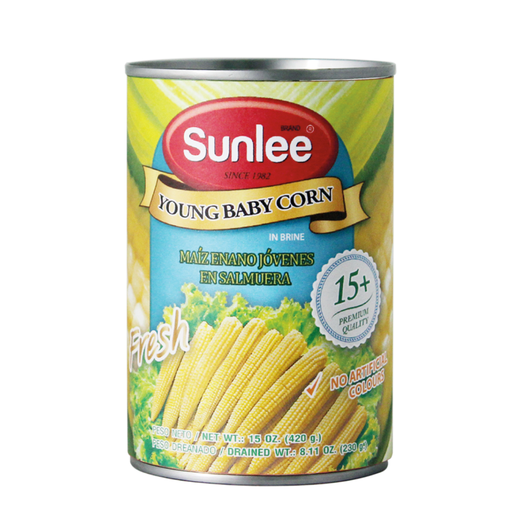 Image unavailable
Worth considering if you’re looking for baby corn rather than sweetcorn kernels for a salad or hot dish. Check the drained weight and instructions for after opening on the packaging.
 Image unavailable
The two portions may suit you if you’d rather open the sweetcorn as you need it for different meals. Check the drained weight and the ‘of which sugars’ line for this product before comparing it with another.
 Image unavailable
This kernel variety could work in a salad or as a hot side dish. The claim in its name doesn’t replace checking the ingredients, nutritional values and drained weight.
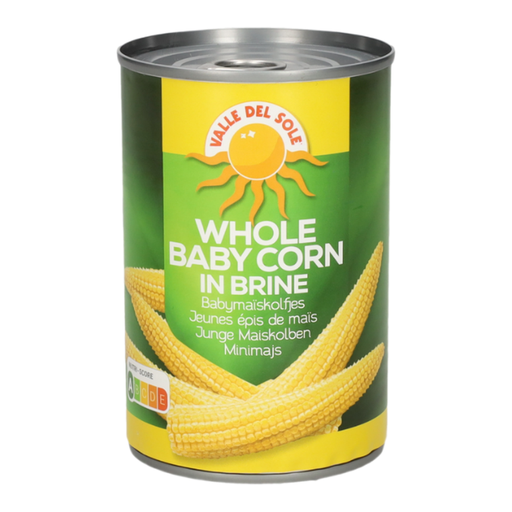 Image unavailable
This baby corn is a different type of product from sweetcorn kernels. Before adding it to a quick dinner, check the preparation instructions and drained weight on the packaging.
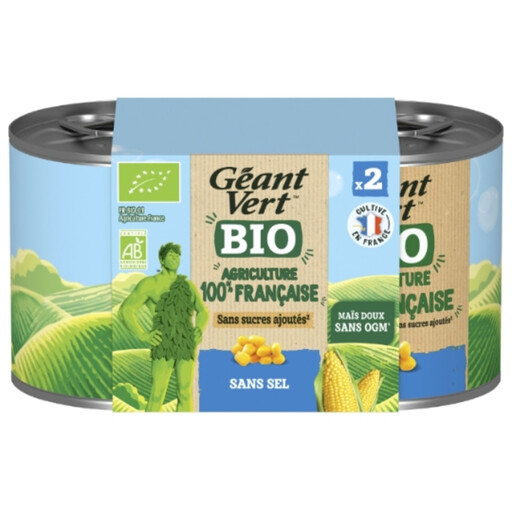 Image unavailable
This kernel product is worth a look if you’re after sweetcorn for a salad or quick side dish. Check the quantity and drained weight on the packaging before planning portions; the title and description on the product page give different weights.
No. Having no added sugar in the recipe doesn’t prove that a product contains less sugar than a similar one. The Institut national de la consommation states that a ‘reduced in sugars’ claim requires a reduction of at least 30%; also check the ‘of which sugars’ line per 100 g.
No. Bonduelle lists 5.1 g of sugars per 100 g for its product with a drained weight of 285 g, including naturally occurring sugars. If you’re comparing total sugar content, rather than simply looking for no added sugar, compare the values per 100 g.
Follow the instructions for the tin you’ve bought. For the Bonduelle product featured here, the brand advises storing it at a maximum of 4 °C after opening and using it within 48 hours.
Start with how much sweetcorn you plan to serve and compare the drained net weights. If you won’t need the whole tin for your meal, choose a pack size that lets you use the leftovers in line with the product’s storage instructions.