People avoiding added sugars
If you’re putting together a simple lunch, you may be looking for a product with no added sugar in the ingredients. However, this doesn’t remove the sugars naturally present in sweetcorn.


For a school-holiday lunch, choose sweetcorn labelled ‘no added sugars’ if your priority is avoiding added sugar. Also compare the ‘of which sugars’ figure per 100 g: this claim doesn’t rule out naturally occurring sugars. Salt, organic status and pack size are separate considerations, so choose according to what you’re serving and how much you need.
If you’re putting together a simple lunch, you may be looking for a product with no added sugar in the ingredients. However, this doesn’t remove the sugars naturally present in sweetcorn.
Whether you’re making a salad, a wrap or a side dish, the drained net weight and number of tins in a pack can help you decide how much to open and plan for any leftovers.
If these factors matter for your lunch, consider them separately from claims about sugars. The ingredients list and nutrition information can help you make a more informed choice.
First, distinguish between no added sugars and the total amount of sugars. Then compare salt and pack size according to the meal you have planned: an organic or no-added-salt tin won’t necessarily meet the same priority.
| Criteria | What to check | Who it matters to |
|---|---|---|
| Sugars and claims | Ingredients list, ‘of which sugars’ per 100 g and the exact wording of the claim. | If I want to avoid added sugar, I also need to know how much sugar the sweetcorn contains overall. Around 36% of consumers would make this distinction a priority. |
| Meal and pack size | Drained net weight and number of tins in the pack. | For a quick salad or side dish, I’m looking for an amount that suits the number of people eating. This would be the main consideration for around 29% of consumers. |
| Salt and organic status | Salt in the ingredients list, the amount per 100 g and an organic label if that matters to you. | If other foods at lunch are salty, I may want to check the salt in the sweetcorn before choosing a tin. Around 21% of consumers would prioritise this aspect of the ingredients, including organic status. |
| Leftovers after opening | How much you need to open and the product’s storage instructions. | When lunch varies from day to day, I prefer to be able to use the opened product within the stated time. Around 14% of consumers would put managing leftovers ahead of other criteria. |
Bonduelle explains that its sweetcorn with no added sugars contains naturally occurring sugars. So the claim alone doesn’t tell you the total amount of sugars.
Read the ingredients list and compare the ‘of which sugars’ figure per 100 g. If you’re looking for a low-sugar or reduced-sugar claim, check the exact wording too.
Storage instructions change once a tin is open and vary by product. For its 570 g Supersweet sweetcorn listed on Joybuy, Bonduelle recommends transferring it to an airtight container, keeping it in the fridge and using it within two days.
Choose an amount that suits your lunch, or plan to use the rest later within the time stated on your tin.
Bonduelle’s no-added-sugars product lists salt among its ingredients. By contrast, Carrefour lists a Géant Vert organic product made with sweetcorn and water, described as having no added salt or sugar.
If salt matters to you, check whether it’s in the ingredients and how much the product contains per 100 g.
Bonduelle offers a tinned sweetcorn product labelled ‘no added sugars’, among other options.
Carrefour offers sweetcorn with no added sugars in a pack of three tins, each with a drained net weight of 140 g.
Carrefour offers a Géant Vert organic product described as having no added salt or sugar.
Auchan offers a D’Aucy organic sweetcorn product with no added sugars in a pack of two 140 g tins.
These two tins contain baby corn, not the sweetcorn kernels found in the products mentioned above. If you’re making a salad or side dish, check that this type suits your recipe. Don’t assume that a low sugar figure alone means a product is labelled ‘reduced sugar’.
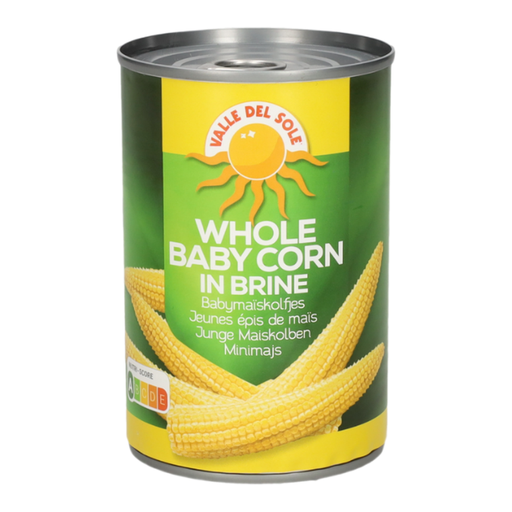 Image unavailable
For a salad or side dish, choose this baby corn if its shape suits your recipe, rather than using standard sweetcorn kernels.
Pack size listed: 400 g. If the total amount of sugars is your main priority, check the nutrition information and wording of any claims on the packaging.
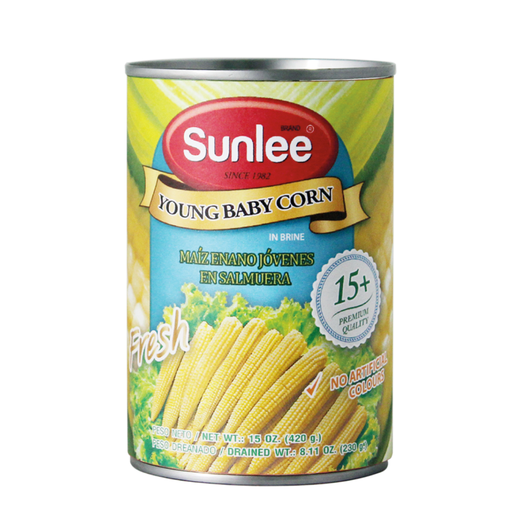 Image unavailable
If you’re planning to serve baby corn in a salad or another dish, check that this product is the shape you want, rather than sweetcorn kernels.
Pack size listed: 420 g. Check the packaging to compare sugars per 100 g and find out how to store the product after opening.
No. Sweetcorn can contain naturally occurring sugars, as Bonduelle notes for its no-added-sugars product. If you’re comparing total sugars, check the ‘of which sugars’ figure per 100 g.
These claims refer to different criteria. Under European Regulation (EC) No 1924/2006, the ‘low sugars’ claim for a solid food means it contains no more than 5 g of sugars per 100 g. Check the claim on the product and its nutrition information rather than assuming one means the other.
No. Follow the storage instructions on the tin after opening. For its 570 g Supersweet sweetcorn listed on Joybuy, Bonduelle advises transferring it to an airtight container, keeping it in the fridge and using it within two days. This timeframe doesn’t automatically apply to other products.
No. Organic status, no added salt and no added sugars are separate criteria. Carrefour’s Géant Vert product combines these features, but if added sugar is your only concern, compare the ingredients list and ‘of which sugars’ figure for the products you’re considering.