People keeping an eye on declared sugars
You want to avoid added sugar while still keeping track of the amount of sugars listed per 100 g. Bonduelle and E.Leclerc product information shows why you should check these two details separately.


For an Easter lunch, if you want to avoid added sugars, start by checking the ingredients, then look at the ‘of which sugars’ line in the nutrition information. ‘No added sugars’ does not mean there are no naturally occurring sugars. Compare the salt content too, along with the type of corn and the quantity you’ll need for your guests. And don’t mistake this claim for a reduced-sugar product.
You want to avoid added sugar while still keeping track of the amount of sugars listed per 100 g. Bonduelle and E.Leclerc product information shows why you should check these two details separately.
You’re looking for a short ingredient list for your meal and want to know whether it contains salt. Depending on the product, Bonduelle, Carrefour and E.Leclerc list either corn and water, or corn, water and salt.
You want to find an organic product, check where the corn comes from or see where it was made. This information relates to the specific products described by Carrefour, E.Leclerc or Auchan; it doesn’t replace checking the sugars and salt.
When choosing corn for Easter lunch, check the ingredients and declared sugars first, then look at the other details that could affect your choice of product or pack size.
| What to check | What to look for | Who is it for? |
|---|---|---|
| Sugars | The ingredients, the ‘no added sugars’ claim and the ‘of which sugars’ figure per 100 g, using the same basis for comparison. | If I want to avoid added sugar, I also want to know how much sugar is naturally present in the corn. Around 43% of consumers would put this distinction first. |
| Ingredients and salt | The full ingredients list and the salt content per 100 g; look for a clear statement if you want a recipe with no salt. | If I’m serving corn with a short ingredient list, I want to know whether salt is included. This would be the top priority for around 29% of consumers. |
| Organic status and origin | Organic claims, the origin of the corn and where the specific product was made. | If origin matters for my meal, I prefer it to be stated for the corn I buy. Around 14% of consumers would prioritise this or organic status. |
| Pack size | The drained weight, the number of containers and the quantity to serve, depending on how many guests you have. | When I’m preparing several plates, I want the right amount without using more containers than necessary. Pack size would come first for around 14% of consumers. |
According to Bonduelle, its ‘no added sugars’ corn contains naturally occurring sugars and has 5.1 g of sugars per 100 g. This claim also doesn’t prove that the product contains less sugar than another one.
Check the ingredients and the ‘of which sugars’ line for the exact product. When comparing two figures, make sure they refer to the same quantity and the same product format.
Carrefour’s product information for Géant Vert organic corn with no added salt lists corn and water. The E.Leclerc product information for Bio Village and the Auchan product information for Auchan Bio both list salt in the ingredients.
If you’re looking for a recipe with no salt, check this on the product you choose, even if it’s organic.
For its ‘no added sugars’ corn, Bonduelle advises keeping it at a maximum of 4 °C and using it within 48 hours of opening. These instructions apply to this specific product.
Follow the instructions on your tin. If there are any leftovers, transfer them to a clean, sealed container and refrigerate promptly. Anses recommends keeping food between 0 and +4 °C in the coldest part of the fridge.
The details below apply to specific products, not to every product from each brand.
Sweetcorn labelled ‘no added sugars’. Bonduelle describes this product’s ingredients as corn, water and salt.
The organic, no-added-salt and no-added-sugars product listed by Carrefour contains organic sweetcorn and water.
E.Leclerc lists a crunchy sweetcorn product with no added sugars in a 285 g pack.
Organic sweetcorn. E.Leclerc’s product information gives the corn’s origin and says it was made in France.
Organic sweetcorn with no added sugars, which Auchan offers in two 140 g containers.
These products include sweetcorn kernels and baby corn. If you’re making a sweetcorn salad, check the difference between the two types before choosing a pack size. If the amount of sugars is important to you, read the nutrition information for the specific product you’re considering.
 Image unavailable
A sweetcorn kernel product to consider if it suits the dish you’re planning for lunch. The stated pack size is 400 g. Check the product format and the basis used for the nutrition figures on the packaging before comparing it with other products.
 Image unavailable
Sweetcorn kernels to consider for a salad or side dish, depending on how much you need. The stated pack size is 570 g. To assess the sugars listed, check the basis used for the nutrition figures for this product.
 Image unavailable
This organic sweetcorn kernel product could suit you if you want to open the two containers separately for your meal. The pack contains 2 × 140 g. Check the ingredients and the basis used for the nutrition figures if salt or sugars are important to your choice.
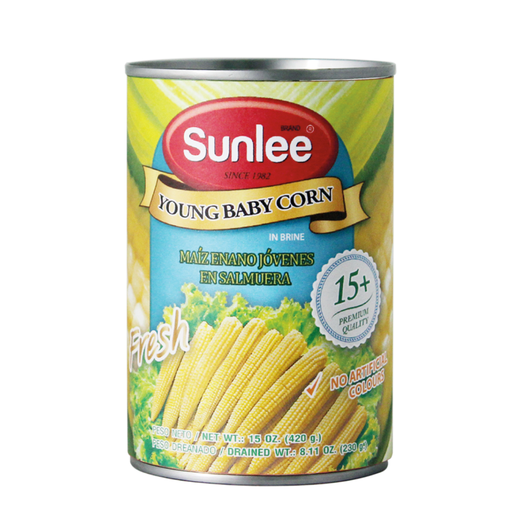 Image unavailable
Consider this if you’d like to serve baby corn rather than sweetcorn kernels: they’re two different formats for your planned dish. The stated pack size is 420 g. Don’t compare its sugar figure with another product without checking the nutrition basis first.
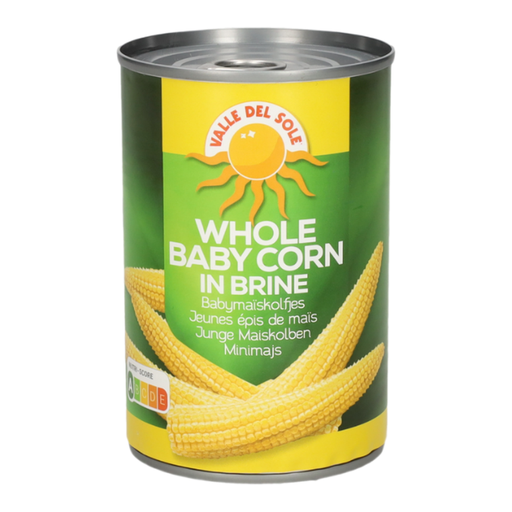 Image unavailable
Another baby corn option if it suits your salad or dish better than sweetcorn kernels. The stated pack size is 400 g. Read the nutrition information for the exact product before comparing its sugars with those of another product.
No. Corn can contain naturally occurring sugars. Bonduelle lists 5.1 g of sugars per 100 g for its ‘no added sugars’ product. Check the ‘of which sugars’ line if this amount matters to your choice.
Choose a product whose ingredients list doesn’t mention salt, and check the exact variety. Carrefour lists its Géant Vert organic corn with no added salt as containing only organic sweetcorn and water, while the Bonduelle, Notre Jardin and Auchan Bio products described above contain salt.
Follow the instructions on the tin you’ve bought and refrigerate any leftovers promptly in a suitable container. For its ‘no added sugars’ corn, Bonduelle advises keeping it at a maximum of 4 °C and using it within 48 hours. Anses recommends keeping food between 0 and +4 °C in the coldest part of the fridge.
No. The organic label alone doesn’t tell you how much sugar is declared. E.Leclerc lists 4.9 g of sugars per 100 g for Bio Village, while Auchan lists 5.2 g for Auchan Bio. Check the figure for the product you choose, and make sure the products you’re comparing use the same basis.