Shoppers avoiding added sugars
If avoiding added sugar guides your choice, read the ingredients first, then check the ‘of which sugars’ line in the nutrition information. These two details answer different questions.


For a picnic, first choose sweetcorn whose ingredients list matches your preference for avoiding added sugars. Don’t confuse this with the total sugar content. Then compare the nutrition information per 100 g and the drained weight: choosing a pack you’ll use in full means you won’t have to store an opened tin while you’re out.
If avoiding added sugar guides your choice, read the ingredients first, then check the ‘of which sugars’ line in the nutrition information. These two details answer different questions.
For a salad or wraps for one or two people, the drained weight can help you choose an amount you’ll use up, rather than having to carry an opened tin with you.
If either of these matters to you, check that it applies to the exact product you’re buying. Organic certification and a claim about pesticide residues refer to different product characteristics.
Start by distinguishing the ingredients from the nutrition information, then choose an amount of sweetcorn you’ll actually use for the meal.
| What to consider | What to check | Who it matters to |
|---|---|---|
| Added and total sugars | The ingredients list and the ‘of which sugars’ figure per 100 g. | If you want to avoid added sugar, check the naturally occurring sugars too before choosing. Around 42% of shoppers are thought to make this distinction their top priority. |
| Pack size and leftovers | The drained weight and storage instructions after opening. | If you’re making a small salad, choose an amount you can use without having to keep leftovers with you on the way. This is thought to be a priority for around 33% of shoppers. |
| Other characteristics | Organic certification or a specific claim on the packaging; for texture, the type of sweetcorn on offer. | You might prefer organic sweetcorn, a residue claim or baby corn rather than kernels, as long as the product suits your dish. Around 25% of shoppers are thought to put one of these characteristics first. |
No added sugar doesn’t tell you the total sugar content. For one of its no-added-sugar products, Bonduelle France lists 5.1 g of sugars per 100 g.
Check the ingredients and the ‘of which sugars’ figure per 100 g separately on the tin you choose.
The total weight of a tin containing liquid doesn’t necessarily match the amount of sweetcorn you’ll add to your salad. The DGCCRF states that the drained weight must be shown for a product packed in liquid.
Choose a pack based on its drained weight and the number of people you’re serving.
A tin that’s too large could leave you with sweetcorn to store after your picnic.
Once you’ve added the sweetcorn to a salad, the other ingredients and their storage requirements matter too. Anses recommends limiting the time that perishable foods are kept at room temperature and putting them back in the fridge promptly.
Prepare the salad close to when you’re setting off or eating, and keep any ingredients that need it chilled.
Organic certification, a residue claim, the ingredients and the nutrition information each describe different aspects of a product.
Read the label on the product you buy, particularly if its ingredients may vary depending on the collection point.
Bonduelle France offers no-added-sugar sweetcorn in a range of pack sizes.
Carrefour France offers a no-added-sugar sweetcorn product in a tin with a drained weight of 285 g, as well as multipacks.
The jarred product listed by Auchan France contains 230 g of drained sweetcorn and carries a ‘no added sugars’ claim.
Auchan France lists an organic, no-added-sugar product in a pack of two 140 g tins.
ALDI France offers a 420 g tin of sweetcorn described as having no added sugars.
This range includes sweetcorn kernels in different pack sizes, as well as baby corn for salads. If you specifically want a ‘no added sugars’ claim, check the packaging of the product you choose. The type of sweetcorn and drained weight also matter for your picnic.
 Image unavailable
Sweetcorn kernels to consider for a cold picnic salad.
Listed size: 285 g. Check the drained weight, added-sugar information and residue claim on the packaging of this specific product.
 Image unavailable
The two smaller tins could suit you if you’re making salad in batches or want to open just one tin.
Listed size: 2 × 140 g. Check the drained weight and sugar information on the packaging.
 Image unavailable
This pack size is worth considering for a salad to share, if the drained amount suits the number of people you’re serving.
Listed size: 570 g. Check the drained weight and sugar information before choosing this tin for a small dish.
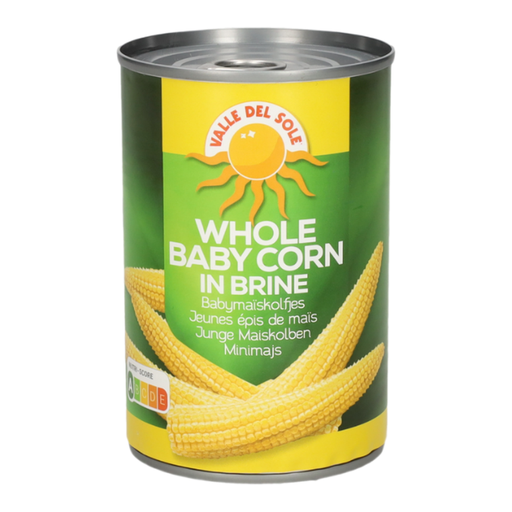 Image unavailable
These baby corn cobs are suited to a salad where you want to keep the cobs whole rather than use sweetcorn kernels.
Listed size: 400 g. Check the drained weight and sugar information on the tin.
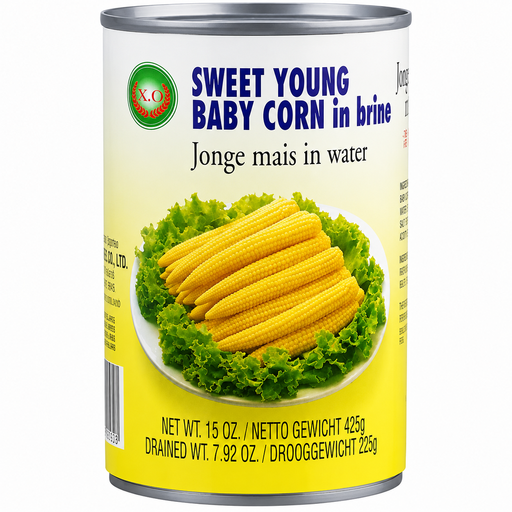 Image unavailable
These baby corn cobs are an option for a picnic salad, but they aren’t a substitute for sweetcorn kernels if that’s what your recipe calls for.
Listed size: 425 g. Check the drained weight and the sugar and salt information on the packaging.
No. The claim is about added sugar, not the total sugar content. Bonduelle France lists 5.1 g of sugars per 100 g for one of its no-added-sugar products. Check the ‘of which sugars’ figure for the product you’re planning to buy.
Yes, as long as you follow the date and storage instructions on the tin. Once opened, follow the instructions for that specific product. If you mix the sweetcorn with other ingredients, take their refrigeration requirements into account too.
To estimate how much sweetcorn to add to your salad, check the drained weight. The DGCCRF states that this must appear on the label when a product is packed in liquid.
Not necessarily. Auchan France says the ingredients for this product may vary depending on the collection point and purchase date. Check the ingredients on the jar you receive.