People who keep a supply at work
You regularly prepare salads or side dishes and would rather keep several tins sealed than rely on a single tin that has already been opened.


If you’re planning several office lunches, choose a multipack of larger tins if you can use each one soon after opening. Smaller tins are a better fit if you only have one portion of sweetcorn at a time. Compare the drained weight per tin and the claims that matter to you, without assuming that organic status, country of origin and pesticide-residue claims mean the same thing.
You regularly prepare salads or side dishes and would rather keep several tins sealed than rely on a single tin that has already been opened.
You use only a little sweetcorn with each meal and want a tin size that leaves fewer leftovers to refrigerate.
You compare products based on a specific criterion, such as salt, organic status, country of origin or a pesticide-residue claim.
For a quick lunch at work, start with how much you’ll use each time you open a tin. The number of sealed tins and the total pack weight alone won’t tell you whether each tin is the right size for your portion.
| What to consider | What to check | Who is it for? |
|---|---|---|
| Stock for several meals | Number of sealed tins and total drained weight; an Auchan pack of 3 × 285 g contains 0.855 kg net drained weight. | I’m planning several lunches or sharing the cupboard: I want to open one tin without using up the whole supply. Around 42% of consumers in this group would put this need first. |
| Leftovers after opening | Drained weight per tin and storage instructions after opening; compare 140 g tins with larger ones in particular. | For a solo lunch, I’d rather open an amount close to what I’ll use. Small portions would be the top priority for around 33% of consumers in this group. |
| On-pack claims | Ingredients list, the “salt” line in the nutritional information and the exact wording of organic, origin or residue-related claims. | I’m looking for a specific feature and don’t want to assume one claim guarantees another. Around 25% of consumers in this group would make this their top priority. |
A multipack keeps several tins sealed for later, but its value also depends on how much you use each time you open one. The instructions for the Auchan and Bonduelle products mentioned here say to transfer leftovers to an airtight container, refrigerate them and eat them within two days.
Work out how much you’ll use within that time and compare packs of smaller tins if you have lunch on your own.
A tin that’s too large can leave you with unused sweetcorn once it’s been opened.
Three small tins and three large tins both give you a supply, but they don’t mean you have to open the same amount for lunch.
Check both the total net drained weight and the weight of each tin, then choose to suit your meal routine.
These claims relate to different criteria. Bonduelle defines its own “no pesticide residues” claim according to a testing threshold declared by the brand; on its own, this does not mean a product is organic.
Decide which criterion matters most, then check the exact wording on the product you choose, along with its ingredients list and nutritional information.
The DGCCRF distinguishes between a best-before date (DDM) and a use-by date (DLC). A product may be usable after its best-before date, provided, among other things, that its packaging has not been damaged.
Check the date and storage instructions, inspect the tin and don’t eat the contents if the packaging looks damaged.
A range of sweetcorn in smaller formats and multipacks, with claims that vary by product.
A range to consider if you’re deciding between different tin sizes and multipacks for the cupboard.
A 3 × 285 g multipack to consider if you want to keep several tins sealed for planned meals.
Two Aldi products let you consider an organic-labelled tin and a larger-format tin separately.
These tinned sweetcorn options show different ways to choose for an office lunch: smaller tins in a multipack, a tin chosen for its on-pack claim, or a large tin to use across several meals.
 Image unavailable
The two small tins are a good fit if you want to open a smaller amount for a solo lunch.
The description says this sweetcorn is organically grown. After opening, it advises refrigerating any leftovers and eating them within two days.
 Image unavailable
This single tin lets you add sweetcorn to a salad or side dish without buying a multipack.
“No pesticide residues” is a product claim, not an organic claim. The description gives the country of origin as France and says to refrigerate leftovers after opening and eat them within two days.
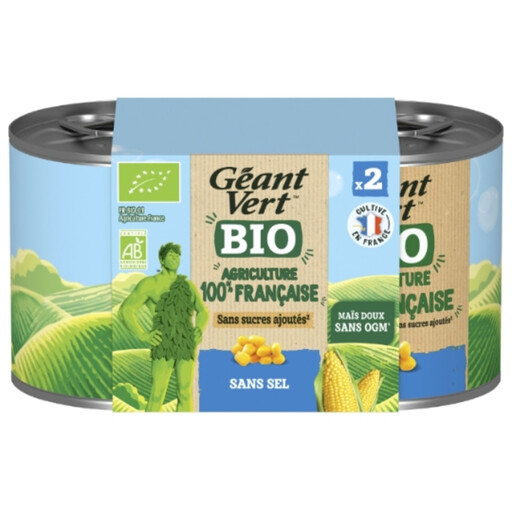 Image unavailable
This sweetcorn is described as ready to eat in a salad or as a quick side dish.
Before choosing this product for its size or claims, check the packaging: the title lists both “2 × 1/4 kg” and “300 g”, while the description also refers to a 285 g tin. It lists salt among the ingredients, despite “Unsalted” in the title.
 Image unavailable
This single 570 g tin is a good choice if you can use several portions soon after opening. If you only use a little sweetcorn, it’s likely to leave more leftovers than a smaller tin.
The description advises transferring any remaining contents to an airtight container, refrigerating them and eating them within two days of opening.
Choose based on how much sweetcorn you’ll use each time you open a tin, not just the total pack weight. A multipack of large tins can work well for several planned meals; for a small individual portion, smaller tins mean fewer leftovers to store.
For the Auchan and Bonduelle products mentioned here, transfer leftovers to an airtight container, refrigerate them and eat them within two days. Follow the instructions on the tin you buy if they differ.
No. The claim “no pesticide residues” isn’t enough to establish that sweetcorn is organic. Bonduelle defines its own claim using a declared testing threshold of 0.01 mg/kg. If organic status matters to you, check for a separate organic claim on the product.
Passing a best-before date doesn’t automatically mean the product can no longer be used. The DGCCRF distinguishes a best-before date from a use-by date: check that the tin is intact and follow its storage instructions. Don’t eat the contents if the packaging looks damaged.