People avoiding added sugar
If you want plain sweetcorn in your cupboard, look for a simple ingredients list. The ‘no added sugar’ claim doesn’t remove the sugars naturally present in sweetcorn.


If your priority is avoiding added sugar, start with the ingredients list and the ‘no added sugar’ claim. This doesn’t mean ‘sugar-free’ or automatically ‘reduced in sugars’. Then compare the ‘of which sugars’ figure on the same basis. No-salt or organic sweetcorn meets a different priority and should be assessed separately.
If you want plain sweetcorn in your cupboard, look for a simple ingredients list. The ‘no added sugar’ claim doesn’t remove the sugars naturally present in sweetcorn.
If the rest of your meal is already salty, you may want to look for a no-salt recipe or compare the ‘salt’ figure per 100 g. This is separate from the amount of sugars.
You may prefer an organic option, a stated country of origin or a claim about pesticide residues. Check the ingredients, sugars and salt of your chosen product separately, too.
When stocking your cupboard, start with your priority: added sugar, salt or production method. Then check the drained weight to choose a size that suits your meals.
| Criterion | What to check | Who is it for? |
|---|---|---|
| Sugars | The ingredients list, the ‘no added sugar’ claim and the ‘of which sugars’ figure per 100 g, using the same basis for comparison. | I want to keep plain sweetcorn for my meals without confusing no added sugar with no sugars. Around 50% of consumers in this group prioritise this criterion. |
| Salt | The ingredients and the ‘salt’ figure per 100 g. Don’t infer the salt content from a claim about sugars. | If other foods in the meal are already salty, I prefer to choose sweetcorn based on its salt content. This is the priority for around 30% of consumers in this group. |
| Production | The organic claim, country of origin or exact claim on the product, followed by its nutritional values and drained weight. | I prioritise a growing method stated on the product without assuming it changes the sugar or salt content. Around 20% of consumers in this group make it their top criterion. |
Sweetcorn naturally contains sugars. Bonduelle lists 5.1 g of sugars per 100 g for its ‘no added sugar’ product. This claim also doesn’t prove that it contains less sugar than another type of sweetcorn.
Read the ingredients, then compare the ‘of which sugars’ figures for products with values shown on the same basis.
Some of the weight of a tin or jar comes from the covering liquid. For products packed in liquid, the DGCCRF (France’s consumer protection authority) notes that the drained net weight is shown on the label.
Compare drained weights and choose a size you can use after opening.
A container that’s too large for your meals may leave you with unused sweetcorn after opening.
These claims describe two different things. Bonduelle’s ‘no added sugar’ product lists 0.28 g of salt per 100 g, while Géant Vert lists 0.00 g for its No Salt product.
If salt is your priority, check the ingredients list and the ‘salt’ figure on the product you buy.
An opened tin can’t be stored in the same way as a sealed one, and instructions vary by product. For the product mentioned, Bonduelle recommends keeping it chilled and consuming it within 48 hours.
Follow the instructions on your pack and plan how you’ll use any leftovers when choosing a size.
The brand offers a ‘no added sugar’ sweetcorn option, among other products.
The range includes a No Salt product, which is a separate choice from products selected for their sugar content.
d'aucy describes its Maïs Bio Engagé as grown in France and containing no added sugar.
Carrefour Bio offers no-added-sugar sweetcorn in three tins, each with a drained weight of 140 g.
Auchan Bio offers no-added-sugar sweetcorn in a jar with a drained weight of 230 g.
These products let you explore different sizes of sweetcorn for your cupboard, as well as baby corn for other recipes. To choose based on sugars, salt or a production claim, compare the details on each pack rather than treating these characteristics as equivalent.
 Image unavailable
A size of sweetcorn to consider for hot or cold dishes. If you’re specifically looking for a ‘no added sugar’ claim, check that it appears on the packaging. Also compare sugars using the same nutritional basis.
 Image unavailable
The two tins may suit you if you prefer to open smaller quantities at a time. The organic label alone doesn’t tell you about the sugar content, so check the nutrition declaration and whether the ‘no added sugar’ claim appears on the pack.
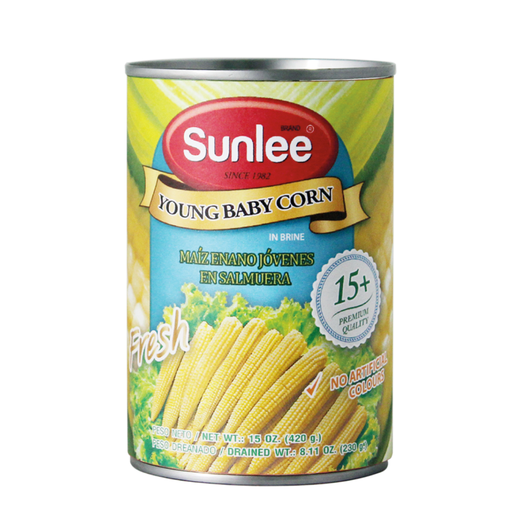 Image unavailable
This baby corn is for a different use from standard sweetcorn kernels, especially in recipes that call for miniature cobs. Check the ingredients and the stated per-100 g basis before comparing its sugars with those in kernel sweetcorn.
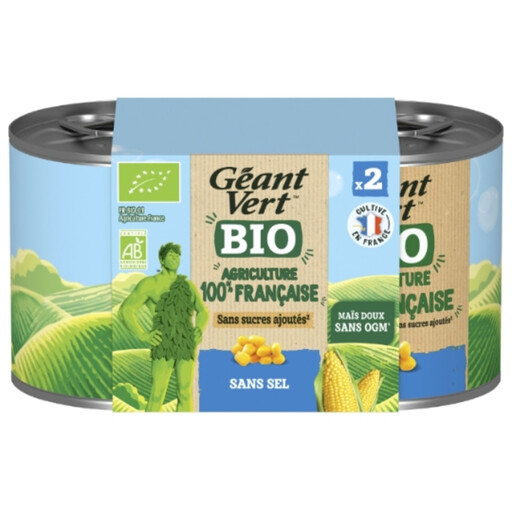 Image unavailable
This variant is described as organic, but don’t choose it on the basis that it’s salt-free just because it says ‘Unsalted’: the salt information is contradictory. Check the label, as well as the exact pack size and the basis used for the nutritional values.
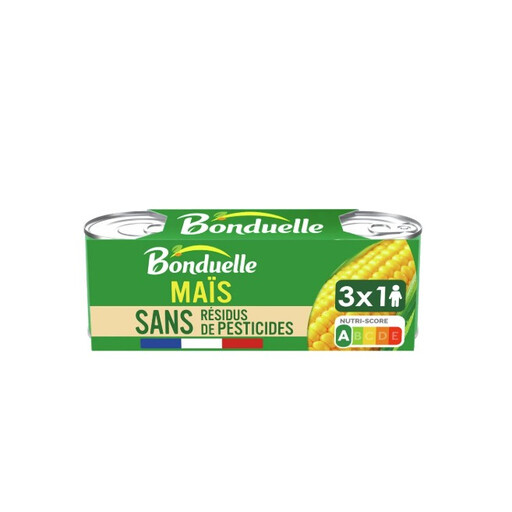 Image unavailable
This sweetcorn product could be a good option for salads or as a side dish. Check exactly what the ‘1/4 x 3’ pack size includes. If no added sugar is essential, look for this claim on the packaging before you buy.
No. Sweetcorn can contain naturally occurring sugars. Bonduelle lists 5.1 g of sugars per 100 g for its ‘no added sugar’ product, so check the ‘of which sugars’ figure as well.
No. The two claims don’t mean the same thing. When comparing products, look at their declared sugar content per 100 g on the same basis. The absence of added sugar alone doesn’t mean the product has less sugar.
Check the ingredients, nutritional values, drained net weight, date and storage instructions. The drained weight helps you choose how much sweetcorn you’ll have to use if the tin contains a covering liquid.
Follow the instructions for the product you’ve bought. For the product mentioned above, Bonduelle says to keep it at no more than 4 °C and consume it within 48 hours. Choose a size that suits the amount you’ll use.
Salt and sugars should be considered separately. Géant Vert’s No Salt product lists 0.00 g of salt and 7.4 g of sugars per 100 g. Compare both figures according to your priorities, and don’t assume they apply to the brand’s other products.