Hosts avoiding added sugar
Whether you’re making a salad, antipasti or a side dish, you’re looking for tinned sweetcorn with no added sugar, without assuming that it contains no naturally occurring sugars.


To avoid added sugar in tinned sweetcorn, start by checking the ingredients list, then compare the ‘of which sugars’ figure per 100 g across the products you’re considering. ‘No added sugar’ does not mean there are no naturally occurring sugars. If salt, organic certification or pack size also matters for your Italian-themed evening, check that separately on the specific product you choose.
Whether you’re making a salad, antipasti or a side dish, you’re looking for tinned sweetcorn with no added sugar, without assuming that it contains no naturally occurring sugars.
You want to serve sweetcorn with a salt content that suits your menu, while checking the declared sugar content separately. Géant Vert’s no-added-salt products are examples of this kind of choice.
You prefer an organic product to prepare your dish quickly, while still checking the sugar and salt content of the specific product. The ranges from d’aucy and Bonduelle include organic products with no added sugar.
When choosing sweetcorn for an Italian-themed evening, start with your main priority — added sugar, salt or how you plan to serve it — then check the other details on the label of the pack you’ve chosen.
| What to check | Look for | Who is it for? |
|---|---|---|
| Added sugars | The ingredients list and the ‘of which sugars’ figure per 100 g: these are two different pieces of information. | If I’m making a salad with no added sugar, I also want to know how much naturally occurring sugar the sweetcorn contains; around 45% of consumers would make this distinction their priority. |
| Salt | The salt content per 100 g and the ingredients of the specific product. | If salt is my main consideration when planning the meal, I don’t want to infer the sugar content from this alone; around 22% of consumers would prioritise salt. |
| Organic and serving style | Organic certification, the form of the sweetcorn and the quantity to suit the dish and the number of guests. | For a salad or side dish, I’m mainly looking for sweetcorn in a form and pack size that suit my recipe, and possibly an organic option; around 33% of consumers would put these aspects first. |
Bonduelle says that its sweetcorn with no added sugar contains naturally occurring sugars; the pack shown by Auchan declares 5.1 g of sugars per 100 g.
Check the ingredients, then compare the ‘of which sugars’ figures per 100 g for the packs you’re interested in.
The product information for Géant Vert Organic Sweetcorn with No Added Salt lists 0.00 g of salt and 7.4 g of sugars per 100 g. Salt and sugar answer two different questions.
Choose your main priority, then check both nutritional figures before comparing products.
The DGCCRF warns that a swollen, rusty or dented metal tin may indicate that the contents have deteriorated.
Set aside any tin showing these signs rather than serving its contents.
If sweetcorn is essential to your menu, have another intact tin ready so you don’t have to change the dish at the last minute.
The range includes sweetcorn with no added sugar, including an organic option.
The Maïs Bio Engagé product is labelled both organic and no added sugar.
The Organic Sweetcorn with No Added Salt product is worth considering if salt is your main priority.
Carrefour’s range includes sweetcorn with no added sugar and no added salt.
These tins offer either baby corn or sweetcorn kernels for salads and side dishes. Check which form your recipe calls for, and review the nutritional information for the specific product before choosing.
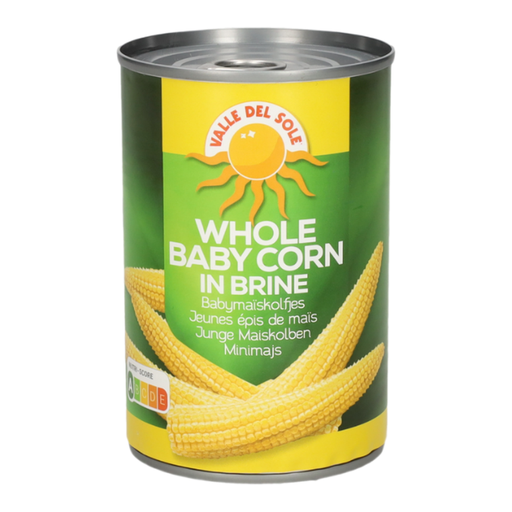 Image unavailable
Worth considering if your salad or antipasti calls for baby corn rather than sweetcorn kernels.
400 g tin; check the ingredients and nutritional information for this product to see how it fits your sugar requirements.
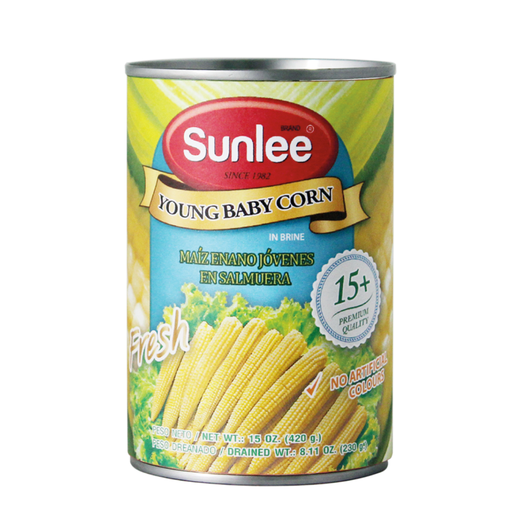 Image unavailable
This baby corn suits recipes that call for this form of sweetcorn; it may not be a suitable substitute for sweetcorn kernels in the dish you have in mind.
420 g tin; compare the product’s ‘of which sugars’ figure with those of the other options you’re considering.
 Image unavailable
Consider this if your salad or side dish calls for sweetcorn kernels rather than baby corn.
285 g pack. The description of this variant doesn’t tell you its total sugar content, so check the ingredients and figures per 100 g on the packaging.
 Image unavailable
This option combines sweetcorn kernels with a two-tin pack, so you can choose it according to the quantity your dish requires.
The name indicates an organic product in two 140 g tins; organic certification alone doesn’t tell you the sugar content.
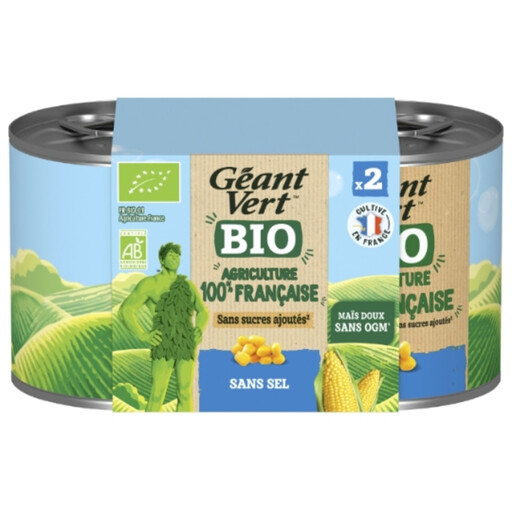 Image unavailable
If salt is your main priority, check the label on this variant before using it in a salad or side dish.
The product name says ‘no added salt’, but the salt information is contradictory; also confirm the pack size and compare sugars per 100 g separately.
No. This wording alone doesn’t tell you the total sugar content. Bonduelle says that its sweetcorn with no added sugar contains naturally occurring sugars; the pack shown by Auchan declares 5.1 g of sugars per 100 g. Check the ‘of which sugars’ figure for the product you plan to serve.
Compare the salt content per 100 g on the specific products, without assuming this tells you how much sugar they contain. The product information for Géant Vert Organic Sweetcorn with No Added Salt lists 0.00 g of salt and 7.4 g of sugars per 100 g.
Check the outside of the tin and follow the storage instructions on the packaging. The DGCCRF highlights bulging, rust and dents on metal tins as possible signs of deterioration. Don’t serve the contents of a tin showing any of these signs.