Families making several dinners
If you use a whole tin for each meal, a multipack of individual tins lets you open one at a time. Auchan France, for example, offers 3 × 285 g multipacks; check that this suits the meals you have planned.


If you’re planning several dinners and will use a whole tin each time, a 3 × 285 g multipack means you can keep the other tins sealed until your next meal. If portions are small or vary, compare the 140 g tins instead. In either case, check the drained weight, label and storage instructions after opening for the product you choose.
If you use a whole tin for each meal, a multipack of individual tins lets you open one at a time. Auchan France, for example, offers 3 × 285 g multipacks; check that this suits the meals you have planned.
For one or two people, or when the amount you need varies depending on the dish, a small tin may leave you with less sweetcorn to store. Carrefour France and E.Leclerc offer 3 × 140 g multipacks.
If salt, ingredients, stated origin or a production claim guides your choice, check the specific tin rather than the brand alone: these details can vary from one product to another.
Start with the amount you’ll open for dinner, then check the details that matter to you. A multipack of small tins and one larger tin won’t leave you with the same amount once you’ve opened them.
| What to consider | What to check | Who is it for? |
|---|---|---|
| Stock for several meals | Number of tins and drained weight per tin; a 3 × 285 g multipack contains three tins that you can open separately. | I’m making several dinners where I’ll use a whole tin, but don’t want to open all my supplies on the same night; around 36% of consumers would prioritise having a family-sized supply. |
| Portions with no leftovers | Drained weight per tin and storage instructions after opening. | For a small meal, I’d rather open an amount close to what I’ll serve; around 29% of consumers would prioritise choosing a size that suits their portions. |
| Salt and ingredients | The ‘salt’ line in the nutritional information per 100 g and the ingredients list for the exact product. | If I choose based on the ingredients first, the multipack size is less important; around 21% of consumers would mainly prioritise salt and ingredients. |
| Production claim | The exact wording of the claim you’re looking for and the stated origin on this product. | I’m looking for a specific claim, without assuming it applies to every product from the brand; nearly 14% of consumers would make this their main criterion. |
A multipack keeps the unopened tins separate, but it doesn’t solve the problem of storing the contents of a tin once it’s been opened. The right amount depends on how much you’ll actually use for each dinner.
Plan the meals you’ll use sweetcorn in, then choose between the 140 g and 285 g sizes. For any leftovers, follow the storage instructions after opening for the product you’ve bought.
‘No added sugars’, ‘no salt’ and ‘no pesticide residues’ describe different things. One claim doesn’t tell you anything about the others: for example, Bonduelle’s 285 g ‘no added sugars’ product contains salt, according to Bonduelle.
Check the ingredients list, the ‘salt’ line and the full wording of the claim you’re looking for separately.
The sizes and details below relate to specific products and may not apply to a brand’s full range.
Bonduelle and Auchan France list a 285 g drained-weight ‘no added sugars’ sweetcorn product, as well as 3 × 285 g multipacks.
Auchan France lists d’aucy crunchy sweetcorn labelled ‘no pesticide residues’ in a 3 × 285 g multipack.
Géant Vert offers a ‘No Salt’ product in a 285 g tin and a 3 × 150 g multipack.
Carrefour France lists 3 × 140 g and 3 × 285 g multipacks in this range.
Auchan France lists a 3 × 285 g multipack of sweetcorn labelled ‘no pesticide residues’.
These products let you compare multipacks of small tins, individual tins in different sizes and products with specific claims. For a weeknight dinner, start by choosing how much you plan to open, then check the details of the variety you’ve selected.
 Image unavailable
For a small dish or variable portions, the two tins mean you can open one at a time. This is a 2 × 140 g multipack, not a 3 × 140 g multipack; check the label on the opened tin for storage instructions for any leftovers.
 Image unavailable
This single 285 g tin may suit a meal where you’ll use this amount. Its name includes the claim ‘no pesticide residues’. If this is important to you, check the wording on the product, along with the ‘salt’ line in the nutritional information.
 Image unavailable
This 400 g tin may be worth considering if you plan to use the contents in a dish for sharing. Compare the drained weight shown on the packaging with the amount you need for your meal, then follow the instructions after opening.
 Image unavailable
This 570 g tin is worth considering if you’d rather open one tin for a dish with several portions than open several smaller tins. Plan how you’ll use the opened contents, and check the drained weight and storage instructions on the packaging.
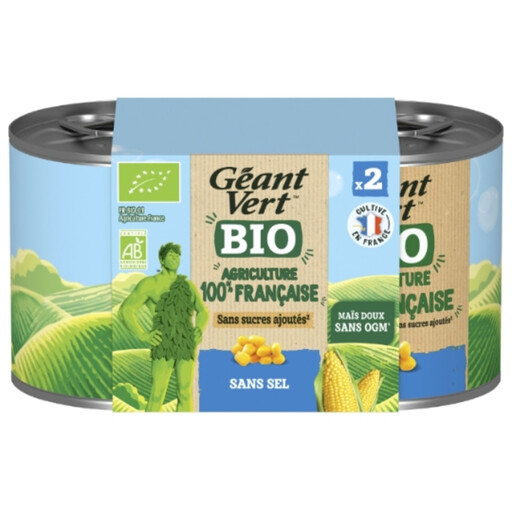 Image unavailable
If you’re choosing this product to quickly add to a dinner, check the number of tins and their weight on the packaging before planning portions. Its name alone doesn’t tell you how much salt it contains: check the ingredients and the ‘salt’ line in the nutritional information.
Choose based on how much you’ll actually open for a meal and how often you have sweetcorn with dinner. A 3 × 285 g multipack leaves two tins sealed when you use one whole tin; 140 g tins may be better suited to a smaller dish. Compare the drained weight per tin.
Follow the instructions for the product you’ve bought, as these specify the temperature and how soon to consume it after opening. For its 285 g product, Bonduelle says to store it at a maximum of 4 °C and consume it within 48 hours; for its 3 × 285 g multipack, Auchan France says to use an airtight container, refrigerate and consume within 2 days.
No: Bonduelle’s 285 g ‘no added sugars’ product lists salt as an ingredient. If salt is important to you, check the ‘salt’ line per 100 g and the ingredients list on the tin you choose; Géant Vert states that its ‘No Salt’ product contains 0.00 g of salt per 100 g.
Check the date and its exact wording on the packaging, along with any storage conditions listed. The French Ministry of the Economy distinguishes between a use-by date (DLC) and a best-before date (DDM) for pre-packed foods; once the tin is open, follow the manufacturer’s instructions for that specific product.