Households that use sweetcorn regularly
If sweetcorn features regularly in your meals, a multipack can be a handy store-cupboard staple. Check the drained weight per tin and consider whether you’ll use every one.


Choose a multipack if you use sweetcorn regularly and expect to open all the tins. For the occasional recipe, a single tin can help you avoid storing more than you need. Compare the drained weight of each format, then check the ingredients and any claims that matter to you: a larger pack or a particular recipe won’t necessarily be a better fit for how you use it.
If sweetcorn features regularly in your meals, a multipack can be a handy store-cupboard staple. Check the drained weight per tin and consider whether you’ll use every one.
For the odd salad or side dish, choose a tin that suits the portions you have in mind. If you don’t use it all, follow the storage instructions on the product you’ve bought.
If added salt or sugar, organic status or information about how it was grown influences your choice, check the ingredients, nutritional information and claims on the specific tin, rather than relying on the brand name alone.
When stocking up the cupboard, start with how often you use sweetcorn. This can help you choose between a multipack and a single tin before comparing quantities and recipes.
| What to consider | What to check | Who is this for? |
|---|---|---|
| Drained weight | Compare the total drained weight of the multipack with that of a single tin when the sweetcorn is packed in liquid. | I want to know how much sweetcorn I’ll actually be able to use from each format. Around 33% of consumers put this usable quantity first. |
| Format and leftovers | Check how many tins there are, their individual size and the storage instructions once opened. | If I cook with sweetcorn infrequently, I’d rather open only what I need and be able to use the rest. This format preference comes first for around 27% of consumers. |
| Ingredients and salt | Read the ingredients list and the ‘salt’ line in the nutrition information per 100 g; distinguish ‘no added sugars’ from ‘sugar-free’. | I’m looking for a recipe that suits my preferences, without assuming what it contains from the range name. Around 20% of consumers prioritise the recipe above all else. |
| Origin and claims | Check the origin on the specific product when stated, its organic status, or the conditions attached to any claim about residues. | A stated origin or advertised production standard matters more to me than whether it’s a multipack. This is the top priority for around 20% of consumers. |
The number of tins won’t tell you how much drained sweetcorn you’ll get or whether you’ll use the whole pack.
Compare the drained weight of each format and choose an amount that suits the meals you have planned.
The first claim doesn’t rule out sugars that occur naturally in sweetcorn.
Check the ingredients list and the ‘of which sugars’ line in the nutritional information for the tin you choose.
For the Pouce product checked, Auchan advises refrigerating the sweetcorn after opening in a suitable airtight container and using it within two days.
Choose a tin size that suits your portions, or plan another meal for the leftovers, following the instructions on the packaging.
Auchan notes that the composition of some products may vary depending on the drive-through service and the date of purchase.
Check the packaging of the tin you receive if the ingredients, stated origin or a particular claim affects your choice.
These brands offer a range of formats and recipes to compare, but product details vary from one item to another.
The range includes a 285 g tin and a multipack of three 285 g tins of sweetcorn.
A 285 g Eco+ tin offers a useful comparison with multipacks.
The Pouce product reviewed is a tin of sweetcorn with a stated drained weight of 285 g.
The ALL SEASONS® and BIO® products let you compare standard sweetcorn with one marketed as organic.
Bonduelle offers sweetcorn with no added sugars, as well as products carrying a claim about pesticide residues.
d'aucy offers a crunchy sweetcorn product carrying a claim about pesticide residues.
This selection includes a pack of two small tins and other tins to consider based on how you use them. Don’t confuse the stated weight with the drained weight: check the label to compare how much sweetcorn you can use.
 Image unavailable
This pack may suit you if you’d like to open two small tins at different times. The product name states 2 × 140 g and describes the sweetcorn as organic; check the drained weight and packaging claims to compare this format with other tins.
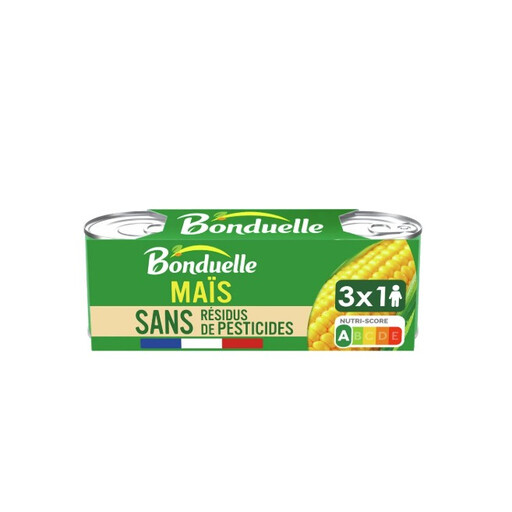 Image unavailable
This product may interest consumers who look for claims about pesticide residues. ‘No Residues’ appears in its product name; check the wording of the claim on the packaging and the exact pack format described as ‘1/4 x 3’ before choosing.
 Image unavailable
This single tin may suit you if you’d rather buy one tin than a multipack. The 400 g stated in the product name isn’t necessarily the drained weight; check this and the storage instructions after opening on the packaging.
Check the drained weight to find out how much sweetcorn is left once the packing liquid has been removed. The DGCCRF states that this information must appear on the label when a food is packed in such a liquid.
Choose a multipack if you regularly use all its unopened tins. For occasional use, a single tin helps you avoid building up a supply you don’t plan to use. In either case, check the drained weight per tin.
Always follow the instructions on the tin you’ve bought. For the Pouce product checked, Auchan advises putting any leftovers in a suitable airtight container in the fridge and using them within two days.
No. Check the origin on the packaging of the specific product, if it’s stated. The retailer’s name alone won’t tell you where the sweetcorn was grown or made.