People preparing a lunchbox with no added sugars
For a quick salad or bowl, they’re looking for a recipe with no added sugar, while bearing in mind that sweetcorn can contain naturally occurring sugars.


When choosing tinned sweetcorn for a lunchbox, start by checking the ingredients, then compare the sugars and salt per 100 g. ‘No added sugars’ does not mean the sweetcorn contains no sugars at all. If organic certification or a commitment on pesticide residues matters to you, consider it separately from the nutritional values. Use sweetcorn as one part of your lunch, rather than making it the whole meal.
For a quick salad or bowl, they’re looking for a recipe with no added sugar, while bearing in mind that sweetcorn can contain naturally occurring sugars.
They add sweetcorn to a meal and think about the other ingredients, including vegetables and a source of protein that suits their choices.
Drained net weight, stated origin, organic certification and commitments on pesticide residues all factor into their choice. They compare specific products rather than relying on the front of the pack alone.
For a lunchbox, start with the ingredients and nutritional values on the tin you’re considering. Then decide how sweetcorn will fit into your meal and which pack size works for you.
| Criteria | What to check | Who is it for? |
|---|---|---|
| Added sugars | Read the ingredients list and the ‘of which sugars’ line per 100 g. A recipe with no added sugar can still contain naturally occurring sugars. | If I’m making a quick salad, I want to avoid added sugar without assuming the sugar content is zero; around 42% of consumers put this at the top of their list of criteria. |
| What’s in your lunch | Consider the amount of sweetcorn you’ll use and the other ingredients you’re planning to include, particularly vegetables and a source of protein. | For my lunchbox, I want sweetcorn to go alongside other foods rather than make up the whole meal; this is the top priority for around 33% of consumers. |
| Pack size and commitments | Compare the drained net weight and, if it matters to you, the origin or commitment stated for the specific product. Check its nutritional values separately. | When choosing between several tins, I’m mainly looking for a suitable pack size or a specific production commitment; this is the main criterion for around 25% of consumers. |
Sweetcorn naturally contains sugars. Bonduelle France lists 5.1 g of sugars per 100 g for the standard product reviewed, even though its ingredients list contains only sweetcorn, water and salt.
Check both the ingredients and the ‘of which sugars’ line per 100 g before comparing two tins.
These claims relate to different criteria from nutritional values. The Bonduelle France product information reviewed lists 7.5 g of sugars per 100 g for its organic sweetcorn with no added sugars, compared with 5.1 g for its standard product with no added sugars.
Choose the commitment that matters to you, then compare the sugars and salt in the specific products separately.
The tin is just one part of your lunch: sauce, cheese or salty toppings may also be included.
Compare the salt per 100 g and taste your food before adding more salt.
The number of tins doesn’t tell you how much sweetcorn you can use in your lunchboxes. The range may also vary from shop to shop.
Check the drained net weight and whether the specific product is available at the shop where you plan to buy it.
Bonduelle France offers sweetcorn with no added sugars, including an organic option, as well as a product carrying a stated commitment on pesticide residues.
The No Added Sugars Crunchy Sweetcorn product listed by E.Leclerc has a drained net weight of 285 g.
ALDI France offers BIO® organic sweetcorn in a 285 g pack.
Auchan France’s sweetcorn range includes Bonduelle products with no added sugars and a jar of Auchan Bio sweetcorn.
Géant Vert products, including a tin of kernels advertised as having no added salt, feature in the sweetcorn range listed by Auchan France.
These products are mainly whole-kernel sweetcorn for adding to a salad or lunchbox. The last one contains baby corn, which is different from sweetcorn kernels.
 Image unavailable
The two-pack may suit you if you’re preparing several portions of sweetcorn for your meals. If organic certification and no added sugars are your priorities, check the ingredients and nutritional values for this product; ‘no added sugars’ doesn’t mean ‘sugar-free’.
 Image unavailable
This product is for anyone who wants to look into Bonduelle’s stated commitment on pesticide residues. Check the scope of the commitment on the packaging and compare sugars and salt per 100 g separately; it doesn’t tell you about the product’s nutritional composition.
 Image unavailable
This pack of sweetcorn kernels may suit you if you’re planning several portions. To compare it with other tins, check the drained weight and the sugars and salt per 100 g. Don’t assume the sugar content from the name Supersweet.
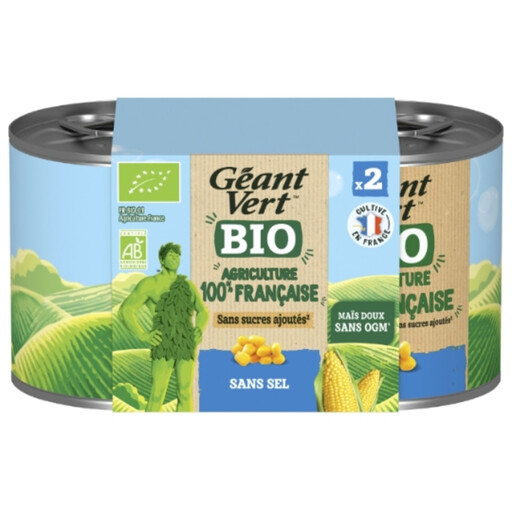 Image unavailable
This sweetcorn can be added to a salad or a quick meal. If you’re choosing it for its organic credentials or to limit the salt added to the recipe, check both claims on the tin before comparing it with other products.
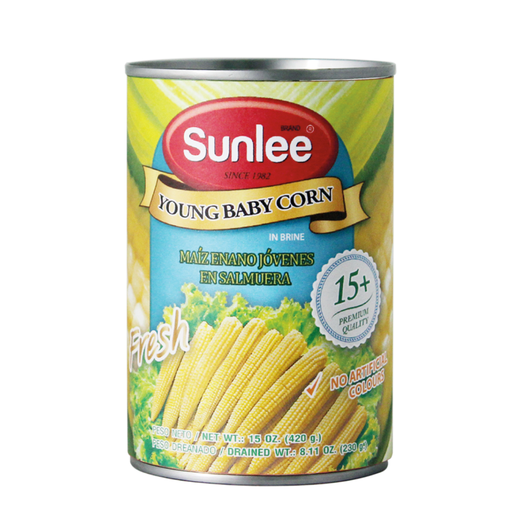 Image unavailable
Choose these baby corn if you’d like this type of corn in a salad, rather than sweetcorn kernels. Compare the ingredients and nutritional values as you would for any other distinct product.
No. Sweetcorn can contain naturally occurring sugars even when no sugar has been added to the recipe. Bonduelle France lists 5.1 g of sugars per 100 g for the standard product reviewed and 7.5 g per 100 g for the organic product reviewed. So check the ingredients and the ‘of which sugars’ line on the product you choose.
Compare the values per 100 g, particularly carbohydrates, sugars, fibre, protein and salt, then consider the portion you’ll use. France’s Directorate-General for Competition, Consumer Affairs and Fraud Control explains that nutritional information is given per 100 g or 100 ml to make comparisons easier.
Sweetcorn can be part of your lunch, but a tin on its own won’t necessarily replace the other components of a meal. To put your plate together, Manger Bouger recommends combining vegetables and starchy foods, and, for a vegetarian option, pulses.
Follow the instructions on the tin you’ve opened. For the standard product reviewed, Bonduelle France recommends storing it at a maximum of 4 °C after opening and eating it within 48 hours. Check the instructions if you choose a different pack.