Families who often cook with sweetcorn
You regularly use it in salads, side dishes or sharing platters, and want to choose an amount that won’t leave leftovers once opened.


For a large family shop, choose a large tin if you’ll use its contents soon after opening. Separate tins are a better fit when meals call for smaller quantities. Compare the drained net weight and storage instructions for each product, then check the ingredients and any claims that matter to you: they don’t all describe the same thing.
You regularly use it in salads, side dishes or sharing platters, and want to choose an amount that won’t leave leftovers once opened.
You want to compare recipes and nutritional information on each product’s label, rather than relying on the brand name alone.
You want to keep sweetcorn in the cupboard and plan how to use it after opening according to the instructions on the packaging.
Start with the amount you need for each meal and how soon you’ll be able to use an opened tin. Then check the date, ingredients and product-specific details.
| What to consider | What to check | Who is this useful for? |
|---|---|---|
| Size after opening | Drained net weight, number of containers and instructions for after opening. | If my meals only need a little sweetcorn at a time, I’d rather open a small tin than store leftovers. Around 25% of consumers prioritise having portions that suit their needs. |
| Cupboard stock | The date on the packaging and storage instructions before opening. | When I’m planning several shops ahead, I want to organise how I use the tins according to their dates and storage instructions. This is a priority for around 25% of consumers. |
| Ingredients | Ingredient list and salt and sugar values per 100 g. | When I’m seasoning a family meal myself, I want to know exactly what’s in the sweetcorn I’m adding. Around 25% of consumers put ingredients first. |
| Origin and product claims | The exact wording for the origin, organic status or texture claim on the product you choose. | If a stated origin or particular feature influences my choice, I want to know exactly which product it applies to. This is the top priority for around 25% of consumers. |
Two multipacks that look the same size don’t necessarily contain the same amount of usable sweetcorn.
Compare the drained net weight where it’s shown, then choose the number of containers to suit the meals you have planned.
For its “No added sugars sweetcorn” product, Bonduelle advises storing it at a maximum of 4 °C and consuming it within 48 hours of opening.
Before choosing a large tin, check the instructions for the specific product you’re buying and plan when you’ll use the rest.
No added sugars doesn’t mean the “sugars” entry in the nutritional information will show zero.
Check the ingredients and nutritional values per 100 g for the specific product. Do the same for salt if it says “no added salt”.
France’s Directorate-General for Competition Policy, Consumer Affairs and Fraud Control distinguishes between a best-before date and a use-by date. Passing a best-before date doesn’t automatically mean that a product with intact packaging must be thrown away.
Read the full date and storage instructions. If the packaging is damaged or the product looks concerning, don’t rely on the date alone to decide whether to eat it.
The brand offers sweetcorn in different sizes, including an organic product and one with no added sugars.
The Carrefour range includes products with no added sugars and no added salt, as well as a pack of 3 × 140 g.
The E.Leclerc range includes sweet and crunchy sweetcorn products, including 285 g sizes.
The Auchan range includes individual tins and multipacks, as well as products with specific claims.
ALDI France offers a 285 g product of crunchy sweetcorn.
These products include separate containers and larger sizes to help you plan family meals. N47° is sold in pouches, so check the packaging if you’re specifically looking for a tin.
 Image unavailable
Two separate tins to consider if each meal only needs a small amount of sweetcorn.
Check the drained net weight and instructions for after opening on the packaging. “Organic” appears in the product name.
 Image unavailable
An individual tin to consider if this size suits the amount you’ve planned for a meal.
The claim about residues appears in the product name; check the exact wording on the packaging. Also check the drained net weight and instructions for after opening.
 Image unavailable
A size to consider if you’re planning to use a large amount of sweetcorn across meals close together.
The 570 g refers to the product size, not necessarily its drained net weight. Check this and the storage instructions for after opening before planning your portions.
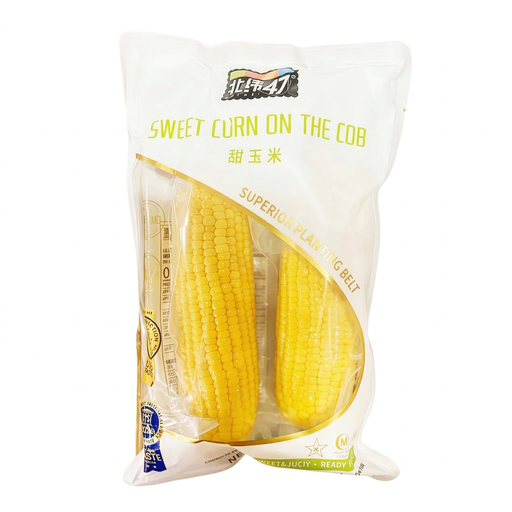 Image unavailable
A twin pack to consider if you want to spread the sweetcorn across several meals.
Check the quantity in each pouch and its instructions for after opening. This pouch packaging is not a metal tin.
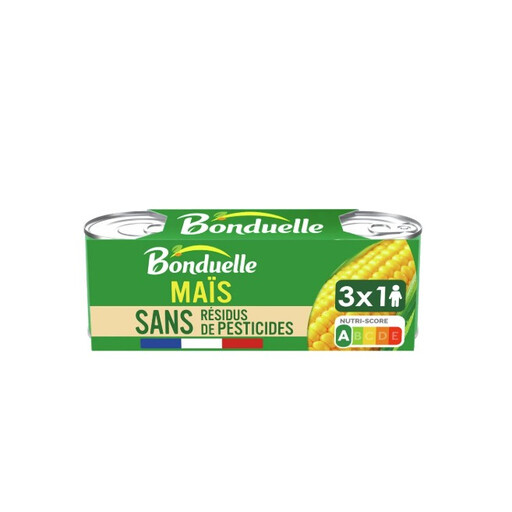 Image unavailable
This sweetcorn product can be included when comparing sizes for family meals.
The “1/4 x 3” description alone doesn’t tell you the net quantity of the pack. Check this on the packaging, along with the drained net weight, instructions for after opening and the wording of the “No Residues” claim.
Start by checking the quantity, ingredients, nutritional information and date. For pre-packed foods sold in France, the Directorate-General for Competition Policy, Consumer Affairs and Fraud Control says the label includes details such as the product name, ingredients, nutrition declaration and net quantity. Also check the drained net weight where it’s shown.
No. “Best before” refers to a best-before date, which is different from a use-by date. According to France’s Directorate-General for Competition Policy, Consumer Affairs and Fraud Control, passing a best-before date doesn’t on its own mean you need to throw away a product with intact packaging, although its taste may have changed. Read the full wording and check the condition of the packaging.
Follow the instructions for the product you’ve bought rather than applying the same time limit to every tin. For its “No added sugars sweetcorn” product, Bonduelle advises storing it at a maximum of 4 °C and consuming it within 48 hours of opening. Bear this in mind if you’re choosing a large size.
No. “No added sugars” doesn’t mean the product contains no sugar at all. Bonduelle’s “No added sugars sweetcorn” product information lists 5,1 g of sugars per 100 g; check the “sugars” entry for the product you’re thinking of buying.
No. Organic status, the origin of the sweetcorn and the country of manufacture describe different things. Check the wording for the specific product, then compare its size, ingredients and storage instructions with the meals you have planned.