What should you look for?
First decide what role the sweetcorn will play in your meal, then compare labels and pack sizes based on what matters most to you.
| What to consider | What to check | Who is it for? |
|---|
| Protein in your meal |
The “protein” figure per 100 g and the protein source you plan to serve alongside the sweetcorn. |
If I’m putting together a high-protein meal, I want to know exactly what the sweetcorn contributes before choosing the other ingredients. Around 36% of consumers put this first. |
| Ingredients |
The ingredients list, salt content and the “of which sugars” figure in the nutrition information. Distinguish naturally occurring sugars from added sugars. |
For a simple recipe or one with no added salt, I need to read the tin rather than rely on the sweet taste of the sweetcorn. Around 29% of consumers put ingredients first. |
| Pack size and storage |
The drained weight, number of tins and storage instructions after opening. |
When I’m making a small portion, I’d rather open an amount I can finish within the stated time. Around 21% of consumers prioritise this. |
| Product claims |
Whether it’s organic, its country of origin or the exact scope of any claim about residues, depending on the product. |
If the production method guides my purchase, I want to identify the claim that matters to me without confusing it with a nutrition figure. Around 14% of consumers prioritise this. |
Tinned sweetcorn on Joybuy
These tinned or vacuum-packed sweetcorn products can be served as a side in a meal where you choose the main source of protein separately. Compare the claims and pack size of each product before deciding.
 Image unavailable
Nong Sao sweetcorn kernels 400 g
Consider it as a side to complement a dish. If you’re comparing the amount of sweetcorn you can use, check the drained weight on the product.
View on Joybuy
 Image unavailable
Bonduelle sweetcorn with no pesticide residues 285 g
Worth comparing if the pesticide residue claim matters to you when choosing a side. Check the scope of the claim on the packaging as well as the drained weight; the claim doesn’t tell you how much protein it contains.
View on Joybuy
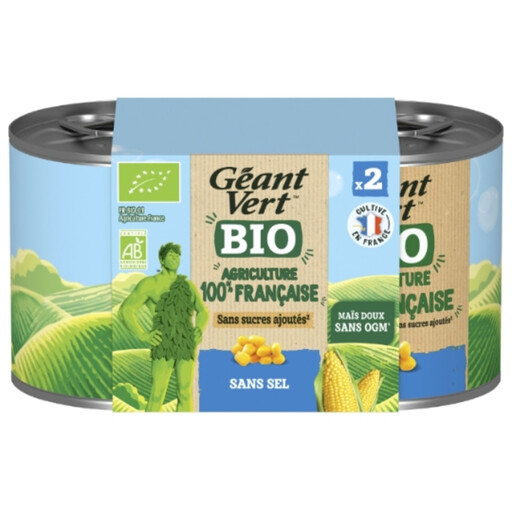 Image unavailable
Géant Vert sweetcorn 2 × 1/4 kg, 300 g
A side to consider if the ingredients guide your choice. Check the organic and no-salt claims directly on the label: the title and description of this product differ on these points. Also check the drained weight to compare pack sizes.
View on Joybuy
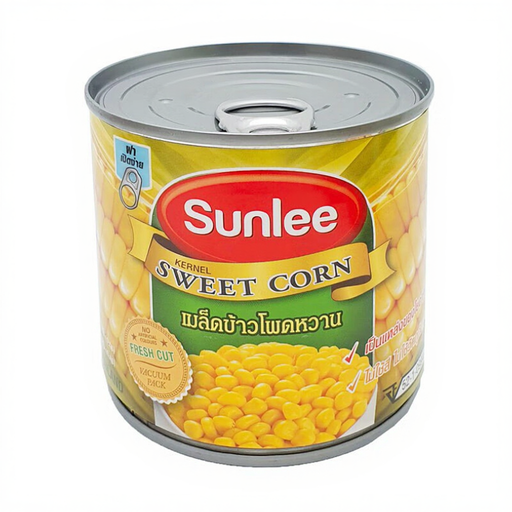 Image unavailable
Sunlee vacuum-packed sweetcorn 340 g
A cupboard option to consider for a salad or side. If protein, salt or using up leftovers will influence your purchase, check the figures and storage instructions after opening on the packaging.
View on Joybuy
Frequently asked questions
Is tinned sweetcorn enough to make a high-protein meal?
No, it’s better used as a side in this kind of meal. Bonduelle France lists 2.7 g of protein per 100 g for its no-added-sugars product. Auchan’s listing for d’Aucy states 2.9 g per 100 g. Choose your main source of protein separately.
What should I look for on a tin of sweetcorn?
Start by comparing the ingredients, nutrition information per 100 g, drained weight and storage instructions. If you’re looking for a particular feature, check for the relevant claim on the product you’re buying rather than assuming it applies to an entire brand.
Does “no added sugars” also mean “no added salt”?
No, the two claims refer to different ingredients. The Bonduelle product described by Bonduelle France as having no added sugars contains salt. The organic Géant Vert product listed by Carrefour France carries claims relating to salt and added sugars. Sweetcorn can also contain naturally occurring sugars.
How should I store sweetcorn after opening?
Follow the instructions for the product you buy and refrigerate leftovers as directed on the packaging. The Bonduelle France and Auchan France listings mentioned here advise using the sweetcorn within 48 hours or two days of opening. The date on an unopened tin doesn’t replace this instruction.
Can you eat tinned sweetcorn after its best-before date?
A best-before date that has passed doesn’t mean the same as a use-by date. The Directorate General for Competition Policy, Consumer Affairs and Fraud Control states that a product can be eaten after its best-before date if its packaging is intact, although its taste may have deteriorated. Check that the tin is undamaged, and remember that different instructions apply after opening.


