Households keeping an eye on fat
You’re preparing meals for several people and want to compare fat per 100 g, as well as checking the salt content.


If you’re choosing tinned sweetcorn and want to keep fat intake down, compare the values per 100 g on a like-for-like basis rather than relying on claims such as ‘no added sugar’ or ‘organic’. A pack of two tins, each with a drained weight of 285 g, provides 570 g of sweetcorn in total. Smaller tins may suit you better if you only use a small amount with each meal.
You’re preparing meals for several people and want to compare fat per 100 g, as well as checking the salt content.
You buy several tins at once, but would prefer to open just one at a time, depending on how much you need for each meal.
You’re also looking for a claim such as ‘organic’ or ‘non-GM’, without confusing it with the product’s fat content.
Start by comparing the nutritional information on a like-for-like basis, then choose the drained weight and number of tins to suit the meals you have planned.
| Criterion | What to check | Who is it for? |
|---|---|---|
| Fat and salt | Compare the values per 100 g on a like-for-like basis. Check the fat, including saturates, as well as the salt. | If my main aim is to limit fat in meals for my household, I want to be able to compare the values shown for each product. Around 46% of consumers put this first. |
| Pack size | Check the drained weight of each tin and the total weight of the pack, as well as the storage instructions once opened. | If I only use some of the sweetcorn at each meal, separate tins mean I don’t have to open the whole pack. Pack size is the top priority for around 36% of consumers. |
| Ingredients and production | Read the ingredients list and check the precise wording of any claims you’re looking for, then check the nutrition table separately. | If I also want an organic product or one with a particular production claim, I want to know exactly what that claim means. This is the top priority for around 18% of consumers. |
This claim is about added sugars, not fat. The Auchan and E.Leclerc product listings show different fat contents for products carrying this claim.
Compare the ‘fat’ value per 100 g on a like-for-like basis. Check saturates and salt too if these matter to you.
Two tins with a drained weight of 140 g each contain 280 g in total, compared with 570 g for two tins with a drained weight of 285 g each. So the number of tins alone doesn’t tell you how much is in the pack.
Check the total drained weight, then the amount in each tin, to choose a size that suits each meal.
Once a tin is open, you’ll need to follow the product’s storage and use-by instructions.
If you only use a little sweetcorn at a time, consider smaller tins. Otherwise, check the instructions on the packaging and plan how you’ll use the rest.
These indications don’t tell you, by themselves, how much fat or salt the product you’re considering contains.
Read the nutritional values for the exact product and compare them on a like-for-like basis.
Auchan lists Bonduelle sweetcorn with no added sugar in a pack of two tins, each with a drained weight of 285 g.
Auchan lists a pack of two d’aucy sweetcorn tins, each with a drained weight of 285 g, carrying the claim ‘no pesticide residues’.
Carrefour lists extra-crunchy sweetcorn in three tins, each with a drained weight of 140 g. This is a format to consider if you only use a small amount at a time.
E.Leclerc lists a 285 g tin of crunchy sweetcorn with no added sugar, with a drained weight of 285 g.
E.Leclerc lists organic sweetcorn with no added sugar in two tins, each with a drained weight of 140 g.
This selection of tinned corn includes sweetcorn kernels and baby corn. Check the product type, pack format and drained weight before adding it to your planned meals.
 Image unavailable
The two separate tins may suit you if you only use a small amount with each meal.
Before comparing this product with other tinned options, check the drained weight and the basis on which the nutritional values are given on the label.
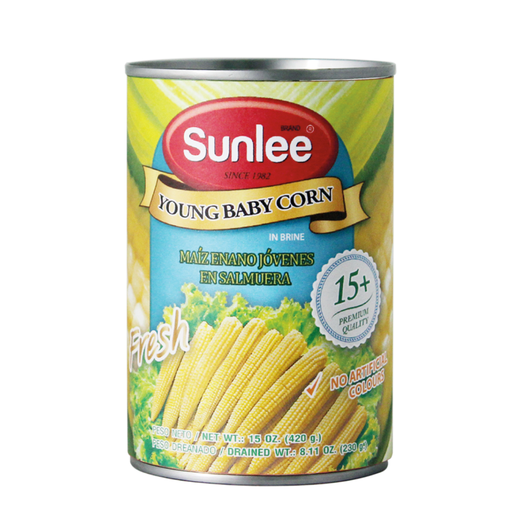 Image unavailable
Choose this type of corn if your recipe calls for baby corn rather than sweetcorn kernels.
The title describes one 420 g tin, not a pack of smaller tins. Check its drained weight before planning your portions.
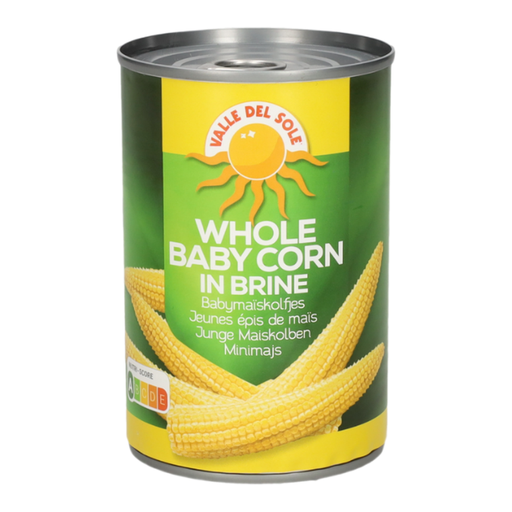 Image unavailable
This product is suited to recipes that call for baby corn rather than sweetcorn kernels.
The listed size is one 400 g tin. Check the drained weight and the basis of the nutritional values to compare the amount you’ll eat and the fat content.
 Image unavailable
This single tin may suit you if you’re looking for sweetcorn kernels but don’t want to buy several tins at once.
The title gives a weight of 285 g. Check the drained weight and nutritional values for the exact product before comparing it with a family-sized pack.
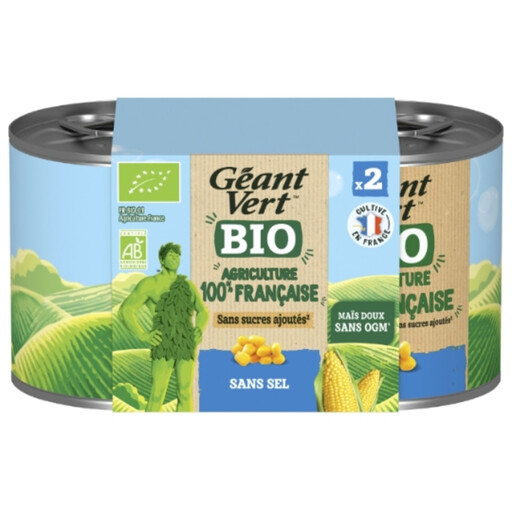 Image unavailable
This tinned sweetcorn is worth considering if you’re also looking for the organic and no-added-salt attributes stated in its title.
The stated pack details include conflicting weight information. Check the number of tins, their drained weight and the nutritional values before planning your meals.
No. This claim relates to added sugars, not fat. The Auchan listings for Bonduelle 2 × 285 g and d’aucy 2 × 285 g give 1.4 g and 2.4 g of fat per 100 g respectively. Compare the values for the exact products on a like-for-like basis.
Check the total drained weight and the weight of each tin to work out how much sweetcorn you’ll get and whether you can split it across meals. According to the Auchan listings, the Bonduelle and d’aucy packs of two tins, each with a drained weight of 285 g, contain 570 g in total. The Bio Village pack of two tins with a drained weight of 140 g each contains 280 g in total, according to E.Leclerc.
Follow the instructions on the tin in question. The instructions for the Bonduelle and d’aucy products mentioned here say to refrigerate leftovers and use them within two days. d’aucy also advises transferring them to a suitable airtight container.
For this choice, compare fat per 100 g on a like-for-like basis, then check the salt, ingredients list and drained weight. The DGCCRF explains that nutritional information given per 100 g makes comparisons easier, while the drained weight shows how much product there is when it is packed in liquid.