People who count the carbohydrates in their meals
You want to relate the carbohydrate content per 100 g to the amount of sweetcorn you’ll actually serve, without confusing “no added sugar” with “sugar-free”.


When choosing tinned sweetcorn as part of your diabetes-aware shopping, compare the carbohydrate and sugar content per 100 g, then work out how that relates to the drained portion you plan to serve. “No added sugar” does not mean “carbohydrate-free”. A multipack is a good fit if you regularly use every tin; for occasional use, a smaller tin can help avoid leftovers, as long as you follow the storage instructions after opening.
You want to relate the carbohydrate content per 100 g to the amount of sweetcorn you’ll actually serve, without confusing “no added sugar” with “sugar-free”.
As well as carbohydrates, you check the ingredients and salt content against the criteria you use to plan your meals.
You’re planning to serve sweetcorn with several meals and want to choose tins you can use up while following the storage instructions after opening.
Start with the label and the portion you plan to serve, then choose the number and size of tins to suit the meals you’ll use the sweetcorn in.
| Criterion | What to check | Who it’s for |
|---|---|---|
| Carbohydrates and portion size | Carbohydrates and sugars per 100 g; drained weight of the portion served. | If I count the carbohydrates in my meal, I need to take account of the amount of sweetcorn actually served rather than relying on the wording on the front of the tin. Around 40% of consumers prioritise this portion calculation. |
| Ingredients and salt | Whether sugar has been added, according to the ingredients list; salt per 100 g. | If I’m also watching my salt intake, sugar-related wording alone isn’t enough to help me choose a recipe. Checking the ingredients and salt content comes first for around 30% of consumers. |
| Tin size and leftovers | Number of tins, quantity in each tin and storage instructions after opening. | When stocking the cupboard, I prefer a multipack where each tin suits the meals I’ve planned, so I can avoid leftovers. This is the top priority for around 30% of consumers. |
Auchan’s product listing for Bonduelle sweetcorn labelled “no added sugar” gives 11 g of carbohydrates and 5.1 g of sugars per 100 g. It also states that the sugars are naturally present.
Compare the values per 100 g, then work them out for the drained portion you plan to serve.
Recipes vary between products: E.Leclerc’s listing for Notre Jardin sweetcorn, for example, includes sugar and salt in the ingredients.
Check the ingredients list and nutrition information on the tin you’ve chosen, even if you already know the brand.
The date printed on an unopened tin doesn’t replace the storage instructions for once it’s opened.
Choose a size to suit the meals you’ve planned, and follow the manufacturer’s guidance for leftovers.
A tin that’s too large for one meal can leave you with leftovers to use within the time stated on the packaging.
Nutri-Score doesn’t tell you how much sweetcorn you’ll serve or which criteria you want to compare for that meal.
Also check the ingredients, carbohydrates, sugars and salt per 100 g, then take account of the portion you plan to serve.
These recipe and pack-size examples can help you compare specific products. A brand name alone doesn’t tell you what to expect from its entire range.
Some Bonduelle sweetcorn products are available in tins and multipacks and are labelled “no added sugar”.
A twin pack of organic sweetcorn, with two tins each containing 140 g drained, may appeal if you also compare added salt.
Depending on the product, available formats include a twin pack of 140 g tins, a 285 g tin and a 230 g jar.
These two products show why it’s worth comparing recipes within the same retailer.
ALDI lists a 285 g tin of sweetcorn labelled “no added sugar”.
This selection includes a twin pack and individual tins in different sizes. Sunlee baby corn is different from the sweetcorn kernels in the other products, so choose the type of corn you want first, then check the portion and the label.
 Image unavailable
A multipack to consider if you plan to use two small tins in separate meals. Check the drained weight and nutrition information for this product to work out the portion you’ll serve, and read the storage instructions for once it’s open.
 Image unavailable
This size may suit you if you’re planning to serve several portions from one tin. The 570 g shown in the product name isn’t the drained weight, so check that, the values per 100 g and the storage instructions for after opening.
 Image unavailable
Consider this single tin if a multipack doesn’t suit the meals you’ve planned. Check the drained weight, carbohydrates per 100 g and storage instructions after opening for the exact product.
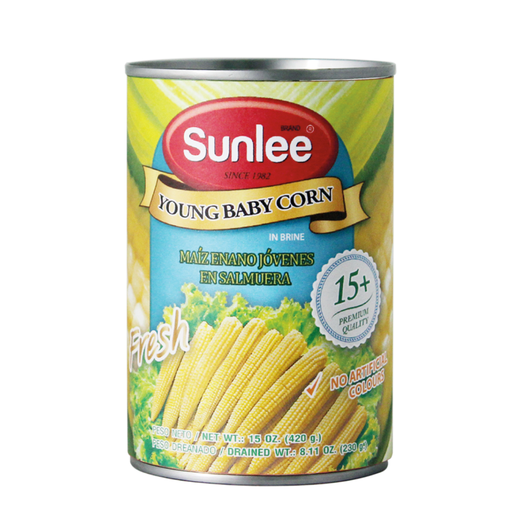 Image unavailable
Choose this only if you’re looking for baby corn rather than regular sweetcorn kernels. For the portion you plan to serve, check the drained weight and nutrition information for this product. Also follow the instructions on the tin after opening.
 Image unavailable
Consider this 400 g tin in light of the number of portions you’re planning. Check the drained weight and carbohydrates per 100 g before working out how much to serve, then read the storage instructions for after opening.
No. Assurance Maladie recommends a varied diet tailored to each person’s needs, rather than a list of foods to avoid. If you want to include sweetcorn in a meal, consider the portion and its carbohydrate content in line with the advice that’s right for you.
No. A recipe with no added sugar may still contain sugars naturally present in sweetcorn, as well as other carbohydrates. Check the values per 100 g and work them out for the drained amount you’ll serve.
Follow the manufacturer’s guidance on the storage temperature and how long to keep that particular product. The date on unopened packaging doesn’t replace these instructions once the tin has been opened.
No. On its own, it doesn’t tell you how much you’ll eat. When comparing products for your meals, also check the ingredients and the values for carbohydrates, sugars, fibre and salt per 100 g.