Cyclists preparing quick meals
You’re looking for sweetcorn that’s ready to drain and add to a salad or hot meal before or after a ride, rather than something to take as your only food during exercise.


For quick meals around cycling, first choose an undamaged tin, then pick a recipe and pack size to suit what you’ll be serving. Choose sweetcorn, water and salt for a short ingredients list, or a product explicitly labelled as having no added salt if that’s your priority. Tinned sweetcorn can round out a meal, but it isn’t enough on its own to fuel you during a long ride. Compare the drained weight and the storage instructions after opening, especially if you might have leftovers.
You’re looking for sweetcorn that’s ready to drain and add to a salad or hot meal before or after a ride, rather than something to take as your only food during exercise.
You want to tell the difference between a recipe made with sweetcorn, water and salt and one that also contains sugar, or choose a product explicitly labelled as having no added salt.
You want to keep a tin handy for making a meal without having to buy fresh produce straight away, while checking the condition of the container, the best-before date and the storage instructions after opening.
For sweetcorn to use in meals around cycling, first check the container and its storage requirements, then choose the recipe and drained weight to suit the portions you’ll be preparing.
| Criteria | What to check | Who is it for? |
|---|---|---|
| Storage | Condition of the container and best-before date; storage instructions after opening. | I want to use a tin from my cupboard without taking a risk with a damaged can or poorly stored leftovers. Around 42% of consumers prioritise this need for storage and safety. |
| Recipe and label | Ingredients list, followed by the sugar and salt values per 100 g in the nutritional information. | If I’m avoiding added salt or sugar in this tin, the exact recipe matters more to me than the word “sweetcorn” alone. Around 33% of consumers prioritise checking the label. |
| Pack size and portions | Number of containers and drained net weight, which is different from the total weight. | I sometimes prepare just one plate and prefer a pack size that lets me use the contents without creating lots of leftovers. For around 25% of consumers, pack size and portions are the priority. |
The products reviewed differ: Bonduelle lists sweetcorn, water and salt for its plain variety, while the ingredients list for SIMPL sweetcorn also includes sugar.
Compare the ingredients list and nutritional information for the specific product, rather than guessing the recipe from the brand or the word “organic” alone.
Some of a tin’s weight comes from the liquid it’s packed in, so the total weight alone doesn’t tell you how much sweetcorn you’ll be serving.
Check the drained net weight to compare portions, and choose a pack size that suits how much you’ll use after opening.
Storage instructions after opening vary by product. For the plain variety reviewed, Bonduelle says to keep it at a maximum of 4 °C and use within 48 hours.
Follow the instructions on your packaging and make a note of when you opened it if you don’t serve the whole contents.
The DGCCRF warns that dents, signs of rust or bulging may indicate that the product has deteriorated.
Discard any tin showing these signs; don’t taste the contents to decide whether they’re safe to eat.
These products illustrate differences in recipes and packaging to check on the item you choose; they aren’t representative of every tinned product from each brand.
The range includes a plain variety with no added sugar and an organic variety. The Bonduelle pages reviewed list a drained weight of 285 g.
Carrefour lists an organic variety with no added salt or sugar, supplied in two tins, each with a drained net weight of 140 g.
The product listed by Carrefour is a 400 g carton of organic sweetcorn. It’s worth considering if this type of packaging suits you better than a tin.
This Carrefour own-brand product offers a point of comparison when checking the ingredients in a 285 g tin of sweetcorn.
These tins of sweetcorn kernels can help you quickly put together a salad or side dish before or after a bike ride. Compare pack sizes, and check the recipe and instructions on the packaging of the product you choose.
 Image unavailable
Two small containers could be a good option if you’re adding sweetcorn to separately prepared meals. Check the drained weight and storage instructions after opening on the packaging.
 Image unavailable
This 400 g pack is worth considering if you’re adding sweetcorn to a meal. Compare its drained weight with the quantity you need, and follow the storage instructions after opening.
 Image unavailable
To add to a salad or hot meal, compare this 285 g pack with the number of portions you want to prepare. Check the drained weight, ingredients and instructions after opening on the packaging.
 Image unavailable
This 570 g pack could be a good option if you’re preparing several portions with sweetcorn. Check the drained weight to work out how much you’ll serve, then read the instructions for storing any leftovers.
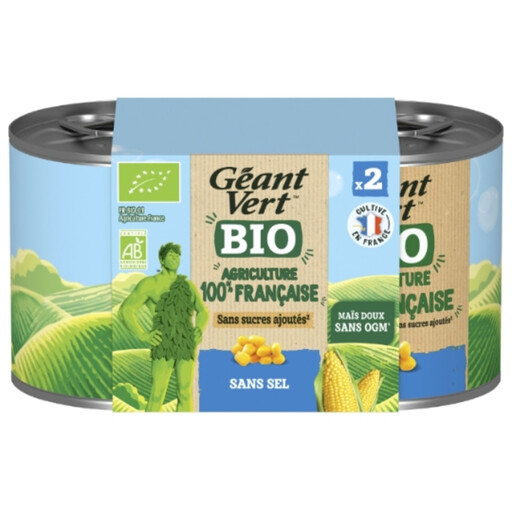 Image unavailable
If you’re adding sweetcorn to a salad or side dish, first check the recipe and packaging for this product. If no added salt is essential for you, check the ingredients list on the packaging: a “no salt” claim and an ingredients list that includes salt don’t match.
No. It’s better suited to making up part of a meal than being your only food during a long ride. The French Federation of Cycle Touring highlights the importance of a balanced diet and staying hydrated; check the nutritional information for the specific tin you choose.
It doesn’t mean the sweetcorn contains no naturally occurring sugars. If you want to avoid added sugar in the recipe, read the ingredients list: the Bonduelle plain variety reviewed lists sweetcorn, water and salt, while the SIMPL variety reviewed also lists sugar.
Follow the temperature and storage period shown on the packaging for your product. For the plain variety reviewed, Bonduelle says to keep it at a maximum of 4 °C and use within 48 hours. Don’t automatically apply these instructions to another product.
A past best-before date is not the same as a use-by date, but the condition of the container still matters. The Ministry of the Economy distinguishes between these two dates, and the DGCCRF warns that a dented, rusty or bulging tin may indicate that the product has deteriorated. Discard it.
The drained weight helps you compare how much sweetcorn you’ll serve when it’s packed in liquid. Check it alongside the net weight to choose a pack size that suits your portions and any leftovers you can store according to the manufacturer’s instructions.