Anyone making a dish to share
For a stir-fry, egg-fried rice or several side dishes, the amount of usable sweetcorn matters more than the number of tins shown on the packaging.


For a sharing dish or several side dishes, start by looking at individual tins labelled 285 g. If you only need a small garnish, compare smaller tins too, which are often sold in multipacks. Check the drained net weight to see how much usable sweetcorn you’ll get, then choose between regular kernels, a variety described as crunchy, or a no-added-salt recipe to suit your dish. A tin labelled ‘no added sugar’ isn’t necessarily salt-free.
For a stir-fry, egg-fried rice or several side dishes, the amount of usable sweetcorn matters more than the number of tins shown on the packaging.
If sweetcorn is only being used as a garnish, the drained net weight per tin can help you choose the right amount without opening more than you need.
If you’re using soy sauce, stock or other salty condiments, check the ingredients to see whether the tinned sweetcorn contains added salt.
First decide how much sweetcorn you need and check whether the tin is sold individually or as part of a multipack. Then consider the type of corn, any texture description and the ingredients, depending on your recipe.
| What to consider | What to check | Who it matters to |
|---|---|---|
| Quantity and leftovers | Drained net weight per tin; sold individually or in a multipack. Carrefour lists tins labelled 285 g, as well as smaller tins with a drained net weight of 140 to 165 g, sold in multipacks. | For a sharing dish, I want enough kernels; for a garnish, I’d rather not open a large tin. Around 31% of consumers would put getting the quantity right at the top of their list. |
| Texture and type | Sweetcorn kernels or baby corn, depending on the dish; check the texture description for the specific product. Géant Vert uses the term ‘Extra Crunchy’ on some products. | For egg-fried rice or a cold dish, I look for a type and texture that suit the recipe. Texture is said to be the top priority for around 31% of consumers. |
| Salt and ingredients | Check the ingredients and nutritional information for the product you’re considering; don’t confuse ‘no added sugar’ with ‘no added salt’. | If my sauce already provides most of the seasoning, I want to be able to choose how much salt is added along with the other ingredients. Around 23% of consumers would prioritise this first. |
| What’s available in store | The exact size and pack type available at the shop or through the grocery service you use. | I plan my menu around the tinned products available where I shop, so I need to be able to find the right size. This would be the top consideration for around 15% of consumers. |
The smaller tins with a drained net weight of 140 to 165 g listed by Carrefour may be sold in multipacks, unlike some tins labelled 285 g, which are sold individually.
Check the number of tins in the pack and the drained net weight of each one separately.
You could be left with several unused tins after dinner.
The Bonduelle sweetcorn recipe described as having no added sugar also contains water and salt. The sugar claim says nothing about the seasoning.
If you want to control the salt in a dish made with sauces or salty condiments, read the ingredients on the tin you choose.
‘Extra Crunchy’ is a description Géant Vert uses for one product, not a guarantee that the sweetcorn will stay crunchy in every dish.
If you want contrasting textures in a stir-fry or egg-fried rice, drain the sweetcorn and consider adding it towards the end of cooking.
The instructions published for the D’Aucy product reviewed recommend transferring leftovers to an airtight container, refrigerating them and eating them within two days of opening. The DGCCRF advises discarding tins that are dented, rusty or bulging.
Follow the instructions on your packaging for storing leftovers, and check the tin before opening it.
Carrefour lists a Bonduelle tin labelled 285 g among its tinned sweetcorn products.
Carrefour lists a D’Aucy tin labelled 285 g. The published storage instructions for one D’Aucy product are useful if you’re expecting leftovers.
Géant Vert’s range includes products described as ‘Extra Crunchy’, ‘Extra Tender’ and ‘No Salt’.
Carrefour lists tinned sweetcorn under its Classic’ and SIMPL brands, including tins labelled 285 g.
ALDI offers a product described as ‘Crunchy Sweetcorn’ under its ALL SEASONS® brand.
These individually sold tins include two sweetcorn kernel products and one baby corn product. Baby corn is suitable for recipes that call for mini corn cobs, but it isn’t a direct substitute for kernels. Compare the quantities shown on the packaging too, depending on the dish you’re planning.
 Image unavailable
Worth considering if your recipe calls for sweetcorn kernels from an individual tin.
The stated size is 285 g. Check the drained net weight on the label to find out how much sweetcorn you can use. ‘No pesticide residue’ applies to this particular product; it doesn’t describe all Bonduelle tinned products.
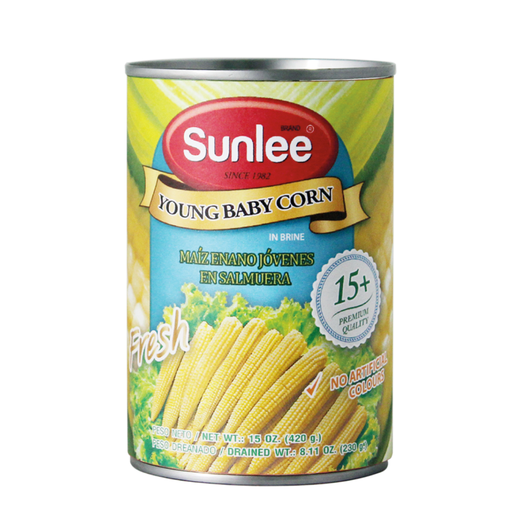 Image unavailable
Choose this only if your dish calls for baby corn rather than sweetcorn kernels, for example in a stir-fry.
The tin is labelled 420 g. Check the drained net weight if the amount of usable corn matters for your recipe.
 Image unavailable
This tin of sweetcorn kernels is worth considering for a sharing dish or several side dishes, rather than a small garnish.
The tin is labelled 570 g. Check its drained net weight, and follow the packaging instructions if you don’t use the whole tin.
Choose the amount based on the part sweetcorn plays in the dish, and use the drained net weight rather than relying on the weight shown on the front of the tin. A small garnish may call for a smaller tin than a sharing dish. Also check whether smaller tins are sold individually or in a multipack.
Drain it before adding it if you don’t want the canning liquid to go into the wok. The instructions published for the D’Aucy product reviewed say to drain it. For rinsing, follow the product instructions and the needs of your recipe.
Follow the storage instructions on the tin you buy. For the D’Aucy product described by Auchan, these recommend using a suitable airtight container, storing it in the fridge and eating it within two days. The DGCCRF reminds consumers to follow the manufacturer’s stated temperature and storage time after opening.
The DGCCRF says that food can still be eaten after its best-before date if the packaging is intact, although its taste may have changed. However, discard any tin that is dented, rusty or bulging, or whose packaging appears damaged.
No. Bonduelle states that its ‘no added sugar’ product contains naturally occurring sugars, while its ingredients list includes salt. If you want a tin with no added salt, check for this separately on the label of the specific product.