Kitchen managers planning a set service
When you can predict the number of people you’ll be serving, a 3/1 tin can reduce the need to open tins repeatedly. You’ll still need to plan how to use the contents and store them after opening.


For meals in a care home, choose the pack size based on the number of people you expect to serve and how much the kitchen can use after opening. A 3/1 tin suits a planned service, while a multipack lets you open smaller quantities. Compare drained weight, ingredients and the instructions for each product; if the purchase needs to count towards your EGalim reporting, keep the relevant supporting documents too.
When you can predict the number of people you’ll be serving, a 3/1 tin can reduce the need to open tins repeatedly. You’ll still need to plan how to use the contents and store them after opening.
For dishes where the quantities vary, a multipack lets you open tins as needed. However, it means handling more tins than you would with a larger format.
The exact product, ingredients, nutritional information and evidence of origin or organic production can all help document your purchases. A claim shown on a tin alone isn’t enough to establish your organisation’s overall figures.
Start by comparing the drained weight with the quantities planned for your menu. Then check storage conditions, ingredients and any documents needed for purchase records.
| Criterion | What to check | Consumers concerned |
|---|---|---|
| Quantity to serve | Drained weight and the number of portions planned; don’t confuse the weight of the tin with the amount of drained sweetcorn. | If I’m preparing a planned service, I want to open an amount the kitchen can actually serve. Around 31% of consumers prioritise choosing a pack size that suits the number of people being served. |
| Storage after opening | Container, temperature and time limit stated for the product you’re buying, as well as your organisation’s procedures. | When several dishes are being prepared in succession, I need to manage leftovers without exceeding the relevant time limit. Around 23% of consumers put safe storage first. |
| Ingredients | Ingredients list and salt per 100 g on the exact product’s information sheet; your organisation’s protocol if a modified texture is needed. | To include sweetcorn in residents’ menus, I need to know what’s in it and have any necessary texture adaptations approved. Around 23% of consumers prioritise checking this first. |
| Purchase traceability | Product delivered, declared origin and evidence for any organic or quality claims included in your records. | If I’m updating supply records, I want to be able to link every declared characteristic to the batch purchased. Around 23% of consumers prioritise this documentation. |
The Auchan multipack shown on its product page contains 0.855 kg drained, while the aro 3/1 tin shown by METRO France contains 1.78 kg drained. So the number of tins alone won’t tell you how many portions you can serve.
Compare the drained weight with the quantity planned for your menu and your ability to use any leftovers.
Anses points out that the date shown on a product doesn’t determine how it should be stored once opened. The instructions and time limits on the sweetcorn product pages reviewed vary by product.
Follow the information for the product delivered and your organisation’s food safety management plan. Label the container and record when it was opened in line with your procedures.
The product information reviewed lists different ingredients. The aro product shown by METRO France includes sugar, for example, unlike the Bonduelle Food Service and Auchan products described here. A marketing claim such as “extra tender” doesn’t mean the product is suitable for a modified texture.
Read the ingredients and nutritional information for the product delivered. Ask the relevant professionals at your organisation to approve dishes for residents with specific needs.
The organic status of one product doesn’t represent all the purchases included in your organisation’s reporting.
Keep evidence for the product purchased and include it in your overall records in line with the rules that apply to your organisation.
These examples show specific pack sizes and recipes; their characteristics don’t necessarily apply to every tinned product from each brand.
Transgourmet lists Maïs doux super sweet grain ce2 in a 1.87 kg professional 3/1 tin.
Transgourmet lists a 1.87 kg organic product in a 3/1 tin. Consider it if this pack size suits your service and you need to document organic purchases.
METRO France lists whole-kernel sweetcorn in a 1.870 kg 3/1 tin, with a drained weight of 1.78 kg.
Auchan lists a multipack of three 285 g tins, with a total drained weight of 0.855 kg.
Carrefour lists a Géant Vert tin of sweetcorn with a stated drained weight of 285 g.
These whole-kernel sweetcorn products may be worth considering for smaller services. Before planning portions, confirm the exact contents of each pack and its drained weight.
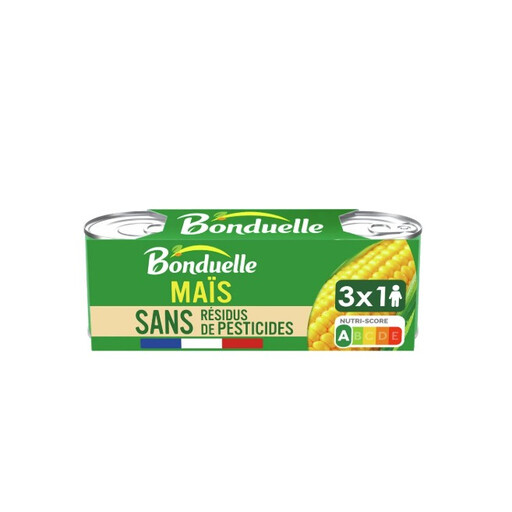 Image unavailable
Worth considering if your service needs less sweetcorn than a professional 3/1 tin. The title says “1/4 x 3”, while the description states 570 g. Confirm the number of tins, net weight and drained weight before working out portions.
The description recommends storing it in an airtight container in the fridge and using it within two days of opening. Check the instructions on the label of the product delivered.
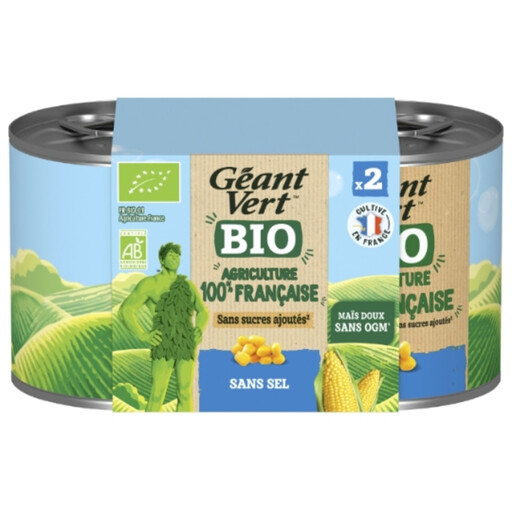 Image unavailable
Worth considering if you want to open smaller quantities for different meals. The title says “2 x 1/4 kg 300 g”, while the description states one 285 g tin. Check the number of tins and the drained weight of the batch delivered.
The title also describes it as an organic, unsalted version, whereas the description mentions salt. Check the ingredients and claims on the label before choosing this product for your purchase records.
No. A 3/1 tin is suitable when the planned service allows you to use its contents and manage any leftovers within the stated time limit. For varying quantities, a multipack can help you open less sweetcorn at a time. Compare drained weights rather than just the number of tins.
Follow the instructions for the product delivered and your organisation’s food safety management plan. The product information reviewed gives two days for the aro and Auchan products, and up to three days for the Bonduelle Food Service and D’Aucy products mentioned here, each with its own chilled storage instructions.
No. The characteristics of one product don’t tell you about all the purchases included in your reporting. Keep the supporting documents for the product purchased and check how it should be recorded in your organisation’s overall figures under the rules that apply to it.
This marketing claim isn’t enough to confirm that tinned sweetcorn is suitable for a modified texture. For residents who need one, ask the relevant professionals to check the product and how it is prepared against your organisation’s individual care protocol.
Check the product and pack size delivered, then note the drained weight, ingredients, nutritional information, batch number, date shown on the packaging and storage instructions. If origin or organic status matters for your purchase records, keep the relevant supporting documents too.