Anyone without a reliable cool box
If you’re eating alone or as a pair, packs you can open separately let you choose how much you need for your meal without having to store an opened tin.


For festival camping, start by choosing an amount of sweetcorn you can finish in one meal. Smaller packs that you can open separately are handy if you’re eating alone or as a pair, while a larger pack is best for sharing. Then compare the drained weight, ingredients and storage instructions after opening. Claims such as ‘organic’, ‘no added sugar’ and ‘no pesticide residues’ relate to different things.
If you’re eating alone or as a pair, packs you can open separately let you choose how much you need for your meal without having to store an opened tin.
For a salad, wraps or a side to share, compare the amount of drained sweetcorn you’ll use for the meal rather than just counting the tins.
If ingredients guide your choice, check the ingredients list and claims such as ‘no added sugar’, ‘no added salt’, ‘organic’ or ‘no pesticide residues’ separately. They don’t all refer to the same thing.
For meals at the campsite, first decide how much you’ll need to open at once, then check the label and storage instructions for the product you’re considering.
| What matters | What to check | Who it matters to |
|---|---|---|
| Avoiding leftovers | Number of packs, drained weight per pack and how much you expect to use for the meal. | Without a reliable cool box, I’d rather open just enough sweetcorn for my meal than have to keep an opened tin. Around 36% of consumers would put avoiding leftovers at the top of their list. |
| Enough for the group | Drained weight and the number of containers needed for a shared meal. | When several people are eating at the campsite, I want to make sure there’s enough sweetcorn without using lots of containers. Having enough for the meal would be a priority for around 29% of consumers. |
| Ingredients and claims | Ingredients list, nutritional information and the exact wording of any claims you’re looking for. | If a particular ingredient profile or claim matters to me, I don’t assume other qualities from the word ‘organic’ or ‘no added sugar’ alone. Around 21% of consumers would make this their priority. |
| Storage | Best-before date, packaging condition and storage instructions before and after opening. | Before setting off, I need to know whether I’ll be able to store an opened pack as instructed. This would be the main concern for around 14% of consumers. |
Storage instructions change once the sweetcorn has been opened. For the POUCE and organic products mentioned here, Auchan says to refrigerate after opening and consume within two days.
If you can’t reliably keep the contents chilled, choose an amount you can finish with your meal.
A pack that’s too large could leave you with sweetcorn you can’t store as instructed.
No added sugar doesn’t mean the ‘of which sugars’ line in the nutritional information will show zero.
If this matters to you, compare the ingredients list and nutritional information for the exact product.
‘Organic’, ‘no added salt’, ‘no added sugar’ and ‘no pesticide residues’ refer to different product characteristics. A claim made about one Bonduelle product doesn’t automatically apply to the whole brand.
Decide which factor matters most to you, then check the pack size, ingredients and storage instructions separately.
The range includes a product labelled ‘no pesticide residues’, which Bonduelle lists as having a drained weight of 420 g.
Carrefour’s range includes sweetcorn with no added sugar in a pack of 3 × 140 g.
E.Leclerc sells Notre Jardin sweetcorn in single tins and multipacks, including a 3 × 140 g size.
Auchan describes a POUCE product of vacuum-packed sweetcorn kernels with a drained weight of 285 g.
Aldi sells crunchy ALL SEASONS sweetcorn in a 285 g pack.
These Joybuy products include packs you can open separately and larger containers for sharing. The selection also includes a pouch of ready-to-eat sweetcorn, so check the type of packaging if you’re specifically looking for a tin.
 Image unavailable
The two packs can be opened separately for a meal for one or two.
If you have any left in an opened pack, refrigerate it and consume within two days. Check the drained weight to work out how much to serve.
 Image unavailable
This 285 g pack may suit a shared meal if you use the contents after opening. The product name includes the claim ‘no pesticide residues’.
Refrigerate any leftovers and consume within two days. Check the drained weight on the packaging to plan your meal.
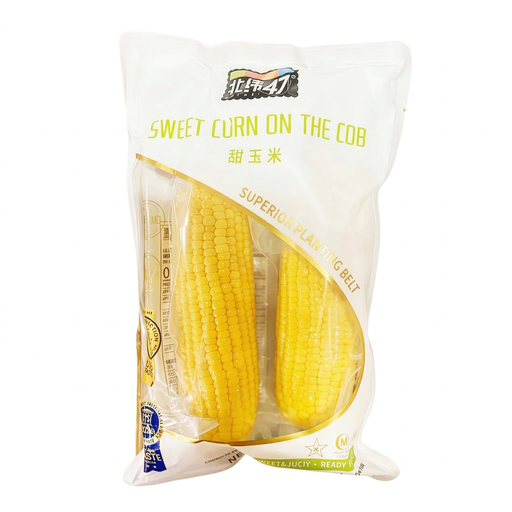 Image unavailable
Supplied in pouches, this multipack could work for a meal at the campsite without having to open the whole pack at once.
The 440 g refers to the whole pack. Check the amount in each pouch and the instructions on the packaging for what to do after opening.
 Image unavailable
This 400 g pack is worth considering if you’re eating with others who can finish the contents at the meal.
After opening, the instructions say to refrigerate any leftovers and consume them within one day. Check the drained weight to estimate how much sweetcorn to serve.
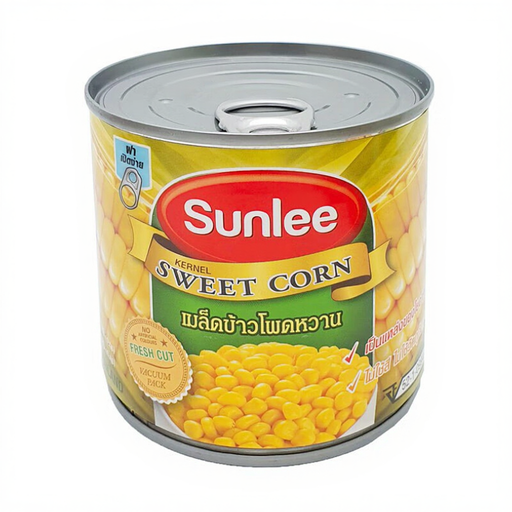 Image unavailable
For a shared meal, compare this 340 g pack with the amount your group can finish.
Check the packaging for the drained weight, type of container and instructions for after opening, especially if you don’t have refrigeration at the campsite.
No. A best-before date and a use-by date mean different things, as explained by the French Ministry of the Economy. Before you set off, check the date on your product and make sure the packaging is intact.
Don’t rely on a tent to store leftover sweetcorn if the label says it needs to be refrigerated. For the POUCE and organic products mentioned here, Auchan says to refrigerate after opening and consume within two days. If you can’t keep it reliably chilled, plan to finish the contents with your meal.
No. The claim refers to added sugars and doesn’t necessarily mean that the total sugars listed in the nutritional information are zero. Check the ingredients list and the ‘of which sugars’ line for the product you’re comparing.
First, choose a container with an amount you can use for your meal, then think about what you need to carry. Compare the drained weight, how sturdy the container is and each product’s instructions for after opening. Don’t assume that one type of packaging will suit every camping set-up.