Anyone putting together a quick lunch
You like to keep sweetcorn in the cupboard for a salad, lunchbox or bowl, but don’t want to open a pack that leaves you with too much over.


When choosing tinned sweetcorn for a quick lunch, compare the ingredients, salt per 100 g and drained net weight rather than relying on a ‘no added sugar’ claim alone. If salt is your priority, look for a product explicitly labelled ‘no added salt’. To avoid leftovers, choose a pack size that suits your portions, and check organic and origin claims separately.
You like to keep sweetcorn in the cupboard for a salad, lunchbox or bowl, but don’t want to open a pack that leaves you with too much over.
You check the salt content of the different ingredients in your meal and want to know the difference between ‘no added sugar’ and ‘no added salt’.
You prefer certified organic produce or a stated country of origin, while still checking the ingredients and salt content of the specific product.
| Criteria | What to check | Who is it for? |
|---|---|---|
| What makes up your lunch | Compare sugars and fibre per 100 g, then consider how much sweetcorn you’ll serve. | If I’m putting together a salad, I want to know how the sweetcorn fits into the meal, rather than deciding based on a claim on the front of the pack; around 36% of consumers put this first. |
| Salt | To avoid added salt in your sweetcorn, look for an explicit claim and check the ingredients. Also compare the salt per 100 g. | When the other ingredients in my lunch are already salty, I want to choose sweetcorn with this in mind; it comes first for around 29% of consumers. |
| Portions and leftovers | Check the drained net weight and storage instructions after opening. | When making lunch just for myself, I prefer a pack size I can finish in time; around 21% of consumers prioritise portions and leftovers above all else. |
| Organic and origin | Check the organic certification and origin of the specific product. Don’t assume either from the brand name. | If my choice depends on whether it’s organic or where it comes from, I want to see those claims on the product I’m buying; around 14% of consumers put these criteria first. |
The Bonduelle product described by the brand contains naturally occurring sugars and provides 5.1 g of sugars and 0.28 g of salt per 100 g. These figures answer two different questions.
Check the ingredients, the ‘of which sugars’ line and the salt figure separately. If avoiding added salt matters to you, make sure this is stated for the product you choose.
The covering liquid isn’t the same as the amount of sweetcorn you’ll serve. The Bonduelle and Jardin Bio product listings we checked give drained net weights of 285 g and 230 g respectively for two different products.
Compare the drained net weight with the number of portions you’re planning, especially if you want to avoid leftovers.
Storage instructions change once a pack is open. For the product we checked, Bonduelle advises keeping it for up to 48 hours at a maximum of 4 °C. Auchan Bio says to transfer its product to an airtight container, refrigerate it and eat it within two days.
Follow the instructions on the packaging and plan when you’ll use the leftovers. The DGCCRF reminds consumers to follow the manufacturer’s stated temperature and storage time after opening.
The Carrefour Bio and Auchan Bio listings describe organic products that contain salt, while the organic, no-added-salt Géant Vert product described by Carrefour contains sweetcorn and water.
Check the organic status, origin, ingredients and salt separately for the specific product.
A sweetcorn kernels product worth considering for a salad or hot dish.
Products to compare depending on whether you’re looking for no added salt, organic produce or a production claim.
An organic product in a pack of three tins, each with a drained net weight of 140 g. Worth comparing if you open sweetcorn over several meals.
A 285 g product that Auchan describes as grown in France, suitable for serving hot or cold.
A carton containing 230 g of drained sweetcorn, for anyone who prefers this type of packaging.
These products let you compare different formats of sweetcorn for an easy-to-assemble lunch, including tinned kernels, vacuum-packed sweetcorn and multipacks. Check the drained net weight and packaging instructions when planning your portions.
 Image unavailable
If you make lunch at different times, this two-pack means you only need to open one unit at a time.
Check the drained net weight of each unit and the instructions for storing it after opening to help plan your portions.
 Image unavailable
For a quick salad, compare this 285 g pack with the amount of sweetcorn you plan to serve.
If a claim about pesticide residues affects your choice, check the exact wording and conditions on the packaging. Also check the drained net weight.
 Image unavailable
If you’re making several portions, compare this 400 g pack with the amount you need.
Check the packaging for the drained net weight and storage instructions after opening before planning how to use any leftovers.
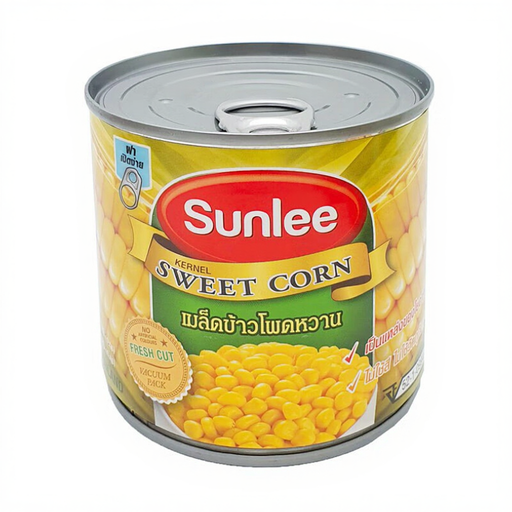 Image unavailable
If you’re looking for sweetcorn to keep in the cupboard but would rather avoid a metal tin, consider this 340 g vacuum pack.
Check the packaging for the usable quantity and storage instructions after opening.
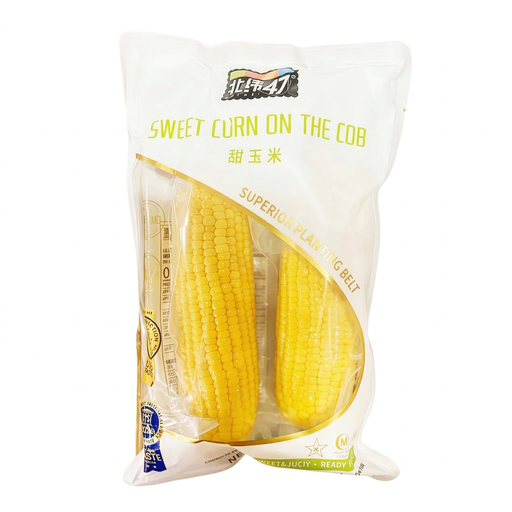 Image unavailable
If you’re making lunch in batches, compare this two-pack with the portions you’re planning.
Check the drained quantity and storage instructions after opening before dividing the contents between meals.
Yes. Manger Bouger says vegetables can be eaten in different forms, including tinned. When choosing your sweetcorn, also consider its nutritional content and how much you’ll use alongside the other ingredients in your lunch.
No. The Bonduelle product described by the brand has no added sugar, but contains naturally occurring sugars; its listing gives 5.1 g of sugars per 100 g. Check the ‘of which sugars’ line for the product you choose.
Follow the temperature, container and storage time instructions on the packaging. For example, Bonduelle advises keeping its product for up to 48 hours at a maximum of 4 °C, while Auchan Bio recommends an airtight container in the fridge and eating it within two days.
Choose the criterion that matters to you, then check it for the specific product: these claims don’t all answer the same question. Carrefour’s listing for the Géant Vert extra-crunchy product clarifies that its ‘no pesticide residues’ claim applies within the limit of quantification; it doesn’t replace checking the ingredients and salt content.