Parents who want to avoid leftovers
You’re preparing a lunchbox and want a portion of sardines that suits the meal, without having to store a large, opened tin. Drained weight makes it easier to compare portions.


For a school lunchbox, first choose a tin with a drained quantity of sardines that suits the meal. The total weight of the tin alone isn’t enough to judge the portion. If your child is bothered by bones, look for a product explicitly described as fillets or boneless, then compare the recipe and allergen information on the tin you choose.
You’re preparing a lunchbox and want a portion of sardines that suits the meal, without having to store a large, opened tin. Drained weight makes it easier to compare portions.
You prefer fillets or a product clearly labelled “boneless”. This presentation doesn’t change the fact that the product contains the fish allergen.
You choose between sardines in spring water, oil or tomato sauce to suit your child’s tastes, checking the ingredients and nutritional information on each tin.
Start with the amount you plan to serve and how the sardines are presented. Then compare the remaining tins by checking their ingredients and storage instructions after opening.
| Criteria | What to check | Who is this for? |
|---|---|---|
| Portion | Compare the net and drained weights if both are shown on the tin, as well as the number of tins in the pack. | I want to serve an amount that suits the meal without keeping leftover sardines. Around 33% of consumers rank portion size as a priority. |
| Bones | Look for “boneless” or “fillets” on the exact product; these terms don’t mean the same thing. | If bones would put my child off eating sardines at school, how they’re presented is my top priority. It comes before other considerations for around 27% of consumers. |
| Recipe | Read the ingredients and compare salt and fat per 100 g across the products you’re considering. | I’m looking for a recipe my child enjoys, with ingredients I can compare against another tin. This is a priority for around 20% of consumers. |
| Allergens and leftovers | Check the allergens on the label, then read the storage and consumption instructions for after opening. | Before packing this tin for school, I need to consider any fish allergy and know what to do with leftovers. Around 20% of consumers prioritise these checks. |
For Auchan’s organic extra virgin olive oil sardines, 115 g is the net weight, while the drained weight is 80 g. Choosing a portion based only on the first figure can be misleading.
If the sardines are packed in liquid, check the drained weight on the tin before planning what to serve with them.
Whole sardines, fillets and products labelled boneless are presented differently. A claim made about one product doesn’t apply to the brand’s entire range.
If bones would put your child off, check the description on the specific tin you want to buy.
A tomato, spring water or oil recipe can differ in its ingredients and nutritional values. The recipe description is no substitute for reading the label.
Compare the ingredients, as well as the salt and fat per 100 g, in the products you’re considering.
Sardines contain fish. A small tin can help limit leftovers, but you still need to check the allergens and follow the instructions for after opening.
If your child has a known fish allergy, don’t pack sardines in their lunchbox. For an opened tin, follow the storage instructions on its own label.
The formats and recipes below refer to specific products. Always check the tin you’re buying rather than assuming its features apply to the brand’s whole range.
The brand’s range includes organic sardine fillets in a 70 g tin, a format to consider if you’re looking for a small portion.
The products reviewed include whole sardines, a boneless option and recipes in olive oil or tomato sauce.
The 115 g tin of organic sardines in extra virgin olive oil is a useful example of the difference between net and drained weight.
The range shown by E.Leclerc includes whole sardines in spring water in a 95 g tin, 100 g fillets in olive oil and 70 g fillets in spring water.
These tins let you compare sardines in oil, in spring water or in tomato sauce, with different presentations and sizes listed. For a school lunchbox, check the drained portion and the wording about bones on each product before choosing.
 Image unavailable
Worth considering if you’re looking for a recipe in olive oil and a product described as boneless. The Joybuy listing for this product gives a drained weight of 98 g and says the central bone has been removed. The product contains fish.
 Image unavailable
Consider this if bones bother your child and you prefer a recipe in spring water. The title gives the tin’s weight as 98 g; check its drained weight to work out how much sardine to serve. The product contains fish.
 Image unavailable
Fillets may suit you if you prefer sardines that are already prepared, but that alone doesn’t mean they’re boneless. Check the packaging to see what the 115/81 g figures refer to and how much will be served. The product contains fish.
 Image unavailable
This product is for anyone looking to compare a tin of small sardines in olive oil with other options. Check what 115/81 g means on the packaging, and don’t assume the sardines are boneless. The product contains fish; the description also notes that it may contain traces of crustaceans and molluscs.
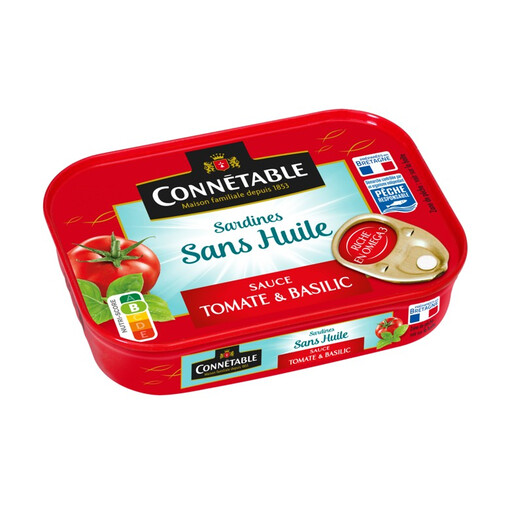 Image unavailable
Worth comparing if your child prefers a tomato recipe. The description lists tomato, basil, garlic and honey, among other ingredients. Read the full ingredients list and check the drained weight and how the sardines are presented. The product contains fish.
They can be, as long as the tin stays sealed until mealtime and its contents suit your child’s needs and preferences. Compare the drained quantity, whether the sardines are boneless and the recipe. Don’t forget that sardines contain fish.
Check the ingredients list: the DGCCRF says allergens in prepacked foods must be highlighted in the list. Sardines contain fish, so if your child has a known fish allergy, don’t put them in their lunchbox.
It’s a practical choice if bones bother your child, but not every tin carries this claim. Check the wording on the specific product: Carrefour describes a 115 g Connétable product as “boneless”, while other products contain whole sardines.
Follow the storage instructions for the tin in question. The Saupiquet and Auchan products described here advise refrigerating the sardines after opening and eating them within two days. Don’t automatically apply this time limit to another product.
Drained weight helps you estimate how much sardine to serve when the tin contains a packing liquid. Auchan’s product has a net weight of 115 g and a drained weight of 80 g. The DGCCRF states that drained net weight must be shown when a food is packed in a covering liquid.