Organisers keeping track of portions
If you’re planning several meals for a group, the net drained weight can help you estimate how much sardine to serve. Compare the drained weight of individual tins and multipacks before deciding how many to buy.


For several festival meals, choose tinned sardines with a drained weight that matches the portions you plan to serve, and a style that suits your guests. Whole sardines, fillets and seasoned varieties all need to be served differently. Check the ingredients and storage instructions after opening too, especially if you can’t rely on having access to a fridge.
If you’re planning several meals for a group, the net drained weight can help you estimate how much sardine to serve. Compare the drained weight of individual tins and multipacks before deciding how many to buy.
Tinned sardines can make a cold meal with bread or salad. However, an unopened tin and leftovers from an opened one need to be handled differently. Plan how you’ll finish or refrigerate anything left over.
If you’re serving guests with different preferences, choose between whole sardines, fillets and boneless varieties. Read the ingredients, allergens and any ‘may contain’ statements for each product you select.
First, work out how many portions you want to serve, then choose a style that suits the equipment you have and the people you’re serving. Make a plan for storing opened tins before you set off.
| What to consider | What to check | Who it matters to |
|---|---|---|
| Amount to serve | Compare the net drained weight and the number of tins you’ll need, particularly when choosing between single tins and multipacks. | When I’m planning several meals, I want to know how much fish I’ll actually be serving, without counting the liquid as a portion. Around 36% of consumers would make this their priority. |
| Ease of serving | Look for whole sardines, fillets or boneless varieties, then check the drained weight. | Without a kitchen, I’d prefer a style that needs little handling at the table. Around 29% of consumers would make ease of serving their priority. |
| Storage | Check the condition of the tin, its best-before date and the product’s storage instructions after opening. | If there’s a chance we won’t finish a tin at the meal, I need to be able to store leftovers in line with the label. This would be the main concern for around 21% of consumers. |
| Recipe and ingredients | Read the ingredients list, allergen information and any ‘may contain’ statements for each product. | For a group with different tastes or dietary requirements, I want to choose recipes that everyone can check before the meal. Around 14% of consumers would make this their priority. |
Net weight includes the liquid the fish is packed in. For example, Carrefour lists 135 g net weight and 95 g drained weight for one Carrefour Classic’ sunflower oil variety. Counting the full 135 g would overestimate how much fish you have.
To work out portions for your group, check the drained weight on each tin and multiply it by the number of tins you plan to serve.
Storage instructions differ for an unopened tin and its contents once opened. For its plain sardines, Auchan recommends storing them at between 0 and +4 °C and eating them within 48 hours of opening.
Open tins as you need them. If you’re planning to keep any leftovers, check that you’ll be able to follow the instructions for the product you’ve bought.
Plain, oil-packed and sauced varieties don’t all have the same ingredients. The Carrefour Classic’ sunflower oil variety we checked also lists possible traces of crustaceans and molluscs.
Ask guests with allergies to check the label for each product, and choose a style to suit the preferences they’ve shared.
The sardines mentioned here are tinned, not frozen. Before opening, follow the storage instructions on the tin; after opening, follow the product’s refrigeration instructions.
Store unopened tins separately from any leftovers you need to keep.
Saupiquet offers whole sardines and fillets, including plain, oil-packed and seasoned varieties.
Connétable offers classic sardines as well as boneless varieties.
Carrefour offers sardines in sunflower oil, plain, in tomato sauce and in extra virgin olive oil, among other varieties.
E.Leclerc offers sardines in oil, plain or as fillets in this range, as well as multipacks.
Auchan offers plain sardines, sardines in olive oil and seasoned or boneless varieties, among others.
These tins offer a few different ways to serve sardines at a festival: in oil, boneless, as fillets or in tomato sauce. Choose the style you want, and check the drained weight and instructions on each pack.
 Image unavailable
A variety in extra virgin olive oil to consider for a cold meal. The title lists 140 g; check the drained weight to plan portions, and follow the instructions after opening.
 Image unavailable
The boneless style can make serving easier for guests who prefer to avoid the backbone. The 98 g refers to the net weight: check the drained weight separately on the tin, and refrigerate any leftovers according to the instructions.
 Image unavailable
Fillets are handy when you want to keep serving fuss to a minimum, for example with a salad or on bread. The title shows 115/81 g: check the pack to confirm the drained weight and read the instructions for after opening.
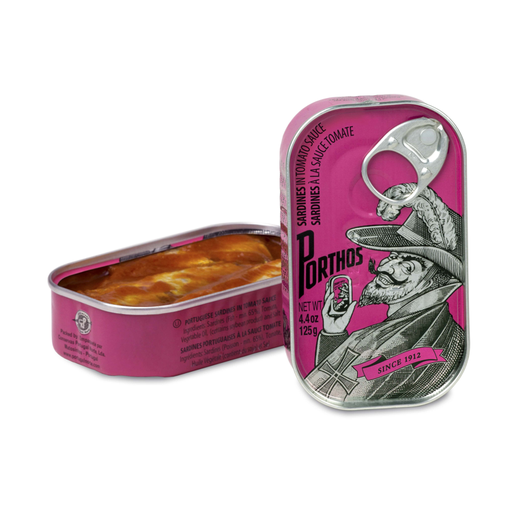 Image unavailable
The tomato recipe lets you serve the sardines with their sauce as part of a cold meal. The 112/81 g shown in the title doesn’t replace checking the drained weight on the pack. Check the ingredients and storage instructions after opening too.
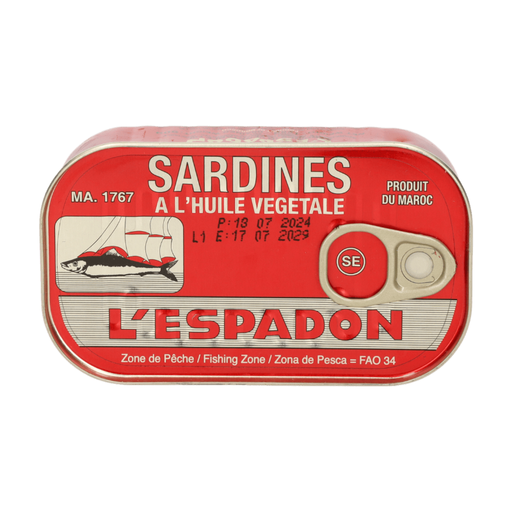 Image unavailable
These sardines in oil can be served with bread or in a salad. The 125 g is the net weight: check the drained weight to calculate portions, and read the label if the ingredients or allergens matter to your group.
Yes, as long as unopened tins are stored according to the instructions on their packaging. Plan to finish opened tins with your meal or follow the refrigeration instructions: for its plain variety, Auchan recommends storage at between 0 and +4 °C and eating within 48 hours of opening.
No. A best-before date isn’t the same as a use-by date. The French Ministry of the Economy explains that a use-by date is a strict deadline. For a tin with a best-before date, check that the packaging is intact and bear in mind that the flavour may have changed.
Start with the net drained weight of each product and the number of portions you plan to serve, rather than the net weight alone. For example, a Carrefour Classic’ sunflower oil variety listed by Carrefour has a net weight of 135 g, but contains 95 g of drained sardines.
Choose them if you want to season the dish yourself or add them to a cold meal. The Auchan plain variety featured here contains sardines, water and salt. A ready-seasoned recipe may need fewer additions, depending on your menu and your group’s tastes.
No. Check the exact style before serving it to guests who need to avoid bones. Connétable says it removes the backbone from its boneless sardines; read the label for ingredients, allergens and drained weight too.